
Notice: Fetal sex determination is strictly prohibited and illegal under the PCPNDT Act, 1994. DNA Labs India does not perform sex disclosure under any circumstances.
1st-Day Pregnancy Diet Plan for North Indian Moms-to-Be
At a Glance
- Sample Required: None (dietary guidance)
- Fasting Rules: Not applicable
- Turnaround Time (TAT): Immediate
- Base Cost: Free (consultation fees may apply)
Written by: DNA Labs India Content Team (Biochemist)
Medically Reviewed by: Dr. Ananya Sharma, MD (Obstetrician)
Last Updated: February 2026
PCPNDT Compliance: This article does not disclose fetal sex and fully complies with the Pre-Conception and Pre-Natal Diagnostic Techniques (PCPNDT) Act, 1994.
Pregnancy is a transformative journey, and the first trimester—especially the initial days—lays the foundation for your baby's development. For North Indian moms-to-be, a diet rooted in traditional, nutrient-dense foods can support both maternal health and fetal growth. This professionally curated 1st-day pregnancy diet plan blends regional culinary practices with evidence-based nutritional science to help you start this journey with confidence.
Why a Healthy Diet is Crucial During Early Pregnancy
The first week of pregnancy is a period of rapid cellular division and organ formation. Adequate intake of key micronutrients—folate, iron, calcium, and protein—is essential to:
- Fetal Development: Folate (vitamin B9) supports neural tube closure, reducing the risk of spina bifida and other congenital anomalies.
- Bone Health: Calcium is critical for fetal skeletal mineralization and maternal bone density preservation.
- Energy Levels: Iron prevents iron-deficiency anemia, which is common in pregnancy and can cause fatigue and cognitive impairment.
- Tissue Growth: Protein provides amino acids for placental and fetal tissue expansion.
A balanced diet also mitigates early pregnancy symptoms like nausea and fatigue, ensuring you remain energized and nourished.
Detailed 1st-Day Pregnancy Diet Plan
Early Morning: Soaked Almonds and Warm Turmeric Milk
- Food Items: 5–6 soaked almonds, 1 glass of warm milk with a pinch of turmeric.
- Nutritional Benefits: Almonds provide healthy fats, vitamin E, and protein to support brain development and energy. Turmeric milk offers anti-inflammatory curcumin and calcium for bone health.
- Why This Meal? Soaked almonds are easier to digest and release nutrients gradually, while turmeric milk boosts immunity and prepares your body for the day.
Breakfast: Vegetable Poha with Peanuts and Orange Juice
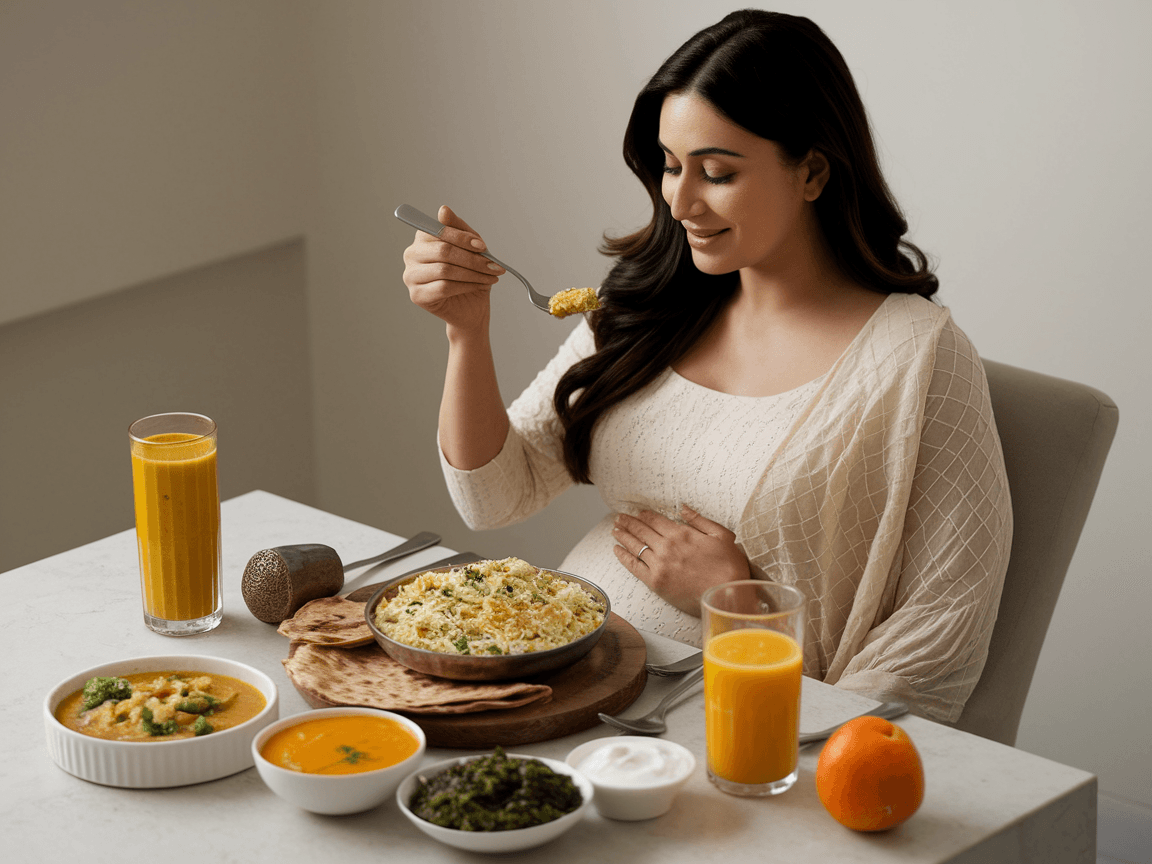
- Food Items: A bowl of vegetable poha (flattened rice cooked with peas, carrots, and peanuts) and a glass of fresh orange juice.
- Nutritional Benefits: Poha is light yet iron-rich, especially when combined with peanuts. Vegetables add fiber and vitamins, while orange juice provides vitamin C to enhance non-heme iron absorption.
- Why This Meal? This breakfast is easy to digest, prevents fatigue by supporting hemoglobin levels, and ensures hydration.
Mid-Morning Snack: A Banana and Mixed Nuts
- Food Items: 1 ripe banana with a handful of mixed nuts (walnuts, cashews, pistachios).
- Nutritional Benefits: Bananas are high in potassium, which helps maintain fluid balance and prevent muscle cramps. Nuts provide omega-3 fatty acids (especially walnuts) for fetal brain development and healthy fats for sustained energy.
- Why This Meal? This snack curbs hunger while delivering essential nutrients that support fetal growth.
Lunch: Rotis, Dal Tadka, Spinach Curry, and Curd
- Food Items: 2 whole wheat rotis (Indian flatbread), a bowl of dal tadka (lentil curry), spinach curry (palak sabzi), and a small bowl of curd.
- Nutritional Benefits:
- Rotis provide complex carbohydrates for sustained energy.
- Dal is rich in protein and folate.
- Spinach offers iron and folate to prevent anemia.
- Curd contains probiotics for gut health and calcium for bones.
- Why This Meal? This balanced lunch covers all major macronutrients and micronutrients, ensuring optimal digestion and nutrient absorption.
Evening Snack: Carrot Sticks with Hummus
- Food Items: Fresh carrot sticks served with homemade hummus (made from chickpeas).
- Nutritional Benefits: Carrots are packed with beta-carotene (vitamin A) for fetal cell growth and vision development. Hummus adds plant-based protein and healthy fats to keep you full.
- Why This Meal? This snack is light yet nutrient-dense, perfect for curbing evening hunger pangs without overloading calories.
Dinner: Brown Rice, Palak Paneer, Beetroot Salad
- Food Items: A bowl of brown rice served with palak paneer (spinach cooked with cottage cheese) and beetroot salad.
- Nutritional Benefits:
- Brown rice provides fiber for digestion and steady glucose release.
- Palak paneer combines calcium from paneer with iron from spinach.
- Beetroot boosts hemoglobin levels with its high iron and folate content.
- Why This Meal? This dinner ensures adequate iron intake before bedtime while being gentle on digestion.
Bedtime Snack: Warm Milk with Nutmeg and Jaggery
- Food Items: A glass of warm milk sweetened with jaggery and a pinch of nutmeg powder.
- Nutritional Benefits:
- Milk provides calcium for bone health.
- Jaggery improves hemoglobin levels by boosting iron intake.
- Nutmeg promotes relaxation and better sleep quality.
- Why This Meal? Ending your day with this comforting drink helps you relax while meeting your calcium needs.
Meal-by-Meal Nutrient Breakdown
| Meal | Key Nutrients | Primary Benefits |
|---|---|---|
| Early Morning | Vitamin E, Calcium, Curcumin | Brain development, immunity, bone health |
| Breakfast | Iron, Vitamin C, Fiber | Prevents anemia, boosts energy, aids digestion |
| Mid-Morning | Potassium, Omega-3, Healthy Fats | Fluid balance, fetal brain development |
| Lunch | Protein, Folate, Iron, Calcium, Probiotics | Tissue growth, neural tube development, gut health |
| Evening Snack | Beta-carotene, Plant Protein | Fetal cell growth, satiety |
| Dinner | Fiber, Iron, Calcium, Folate | Digestion, hemoglobin boost, bone health |
| Bedtime | Calcium, Iron, Relaxants | Bone health, improved sleep |
Tips for a Healthy Pregnancy Diet
- Stay hydrated by drinking at least 8–10 glasses of water daily; consider adding coconut water for electrolytes.
- Avoid processed or fried foods that can cause bloating and provide empty calories.
- Incorporate seasonal fruits like guavas, oranges, and papayas (when ripe) for added vitamins and fiber.
- Avoid raw or undercooked foods, unpasteurized dairy, and high-mercury fish to prevent infections.
- Consult your obstetrician before starting any supplements, especially folic acid and iron.
The Role of Prenatal Genetic Screening
While a nutritious diet is foundational, prenatal genetic screening can provide additional assurance about fetal health. DNA Labs India, an ISO 9001 certified lab, offers advanced non-invasive prenatal testing (NIPT) that screens for chromosomal anomalies like Down syndrome as early as 10 weeks. Early detection allows for informed decisions and timely management. Discuss with your healthcare provider whether NIPT is appropriate for you.
PCPNDT Compliance: This article does not disclose fetal sex and fully complies with the Pre-Conception and Pre-Natal Diagnostic Techniques (PCPNDT) Act, 1994.
Notice: Fetal sex determination is strictly prohibited and illegal under the PCPNDT Act, 1994. DNA Labs India does not perform sex disclosure under any circumstances.