


Written by Dr. [Name] | Medically Reviewed by Dr. [Name] | Last Updated: [Date]
At a Glance
- Sample Required: Blood (venipuncture)
- Fasting Rules: Not required for CBC; some tests may require 8-12 hours fasting
- Turnaround Time (TAT): 24-48 hours
- Base Cost: [Insert Current 2026 Price]
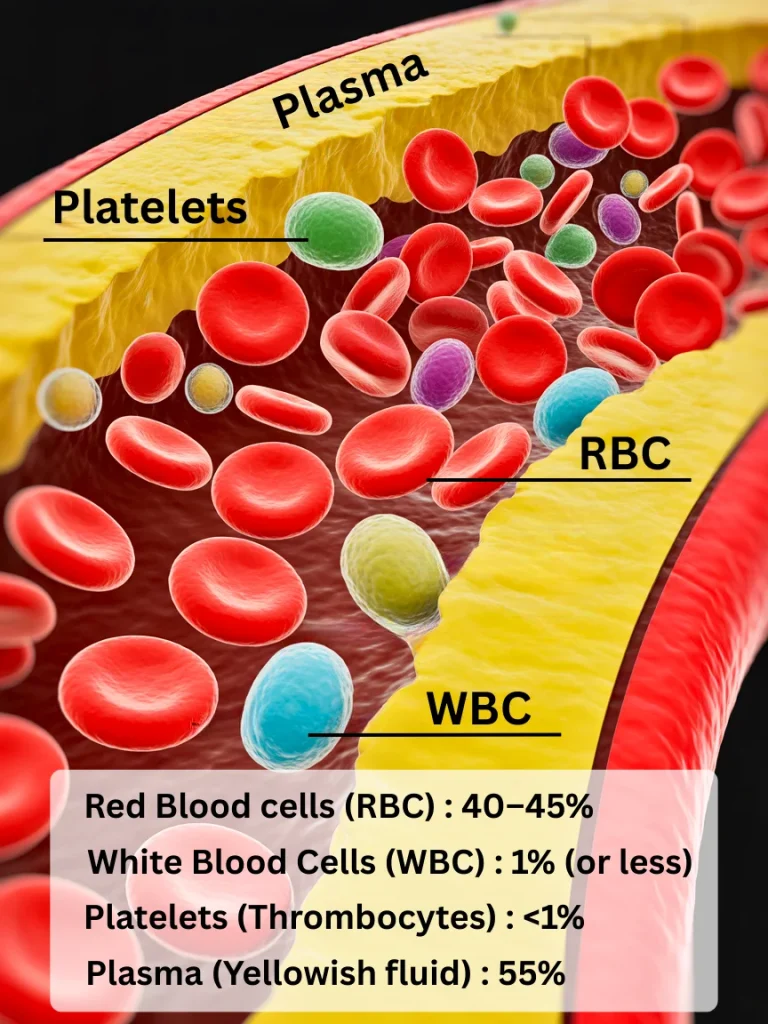
What is Blood?
Blood is a specialized bodily fluid composed of cells suspended in plasma. It circulates through the heart, arteries, veins, and capillaries, ensuring that every part of the body receives the oxygen and nutrients it needs to function. Blood is often referred to as the “river of life” because of its essential role in maintaining life.
Components of Blood
Blood is made up of three main components, along with plasma:
1. Plasma
- Function: The liquid portion of blood that carries cells, nutrients, hormones, and waste.
- Quantity: Makes up about 55% of total blood volume (~2.5–3 liters in an average adult).
2. Red Blood Cells (RBCs / Erythrocytes)
- Function: Transport oxygen from the lungs to tissues and carry carbon dioxide back to the lungs.
- Quantity: About 4.5–6 million cells per microliter (µL) of blood; makes up roughly 40–45% of blood volume.
- Importance: RBCs contain hemoglobin, a protein crucial for oxygen binding.
3. White Blood Cells (WBCs / Leukocytes)
- Function: Defend the body against infections and foreign invaders.
- Quantity: Around 4,000–11,000 cells per microliter (µL) of blood.
- Types of WBCs:
- Lymphocytes: B cells and T cells, including CD4 and CD8 T-cells
- Neutrophils: Fight bacterial infections
- Monocytes: Become macrophages to engulf pathogens
- Eosinophils & Basophils: Involved in allergic reactions and parasite defense
4. Platelets (Thrombocytes)
- Function: Help in blood clotting and prevent excessive bleeding.
- Quantity: About 150,000–450,000 platelets per microliter (µL) of blood.
| Blood Component | Function | Approximate Quantity |
|---|---|---|
| Plasma | Carries nutrients, hormones, and waste; liquid medium for cells | ~55% of blood volume (~2.5–3 liters in adults) |
| Red Blood Cells (RBCs / Erythrocytes) | Transport oxygen and carbon dioxide | ~4.5–6 million cells/µL; ~40–45% of blood volume |
| White Blood Cells (WBCs / Leukocytes) | Immune defense, fight infections | ~4,000–11,000 cells/µL |
| Platelets (Thrombocytes) | Blood clotting to prevent bleeding | ~150,000–450,000 cells/µL |
Functions of Blood
Blood performs several critical functions:
- Transportation: Carries oxygen, carbon dioxide, nutrients, and hormones.
- Protection: White blood cells fight infections; platelets prevent bleeding.
- Regulation: Helps maintain body temperature, pH balance, and fluid levels.
Common Blood Disorders
Maintaining healthy blood is essential. Common disorders include:
- Anemia: Low red blood cell count or hemoglobin
- Leukemia: Cancer of white blood cells
- Thrombocytopenia: Low platelet count leading to bleeding issues
- Hemophilia: Impaired blood clotting
| Disorder | Description | Diagnostic Test |
|---|---|---|
| Anemia | Low RBC or hemoglobin | CBC, Hemoglobin electrophoresis |
| Leukemia | Cancer of WBCs | CBC, Flow cytometry, NGS |
| Thrombocytopenia | Low platelet count | CBC, Platelet function tests |
| Hemophilia | Impaired clotting | Coagulation profile, Factor assays |
Interesting Facts About Blood
- The human body has about 5 liters of blood on average.
- Blood makes up around 7–8% of body weight.
- Red blood cells live for about 120 days, while platelets last 7–10 days.
- White blood cells can increase dramatically during infections.
- ABO and Rh factors determine blood groups, crucial for transfusions.
Conclusion
Blood is not just a bodily fluid—it is the lifeline that keeps the body alive. From transporting oxygen to fighting infections and regulating body functions, healthy blood is essential for survival. Regular check-ups, a balanced diet, and awareness about blood disorders are key to maintaining a healthy circulatory system.
Frequently Asked Questions (FAQs)
1. What is blood made of?
Blood is composed of plasma, red blood cells (RBCs), white blood cells (WBCs), and platelets. Plasma makes up about 55% of blood volume, RBCs about 40–45%, WBCs 1%, and platelets less than 1%.
2. How many red blood cells are in human blood?
An average adult has about 4.5–6 million red blood cells per microliter (µL) of blood. They are responsible for carrying oxygen to tissues and removing carbon dioxide.
3. What do white blood cells do?
White blood cells are part of the immune system. They fight infections, bacteria, viruses, and foreign substances. WBCs include lymphocytes (T cells and B cells), neutrophils, monocytes, eosinophils, and basophils.
4. How many platelets are in blood?
There are typically 150,000–450,000 platelets per microliter (µL) of blood. Platelets help clot blood and prevent excessive bleeding.
5. What is plasma and why is it important?
Plasma is the liquid portion of blood that carries cells, nutrients, hormones, and waste products. It accounts for about 55% of total blood volume and helps maintain blood pressure and volume.
6. How much blood does a human body have?
An average adult has about 5 liters of blood, which is roughly 7–8% of body weight.
7. What are common blood disorders?
Common blood disorders include:
- Anemia: Low red blood cells or hemoglobin
- Leukemia: Cancer of white blood cells
- Thrombocytopenia: Low platelet count causing bleeding issues
- Hemophilia: Impaired clotting ability
8. How long do blood cells live?
- Red blood cells: ~120 days
- White blood cells: Days to years, depending on type
- Platelets: 7–10 days
Medical Disclaimer: This article is for informational purposes only and does not constitute medical advice. Always consult a qualified healthcare professional for diagnosis and treatment. DNA Labs India is an ISO 9001 certified laboratory.
Disclaimer: This content is for educational purposes only and does not substitute for a professional clinical consultation. Diagnostic testing must be performed under the guidance of a registered medical practitioner.