

Brain-Eating Amoeba in Kerala: Sixth Death Reported – Symptoms, Prevention, and Diagnosis
At a Glance
- Sample Required: Cerebrospinal fluid (CSF) or blood for PCR
- Fasting Rules: None required
- Turnaround Time (TAT): 24–48 hours for RT-PCR
- Base Cost: [Insert Current 2026 Price]
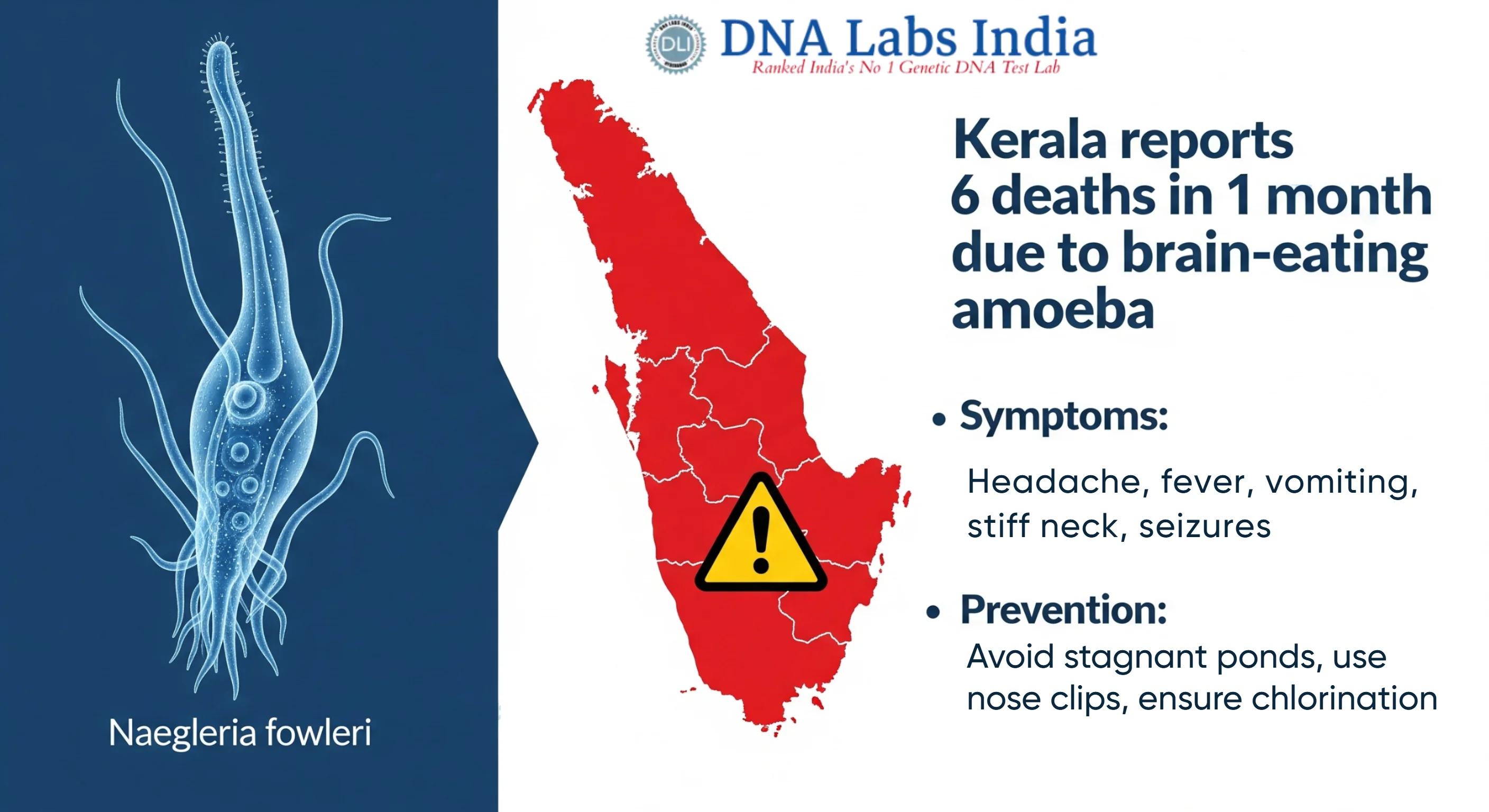
Kerala is currently facing a health scare after reporting six deaths due to amoebic meningoencephalitis, a rare but fatal brain infection caused by the so-called brain-eating amoeba, Naegleria fowleri. The alarming rise in cases has raised concerns across the state, especially in districts such as Kozhikode, Malappuram, and Alappuzha.
At DNA Labs India, we believe spreading awareness about such infections is critical to protecting public health. Here’s everything you need to know about the recent outbreak, symptoms, prevention, and the role of timely diagnosis.
What is the Brain-Eating Amoeba (Naegleria fowleri)?
Naegleria fowleri is a free-living amoeba commonly found in warm freshwater bodies such as ponds, lakes, rivers, and poorly maintained swimming pools.
- It causes a rare infection known as Primary Amoebic Meningoencephalitis (PAM).
- Infection occurs when contaminated water enters the nose, allowing the amoeba to travel to the brain.
- The condition is almost always fatal if not diagnosed early.
Transmission Vectors and Incubation
Infection occurs exclusively through nasal exposure to contaminated water. The amoeba migrates via the olfactory nerve to the brain. The incubation period typically ranges from 1 to 12 days after exposure.
Why Are Cases Rising in Kerala?
- Most cases in Kerala have been linked to bathing in untreated ponds and stagnant freshwater sources.
- Rising temperatures during summer make water bodies a suitable breeding ground for the amoeba.
- Children and young people are often more exposed due to swimming in natural ponds.
Symptoms of Amoebic Meningoencephalitis
The infection progresses rapidly, often within a week. Early recognition is crucial. Symptoms include:
- Severe headache
- Fever and nausea
- Vomiting
- Stiff neck
- Seizures
- Confusion or hallucinations
- Coma (in advanced stages)
If anyone develops these symptoms after swimming or bathing in freshwater, immediate medical attention is critical.
Symptom Timeline and Diagnostic Methods
Understanding the progression of symptoms is vital for early intervention. The table below outlines the typical timeline and the most effective diagnostic approaches.
| Stage | Symptoms | Diagnostic Method |
|---|---|---|
| Early (Days 1–3) | Headache, fever, nausea | Clinical suspicion, CSF analysis |
| Progressive (Days 4–7) | Stiff neck, vomiting, confusion | RT-PCR on CSF or blood |
| Advanced (Days 8+) | Seizures, coma | Imaging (MRI/CT) and molecular confirmation |
Molecular diagnostics, particularly RT-PCR, are the gold standard for confirming Naegleria fowleri infection. DNA Labs India offers advanced molecular testing to aid rapid and accurate diagnosis.
How to Prevent Brain-Eating Amoeba Infection
Currently, there is no vaccine. The best approach is prevention:
- Avoid swimming in stagnant or untreated ponds/lakes.
- Use nose clips if swimming in freshwater is unavoidable.
- Ensure proper chlorination of swimming pools and water tanks.
- Do not let water enter your nose while bathing in natural water bodies.
Treatment Challenges
Unfortunately, Naegleria fowleri infections have a mortality rate of over 95%. Treatment involves aggressive use of antifungal and antimicrobial drugs such as amphotericin B, rifampicin, fluconazole, and miltefosine. However, early diagnosis offers the best chance of survival.
Role of DNA Labs India
At DNA Labs India, we specialize in advanced infectious disease diagnostics. As an ISO 9001 certified lab, we are committed to providing reliable testing solutions. While Naegleria fowleri infections are extremely rare, timely laboratory testing and genetic analysis can assist doctors in identifying pathogens quickly.
If you or your loved ones have symptoms after freshwater exposure, consult a doctor immediately. Early diagnosis is life-saving.
FAQs on Brain-Eating Amoeba in Kerala
1. Is the brain-eating amoeba contagious?
No, it does not spread from person to person. Infection only occurs when contaminated water enters the nose.
2. Can drinking contaminated water cause the infection?
No, swallowing water does not cause brain infection. Only nasal exposure is risky.
3. Is Kerala the only state reporting such cases?
Kerala has reported multiple cases in recent years due to widespread use of ponds for bathing, but cases can occur in other warm, freshwater regions as well.
4. How quickly does the infection progress?
Symptoms usually appear within 1–12 days of exposure, and the disease progresses rapidly.
Key Takeaway
The recent reports of six deaths in a month in Kerala due to Naegleria fowleri (brain-eating amoeba) are a reminder that awareness and prevention are crucial. While the infection is rare, it is almost always fatal.
At DNA Labs India, we are committed to spreading awareness and providing reliable testing solutions to safeguard public health.
Written by: DNA Labs India Editorial Team
Medically Reviewed by: Dr. [Name], Microbiologist
Last Updated: [Insert Date]