


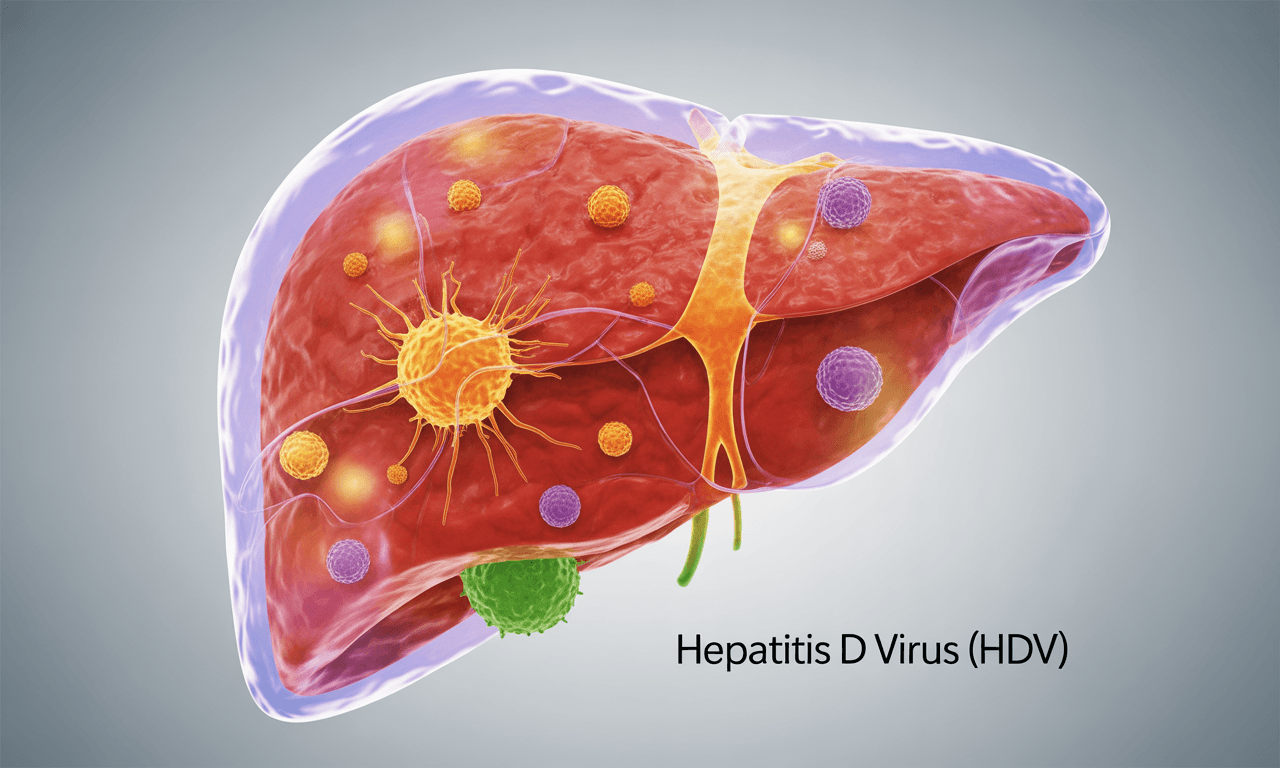
Hepatitis D: Causes, Symptoms, Diagnosis, Prevention, and Treatment
Written by Dr. A. Sharma | Medically Reviewed by Dr. R. Patel | Last Updated:
Key Facts at a Glance
- Sample Required: Blood (serum or plasma)
- Fasting Rules: No fasting required
- Turnaround Time (TAT): 2–3 business days
- Base Cost: [Insert Current 2026 Price]
What is Hepatitis D?
Hepatitis D, also known as Hepatitis Delta, is a serious liver infection caused by the Hepatitis D virus (HDV). What makes HDV unique is that it only occurs in people who are already infected with Hepatitis B virus (HBV). HDV cannot replicate or cause infection on its own — it requires the HBsAg (Hepatitis B surface antigen) to survive and multiply.
This co-infection (HDV + HBV) leads to more severe liver disease, often accelerating progression to cirrhosis, liver failure, or hepatocellular carcinoma (liver cancer) faster than HBV alone.
Transmission Vectors and Incubation
HDV is transmitted through contact with infected blood or bodily fluids, similar to Hepatitis B. It spreads through:
- Injection drug use (sharing needles or syringes)
- Unprotected sex with an infected person
- Blood transfusions or unsafe medical procedures
- Mother-to-child transmission (less common)
- Sharing personal items like razors or toothbrushes contaminated with blood
HDV can occur as:
- Co-infection: When a person is infected with HBV and HDV at the same time.
- Superinfection: When a person already infected with chronic HBV later acquires HDV. This form is often more severe and likely to cause chronic liver disease.
The incubation period for HDV ranges from 2 to 8 weeks, depending on the mode of transmission and co-infection status.
Clinical Manifestations and Symptom Timeline
Symptoms of Hepatitis D are often similar to those of Hepatitis B but more intense and rapid in progression. These may include:
- Fatigue and extreme weakness
- Loss of appetite
- Nausea and vomiting
- Abdominal pain (especially in the upper right side)
- Joint and muscle pain
- Jaundice (yellowing of the skin and eyes)
- Dark urine and light-colored stools
- Swelling of abdomen (ascites) in advanced liver disease
Some individuals may remain asymptomatic until liver damage becomes advanced.
| Phase | Timeline | Common Symptoms |
|---|---|---|
| Acute phase | 2–8 weeks post-exposure | Fatigue, nausea, jaundice, dark urine |
| Chronic phase | >6 months | Often asymptomatic, but progressive liver damage |
| Advanced liver disease | Years | Ascites, variceal bleeding, encephalopathy |
Diagnostic Modalities and Molecular Assays
Accurate diagnosis of Hepatitis D (HDV) is essential, especially in individuals already diagnosed with Hepatitis B (HBV). Testing helps detect co-infection or superinfection and assess disease progression. Common diagnostic tests include:
| Test | Purpose | Interpretation |
|---|---|---|
| Anti-HDV Antibody Test (IgM) | Detects recent or current infection | Positive IgM indicates acute infection; IgG indicates past or chronic exposure |
| HDV RNA PCR Test | Confirms active viral replication | Detectable HDV RNA indicates active infection; used for treatment monitoring |
| HBsAg (Hepatitis B surface antigen) | Confirms HBV infection (required for HDV) | Must be positive for HDV to exist |
| HBV DNA Quantitative Test | Measures HBV viral load | Helps co-manage HBV and HDV treatment |
| Liver Function Tests (LFTs) | Assess liver inflammation and function | Elevated ALT/AST indicate liver injury |
| Liver Fibrosis Assessment (FibroScan or biopsy) | Measure liver scarring | Staging fibrosis guides prognosis |
Early detection through these tests allows clinicians to initiate timely treatment and reduce the risk of severe liver damage or complications. At DNA Labs India, an ISO 9001 certified lab, we offer comprehensive HDV testing with rapid turnaround times.
Preventive Strategies and Vaccination
There is no vaccine for Hepatitis D, but it can be prevented by getting vaccinated against Hepatitis B, since HDV requires HBV to survive.
Prevention methods include:
- Hepatitis B vaccination (offers indirect protection against HDV)
- Avoiding shared needles, syringes, or blood-contaminated items
- Safe sex practices to reduce risk of transmission
- Screening blood and organ donors
- Educating HBV-infected individuals on the risks of HDV superinfection
Public health measures that control HBV will automatically reduce HDV transmission.
Therapeutic Landscape and Prognosis
Treatment of Hepatitis D is challenging and still evolving. The goal is to suppress HDV replication and prevent liver damage.
- Pegylated Interferon-alpha (Peg-IFN-α): Historically the mainstay, effective in a subset of patients; long-term therapy may be required.
- Bulevirtide (HDV entry inhibitor): Approved in the EU and increasingly available; shows promising results in reducing HDV RNA levels.
- Antiviral therapy for HBV (e.g., Tenofovir, Entecavir): Often used in co-management but does not directly affect HDV.
- Liver transplantation: May be necessary in patients with end-stage liver disease or hepatocellular carcinoma.
Regular monitoring of HDV RNA levels, liver function, and HBV status is essential for managing chronic Hepatitis D. Prognosis varies; with early diagnosis and appropriate therapy, progression can be slowed, but chronic HDV remains a serious condition.
Screening Protocols and High-Risk Populations
Due to its dependence on HBV and its potential for rapid liver damage, screening for HDV is essential in all individuals diagnosed with chronic Hepatitis B.
Key groups who should be screened include:
- People with chronic HBV who show signs of liver damage
- Individuals from regions where HDV is common (Asia, Africa, Eastern Europe)
- People who inject drugs
- People living with HIV and HBV co-infection
Public awareness, timely screening, and preventive vaccination are crucial in reducing the global burden of Hepatitis D.
Summary and Clinical Takeaways
Hepatitis D is a serious and aggressive liver infection that only affects those already infected with Hepatitis B. While no vaccine exists for HDV itself, preventing Hepatitis B through vaccination offers the best protection. With emerging treatments and improved diagnostics, managing HDV is increasingly possible — but early detection remains the key to saving lives.