


Kidneys: Structure, Functions, and Key Facts
At a Glance
- Sample Required: Blood (serum creatinine, eGFR) and urine (albumin-to-creatinine ratio)
- Fasting Rules: No fasting required for basic kidney panel; follow specific test instructions
- Turnaround Time (TAT): 24–48 hours
- Base Cost: [Insert Current 2026 Price]
The kidneys are two bean-shaped organs that play a critical role in maintaining your body’s internal balance. Located on either side of the spine, just below the rib cage, these powerful organs silently work around the clock to filter waste, balance fluids, and regulate essential bodily functions.
Anatomy of the Kidneys
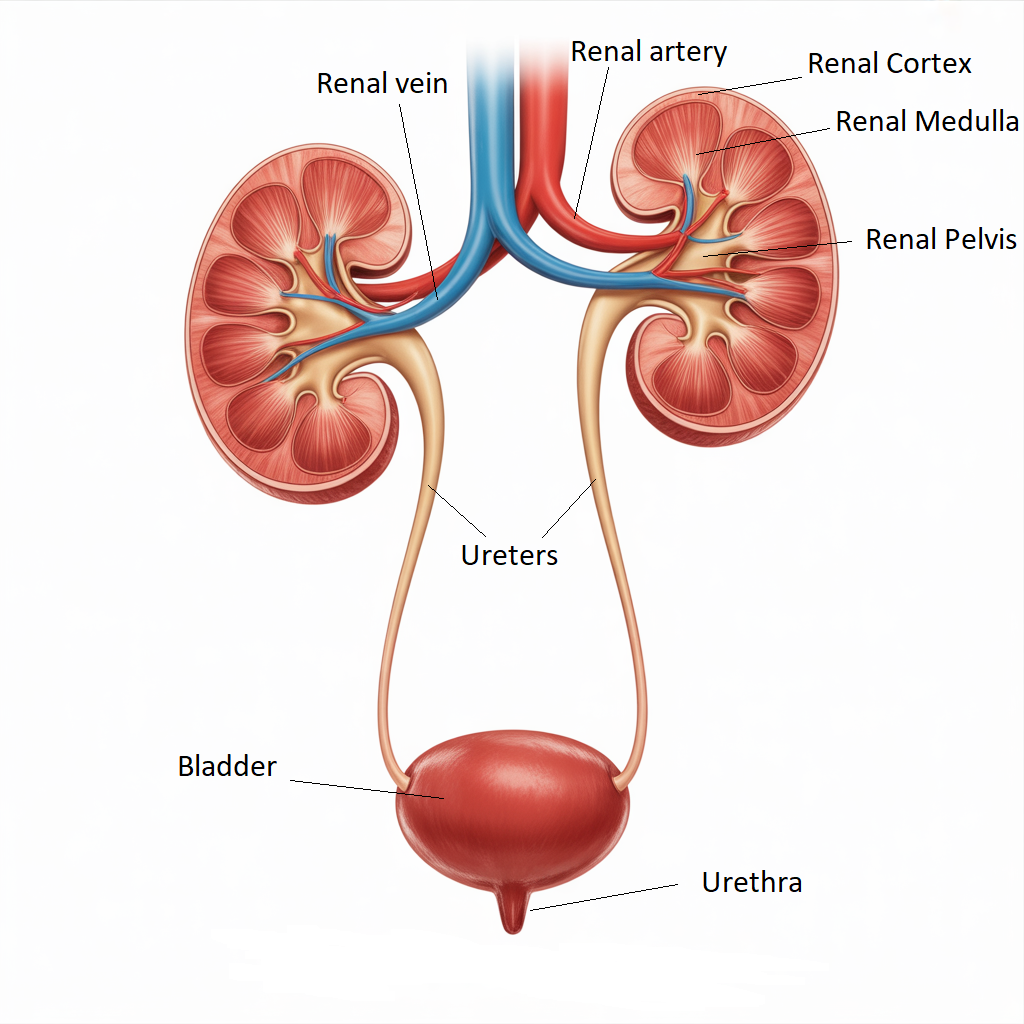
The kidneys are vital components of the urinary system. Each kidney is about the size of a fist and weighs approximately 150 grams. Despite their small size, the kidneys filter about 50 gallons (180 liters) of blood daily, producing around 1–2 liters of urine.
They work closely with the bladder, ureters, and urethra to eliminate toxins and maintain fluid balance — ensuring your body runs efficiently.
| Part | Location/Feature | Function |
|---|---|---|
| Renal Cortex | Outer part of the kidney | Houses nephrons where filtration begins |
| Renal Medulla | Inner region of kidney | Concentrates urine before it exits to pelvis |
| Renal Pelvis | Funnel-shaped cavity | Collects urine and channels it into the ureter |
| Nephrons | Microscopic units (1M+ per kidney) | Perform actual blood filtration |
| Ureters | Tubes connecting kidneys to bladder | Transport urine downward |
| Bladder | Located in pelvis | Stores urine until it’s expelled |
Physiological Functions
- Filters waste from the blood: Removes toxins, urea, and excess substances.
- Regulates fluid and electrolyte balance: Maintains levels of sodium, potassium, and other minerals.
- Controls blood pressure: Releases hormones like renin that regulate blood pressure.
- Stimulates red blood cell production: Produces erythropoietin, a hormone that signals bone marrow to create red blood cells.
- Balances pH levels: Keeps body’s acid-base levels in check.
- Activates vitamin D: Supports healthy bones by aiding calcium absorption.
Common Kidney Disorders
Kidney conditions can develop silently and become serious if left untreated. Common kidney-related conditions include:
- Chronic Kidney Disease (CKD)
- Kidney stones
- Urinary tract infections (UTIs)
- Acute kidney injury (AKI)
- Polycystic kidney disease
- Glomerulonephritis
- Kidney infections (pyelonephritis)
- Kidney failure (end-stage renal disease)
Warning Signs and Symptoms
- Swelling in the legs, ankles, or feet
- Frequent urination, especially at night
- Blood in urine or foamy urine
- Fatigue or trouble concentrating
- High blood pressure
- Loss of appetite or nausea
- Lower back pain on one or both sides
Diagnostic Tests for Kidney Health
Early detection is key. DNA Labs India offers comprehensive kidney function panels. Below is a comparison of common tests:
| Test | Sample | What It Measures | Typical TAT |
|---|---|---|---|
| Serum Creatinine | Blood | Waste product from muscle metabolism; elevated levels indicate impaired filtration | 24 hours |
| eGFR (Estimated Glomerular Filtration Rate) | Blood | Calculated from creatinine; stages of CKD | 24 hours |
| Blood Urea Nitrogen (BUN) | Blood | Urea nitrogen from protein breakdown; reflects kidney function | 24 hours |
| Urine Albumin-to-Creatinine Ratio (UACR) | Urine | Detects protein leakage; early marker of kidney damage | 24–48 hours |
| Urinalysis | Urine | Checks for blood, protein, infection, and crystals | 24 hours |
Preventive Measures for Kidney Health
Protecting your kidneys is easier than you might think. Here’s how:
- Stay hydrated: Drink adequate water daily to help the kidneys flush out toxins.
- Limit salt intake: Excess sodium can increase blood pressure and strain kidneys.
- Manage blood sugar and blood pressure: Diabetes and hypertension are top causes of kidney disease.
- Avoid overuse of painkillers: NSAIDs and other medications can damage kidney tissue over time.
- Eat a kidney-friendly diet: Limit processed foods, choose whole grains, and include fruits and vegetables.
- Don’t smoke: Smoking reduces blood flow and speeds up kidney damage.
- Get regular kidney function tests: Especially if you have diabetes, hypertension, or a family history of kidney disease.
When to Consult a Doctor
See a healthcare professional if you experience:
- Persistent lower back pain
- Changes in urination frequency or color
- Unexplained swelling
- Sudden increase in blood pressure
- Fatigue or confusion
- Family history of kidney disease
Early diagnosis can prevent progression and improve long-term kidney function.
Frequently Asked Questions (FAQs)
Q1: What do the kidneys do in the human body?
A: The kidneys filter waste products and excess fluids from the blood to form urine. They also help regulate blood pressure, maintain electrolyte balance, and produce hormones that support red blood cell production and bone health.
Q2: How do I know if my kidneys are not functioning properly?
A: Common signs of kidney issues include swelling in the legs or ankles, frequent or painful urination, foamy or bloody urine, fatigue, high blood pressure, and lower back pain. However, early kidney damage may show no symptoms, so regular testing is essential.
Q3: Can kidney disease be cured?
A: Chronic kidney disease (CKD) is usually not curable, but its progression can be slowed with proper management. Acute kidney injuries may be reversible if treated early. In severe cases, dialysis or a kidney transplant may be required.
Q4: How many kidneys does a person need to live?
A: Most people are born with two kidneys, but it’s possible to live a healthy life with just one functional kidney. This is common for kidney donors and individuals with a damaged or removed kidney.
Q5: What are kidney stones and how do they form?
A: Kidney stones are hard mineral deposits that form in the kidneys when substances like calcium or uric acid become too concentrated in the urine. They can cause severe pain and may require medical intervention if they don’t pass naturally.
Q6: How often should kidney function be tested?
A: People with risk factors like diabetes, high blood pressure, or a family history of kidney disease should get tested annually. Otherwise, routine blood and urine tests during general health checkups often include kidney function monitoring.
Q7: What foods are good for kidney health?
A: A kidney-friendly diet includes fresh fruits (like apples and berries), vegetables, whole grains, low-sodium foods, and adequate water intake. Limiting processed foods, red meat, and high-sodium snacks is also beneficial.
Q8: Can dehydration affect kidney function?
A: Yes. Chronic dehydration reduces the kidneys' ability to eliminate toxins and increases the risk of kidney stones and infections. Staying properly hydrated helps support optimal kidney function.
Conclusion
Your kidneys are silent heroes that work hard every day to keep your body clean, balanced, and healthy. Don’t wait until there’s a problem — stay proactive with lifestyle choices and routine checkups.
At DNA Labs India, we provide advanced kidney health screening, including genetic testing, urine analysis, and kidney function panels. Early detection saves lives — and kidneys.
Contact DNA Labs India today for a personalized kidney health assessment.