

Dengue Fever: Prevention, Symptoms, and Testing for Monsoon Travelers
Key Facts at a Glance
- Sample Required: Blood (serum or plasma)
- Fasting Rules: No fasting required
- Turnaround Time (TAT): 24–48 hours
- Base Cost: [Insert Current 2026 Price]
The monsoon transforms many destinations across India into lush, scenic landscapes. Whether you're heading to the Western Ghats, the Northeast, Kerala, Goa, or planning a weekend getaway, the rainy season also brings an increased risk of mosquito-borne illnesses—especially dengue.
While most people focus on packing rain gear, insect protection is just as important. Understanding how dengue spreads, recognizing its early symptoms, and knowing when laboratory testing may be appropriate can help travelers make informed health decisions.
Transmission Vectors and Incubation
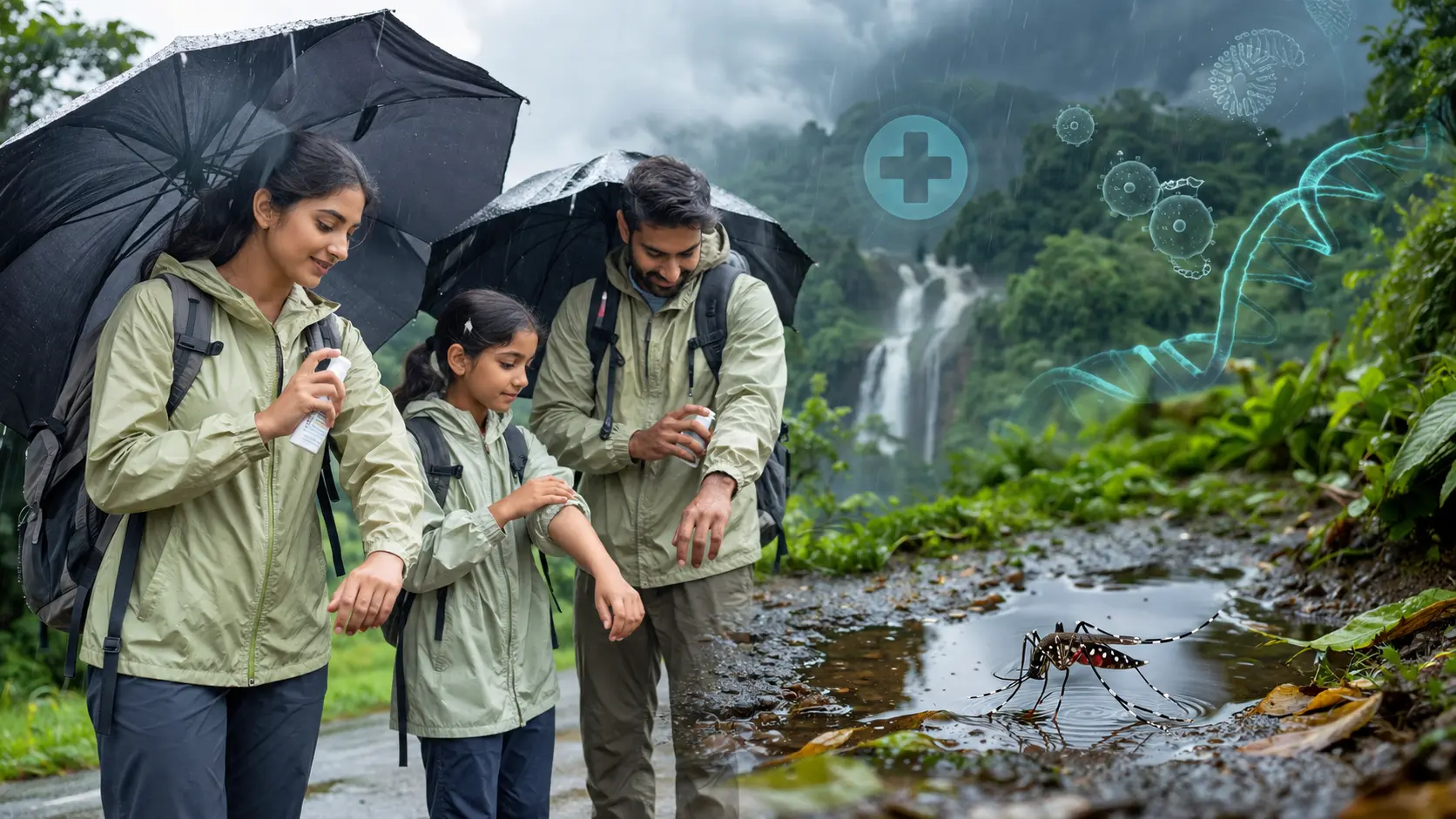
Dengue is caused by the dengue virus, which is transmitted through the bite of infected Aedes mosquitoes. These mosquitoes thrive during and after the rainy season because stagnant water provides ideal breeding sites.
Common breeding locations include:
- Flower pots
- Buckets and water storage containers
- Construction sites
- Discarded tires
- Rooftop tanks
- Coolers and outdoor containers
Unlike mosquitoes that bite mainly at night, Aedes mosquitoes are most active during the daytime, particularly during the early morning and late afternoon.
Traveler-Specific Risk Factors
Travel often increases exposure to mosquito bites because people may:
- Spend more time outdoors sightseeing.
- Visit forests, beaches, waterfalls, or parks.
- Stay in accommodations near vegetation or standing water.
- Travel to regions experiencing seasonal dengue outbreaks.
Even short trips can increase the risk if preventive measures are not followed.
Preventive Measures for Travelers
Protective Clothing
Choose:
- Full-sleeved shirts
- Full-length trousers
- Light-colored clothing
- Socks when possible
Loose-fitting clothing provides additional protection against mosquito bites.
Mosquito Repellents
Apply mosquito repellent on exposed skin according to the product instructions. Repellents can be especially useful during:
- Morning walks
- Outdoor sightseeing
- Trekking
- Evening activities
Accommodation Selection
Before booking or checking into your stay, look for:
- Window screens
- Air-conditioned rooms
- Mosquito nets where necessary
- Clean surroundings without stagnant water
Eliminating Breeding Sites
If you're staying for several days:
- Empty standing water from containers.
- Keep water tanks covered.
- Report stagnant water around the property if possible.
Clinical Presentation and Symptom Timeline
Dengue symptoms usually appear 4–10 days after being bitten by an infected mosquito.
Common symptoms include:
- Sudden high fever
- Severe headache
- Pain behind the eyes
- Muscle and joint pain
- Nausea or vomiting
- Skin rash
- Extreme tiredness
Some people may recover within a week, while others can develop severe dengue that requires urgent medical care.
Warning Signs Requiring Immediate Medical Attention
Seek prompt medical evaluation if symptoms are accompanied by:
- Severe abdominal pain
- Persistent vomiting
- Difficulty breathing
- Bleeding gums or nose
- Blood in vomit or stool
- Extreme weakness or restlessness
These warning signs may indicate progression to severe dengue and require immediate medical assessment.
Diagnostic Modalities and Timing
The early symptoms of dengue can resemble other viral infections such as influenza, chikungunya, or COVID-19. Because the symptoms overlap, laboratory testing plays an important role in confirming the cause.
Identifying dengue early may help healthcare providers:
- Differentiate dengue from other febrile illnesses.
- Monitor patients more closely if needed.
- Guide appropriate clinical management.
- Reduce unnecessary treatments.
Molecular Detection (RT-PCR)
One of the earliest laboratory methods for detecting dengue infection is RNA detection using reverse transcription-polymerase chain reaction (RT-PCR).
This test looks for the genetic material (RNA) of the dengue virus rather than waiting for the body's immune response to develop. RT-PCR can identify dengue during the early phase (days 1–5) when antibody tests may still be negative.
Serological Tests
Antibody-based tests (NS1 antigen, IgM, IgG) are useful in later stages. The table below summarizes the optimal testing windows.
| Test | Optimal Collection Window | Clinical Utility |
|---|---|---|
| RT-PCR | Days 1–5 of illness | Confirms acute infection; identifies serotype |
| NS1 Antigen | Days 1–7 | Rapid early detection; high specificity |
| IgM Antibody | Days 5–10 | Confirms recent infection; may cross-react with other flaviviruses |
| IgG Antibody | After day 10 | Indicates past infection; paired samples needed for rising titers |
Healthcare professionals determine which laboratory test is most appropriate based on:
- Day of illness
- Symptoms
- Clinical findings
- Medical history
Serotype Identification and Clinical Relevance
There are four recognized dengue virus serotypes:
- DENV-1
- DENV-2
- DENV-3
- DENV-4
An infection with one serotype generally provides long-term immunity only against that specific serotype, not the others. This is one reason a person can experience dengue more than once during their lifetime.
Understanding the infecting serotype can support epidemiological surveillance and may provide useful clinical information in appropriate situations.
Differential Diagnosis: Not Every Fever Is Dengue
No, not every fever during travel is dengue. Many illnesses occurring during the monsoon can cause fever, including:
- Viral fever
- Influenza
- Malaria
- Chikungunya
- Typhoid
Because symptoms often overlap, self-diagnosis is not reliable. Persistent fever or worsening symptoms should be evaluated by a healthcare professional.
Pre-Travel Checklist
Before travelling:
- Pack mosquito repellent.
- Carry full-sleeved clothing.
- Keep basic medicines recommended by your doctor.
- Stay hydrated throughout the trip.
- Be aware of local health advisories.
- Seek medical care promptly if fever develops during or shortly after travel.
Frequently Asked Questions
Can I get dengue more than once?
Yes. Infection with one dengue serotype does not provide complete protection against the other three serotypes.
Is dengue contagious?
No. Dengue does not spread directly from one person to another. It spreads through the bite of an infected Aedes mosquito.
When do dengue symptoms usually begin?
Symptoms generally appear between 4 and 10 days after an infected mosquito bite.
Can mosquitoes bite during the daytime?
Yes. Aedes mosquitoes are primarily daytime biters, with peak activity in the early morning and late afternoon.
Written by: [Author Name]
Medically Reviewed by: [Reviewer Name]
Last Updated: [Date]