

At a Glance: Hemophilia Testing
- Sample Required: Whole blood (EDTA)
- Fasting Rules: Not required
- Turnaround Time (TAT): 7–10 days
- Base Cost: [Insert Current 2026 Price]
World Hemophilia Day 2026 · Global campaign
"Diagnosis: First step to care" — shifting from awareness to diagnostic accountability, transforming millions of lives across India.
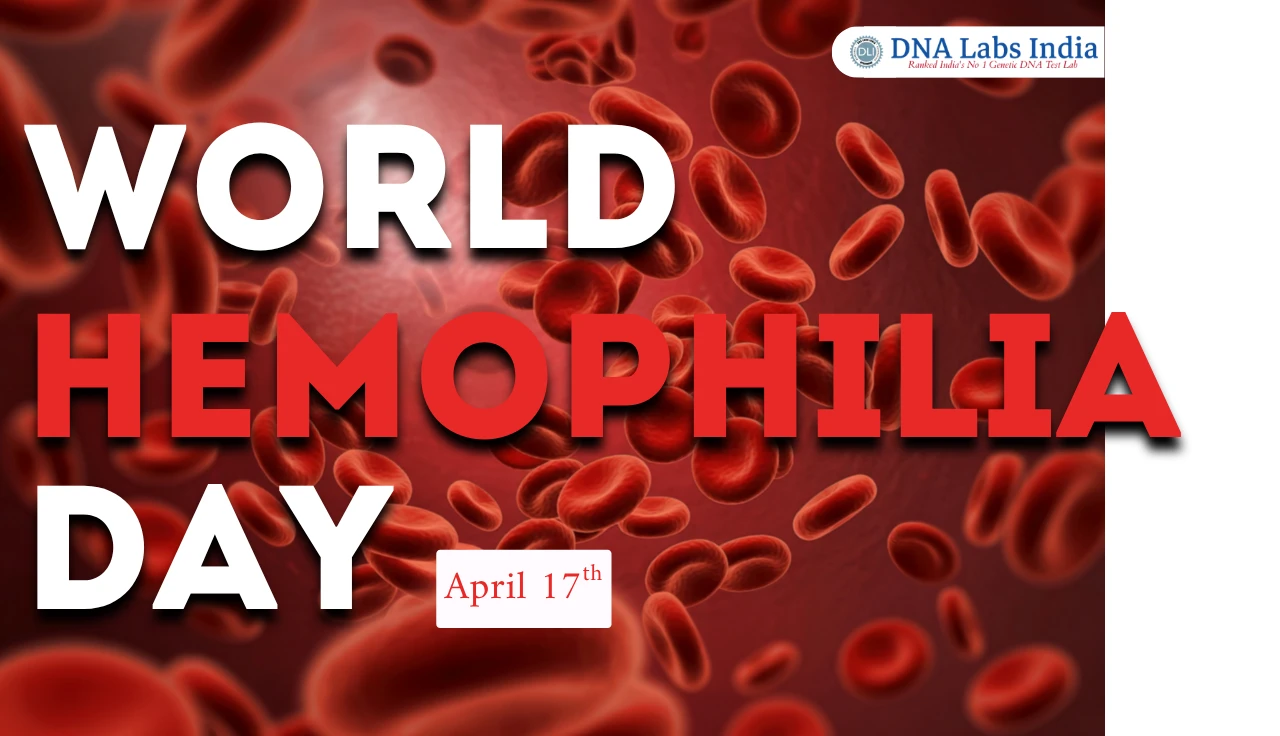
World Hemophilia Day 2026: Why Diagnosis is the Critical First Step to India's Health Future
Written by Dr. A. Sharma | Medically Reviewed by Dr. R. Iyer | Last Updated: April 17, 2026
Theme 2026: "Diagnosis: First step to care"
The 2026 theme prioritizes confirmed, evidence-based identification of bleeding disorders. With nearly 75% of cases globally still undiagnosed, the focus shifts from awareness to actionable diagnosis, especially in India where early detection directly influences survival, treatment access, and health system planning.
Following updated 2026 WFH guidelines, healthcare systems are now measured on diagnostic conversion rates — not just outreach volume.
What is Hemophilia?
Hemophilia is an inherited bleeding disorder where the blood does not clot properly because key clotting proteins (usually factor VIII or IX) are missing or low, causing prolonged and sometimes internal bleeding. This genetic condition predominantly affects males, though females can be carriers and may also experience bleeding symptoms.
Modern molecular diagnostics using Next-Generation Sequencing (NGS) and Whole Exome Sequencing (WES) help identify the exact mutation (e.g., Factor VIII inversion mutations), enabling targeted treatment and better outcomes. Without accurate diagnosis, recurrent bleeding into joints and tissues can lead to chronic damage.
Read comprehensive guide →Diagnostic Literacy & Indian Families
Diagnostic literacy means understanding the exact genetic and molecular basis of hemophilia. For Indian families, moving beyond symptom recognition to identify specific mutations enables targeted treatment, informed reproductive choices, and better long-term outcomes.
At Indian labs, families with genetic reports demonstrate: faster clinical decisions, reduced emergency interventions, and higher adherence to prophylactic therapy. Carrier detection and mutation-specific insight redefine family planning and disease prevention across generations.
Evidence-Based Testing & India's Health Goals
Evidence-based testing ensures healthcare decisions are grounded in verified clinical data rather than assumptions. In India, this is essential for optimizing insurance approvals, government health schemes, and national resource allocation. Accurate diagnosis enables targeted interventions, reduces system inefficiencies, and aligns with precision medicine objectives.
Without laboratory confirmation: insurance claims for clotting factor therapy are frequently denied, patients remain ineligible for state-sponsored programs, and epidemiological data remains incomplete. Diagnostic Sovereignty — a nation's ability to generate high-quality diagnostic data — is the new benchmark.
Hemophilia Types and Genetic Testing
| Type | Deficient Factor | Gene | Inheritance | Recommended Testing |
|---|---|---|---|---|
| Hemophilia A | Factor VIII | F8 | X-linked recessive | NGS, WES, inversion PCR |
| Hemophilia B | Factor IX | F9 | X-linked recessive | NGS, WES |
How to Access Reliable Molecular Screening in India
At DNA Labs India, we offer comprehensive hemophilia genetic testing using advanced NGS platforms. Our ISO 9001 certified lab ensures accurate and timely results. To learn more about the testing process, sample requirements, and costs, visit our detailed guide.
Myths vs Facts
| Myth | Fact |
|---|---|
| Hemophilia only affects males | Females can be carriers and may exhibit bleeding symptoms due to lyonization or homozygous mutations. |
| Genetic testing is not necessary for diagnosis | Molecular testing identifies the exact mutation, enabling personalized treatment and carrier detection. |
Conclusion
World Hemophilia Day 2026 reminds us that diagnosis is not just a medical step—it is the foundation of care, empowerment, and national health progress. By prioritizing accurate molecular testing, India can transform the lives of thousands of undiagnosed individuals and build a healthier future.