


At a Glance: Hepatitis Testing at DNA Labs India
- Sample Required: Blood (serum or plasma)
- Fasting Rules: No fasting required
- Turnaround Time (TAT): 24–48 hours
- Base Cost: [Insert Current 2026 Price]
Written by: DNA Labs India Medical Content Team
Medically Reviewed by: Dr. A. Sharma, MBBS, MD (Internal Medicine)
Last Updated: July 28, 2025
World Hepatitis Day 2025: Awareness, Prevention, and Liver Health
Every year on July 28, the world observes World Hepatitis Day—a global health awareness event dedicated to the prevention, diagnosis, and treatment of hepatitis. This campaign highlights the millions of people living with undiagnosed or untreated hepatitis B and C and calls for action to eliminate viral hepatitis as a public health threat by 2030.
Why World Hepatitis Day Matters
Viral hepatitis is a silent epidemic affecting over 350 million people worldwide. It is a leading cause of liver disease, liver cancer, and liver failure. Despite its impact, awareness remains dangerously low. World Hepatitis Day serves as a critical reminder to prioritize liver health, encourage testing, and expand access to life-saving treatment.
Key Facts About Hepatitis
- Hepatitis B and C cause over 1.3 million deaths annually.
- Most people with chronic hepatitis are unaware they are infected.
- Effective vaccines and treatments exist for hepatitis B and C.
- Early diagnosis can prevent serious liver complications.
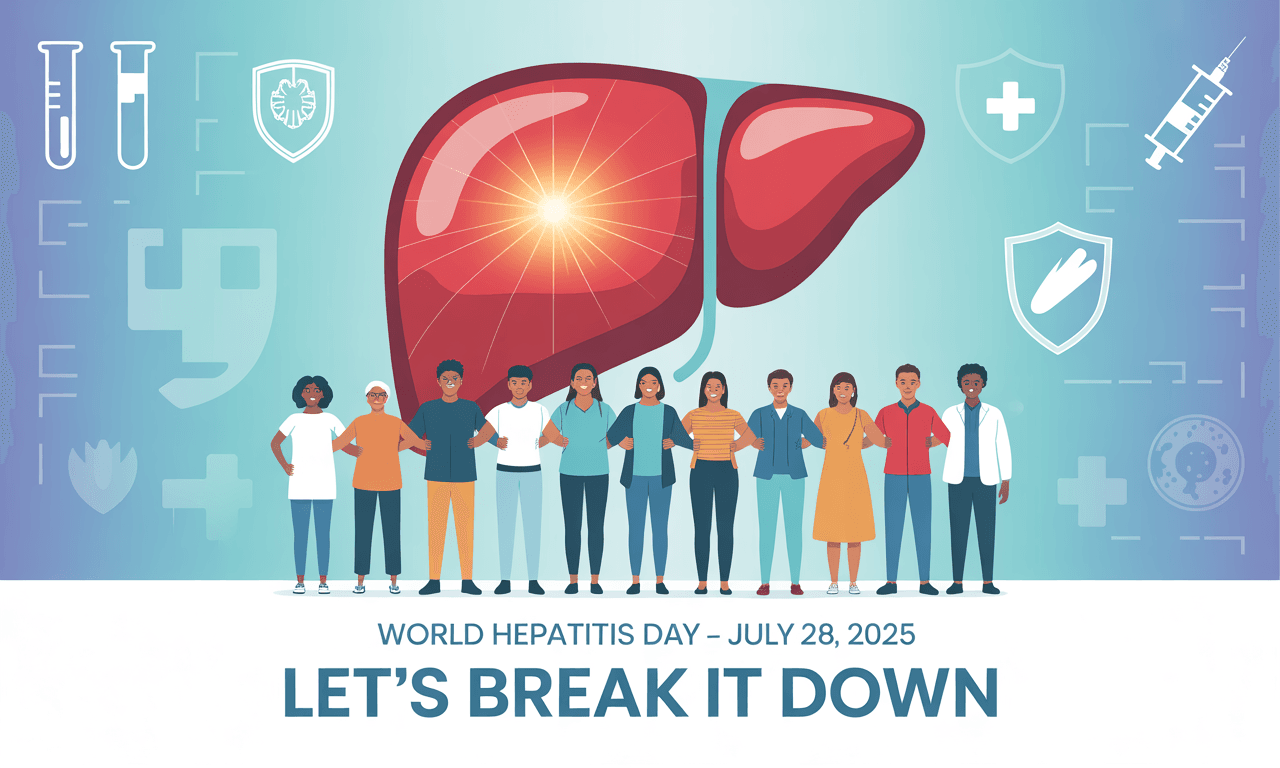
Theme for World Hepatitis Day 2025: “Hepatitis: Let’s Break It Down”
This year’s theme focuses on removing barriers to testing and treatment by simplifying services and breaking down stigma. It calls on governments, health systems, and individuals to integrate hepatitis care into primary healthcare and reach underserved communities.
What is Hepatitis?
Hepatitis refers to inflammation of the liver, usually caused by a viral infection. There are five main types: A, B, C, D, and E. Among these, hepatitis B and C are the most dangerous and can lead to chronic illness and liver damage.
Types of Viral Hepatitis
- Hepatitis A: Usually spread through contaminated food or water. Preventable with vaccination.
- Hepatitis B: Spread through blood, sexual contact, and mother-to-child. Preventable with a vaccine.
- Hepatitis C: Spread mainly through blood-to-blood contact. No vaccine, but curable with medication.
- Hepatitis D and E: Less common but dangerous, especially in pregnant women (E type).
| Type | Transmission | Incubation Period | Chronicity | Prevention | Treatment |
|---|---|---|---|---|---|
| A | Fecal-oral (contaminated food/water) | 15–50 days | No | Vaccine | Supportive care |
| B | Blood, sexual, mother-to-child | 45–160 days | Yes (in some) | Vaccine | Antiviral drugs |
| C | Blood-to-blood | 14–180 days | Yes (most) | No vaccine | Direct-acting antivirals |
| D | Co-infection with B | 2–8 weeks | Yes | Hepatitis B vaccine | Pegylated interferon |
| E | Fecal-oral (contaminated water) | 2–10 weeks | No | Safe water, hygiene | Supportive care |
Transmission Vectors and Incubation
Understanding how hepatitis spreads is crucial for prevention. Hepatitis A and E are primarily transmitted via the fecal-oral route, often through contaminated food or water. Hepatitis B, C, and D are bloodborne and can be transmitted through unsafe injections, blood transfusions, sexual contact, or from mother to child during childbirth.
Incubation periods vary by type, as shown in the table above. Early detection through molecular diagnostics is essential to prevent progression to chronic liver disease.
Prevention Strategies
Prevention is key to reducing the global burden of hepatitis. Here are practical steps you can take:
Get Vaccinated
Vaccines for hepatitis A and B are highly effective. Ensure that infants receive the hepatitis B vaccine within 24 hours of birth.
Practice Safe Hygiene
Wash hands frequently, avoid sharing personal items like razors or toothbrushes, and ensure food is cooked properly.
Get Tested and Know Your Status
Many people with hepatitis don’t have symptoms until serious liver damage occurs. Early testing helps prevent complications and transmission. Take control of your health today by getting tested for different types of hepatitis:
| Test | Sample | TAT | Cost |
|---|---|---|---|
| Hepatitis A virus (HAV) RNA Detection | Blood | 24–48 hrs | [Insert Current 2026 Price] |
| Hepatitis B virus (HBV) Quantitative PCR | Blood | 24–48 hrs | [Insert Current 2026 Price] |
| Hepatitis C virus (HCV) RNA Detection | Blood | 24–48 hrs | [Insert Current 2026 Price] |
| Hepatitis D virus (HDV) Detection PCR | Blood | 24–48 hrs | [Insert Current 2026 Price] |
| Hepatitis E virus (HEV) RNA Detection | Blood | 24–48 hrs | [Insert Current 2026 Price] |
Scheduling these tests early can save lives and protect your liver health.
Avoid Unsafe Injections and Blood Transfusions
Use only sterile equipment in medical or cosmetic settings. Blood transfusions should always be screened for hepatitis viruses.
Global Impact and the 2030 Elimination Goal
The World Health Organization has set a bold target to eliminate hepatitis as a public health threat by 2030. Achieving this requires a coordinated global effort including:
- Widespread hepatitis testing and awareness campaigns
- Affordable access to antiviral treatment
- Integration of hepatitis services into primary care
- Stigma reduction and community engagement
How You Can Make a Difference
Raising awareness is everyone’s responsibility. Whether you're a healthcare worker, policymaker, or concerned individual, you can take steps to support hepatitis elimination:
- Share educational content about World Hepatitis Day on social media
- Encourage friends and family to get tested
- Advocate for better access to vaccines and treatment
- Support local health initiatives and screenings
Conclusion: Join the Fight Against Hepatitis
World Hepatitis Day 2025 is more than just a date on the calendar—it's a global call to action. By spreading awareness, supporting preventive healthcare, and encouraging early testing, we can protect liver health and save millions of lives. Together, we can break down barriers and bring the world closer to eliminating hepatitis once and for all.
Take the first step today—get tested, stay informed, and be part of the change.