


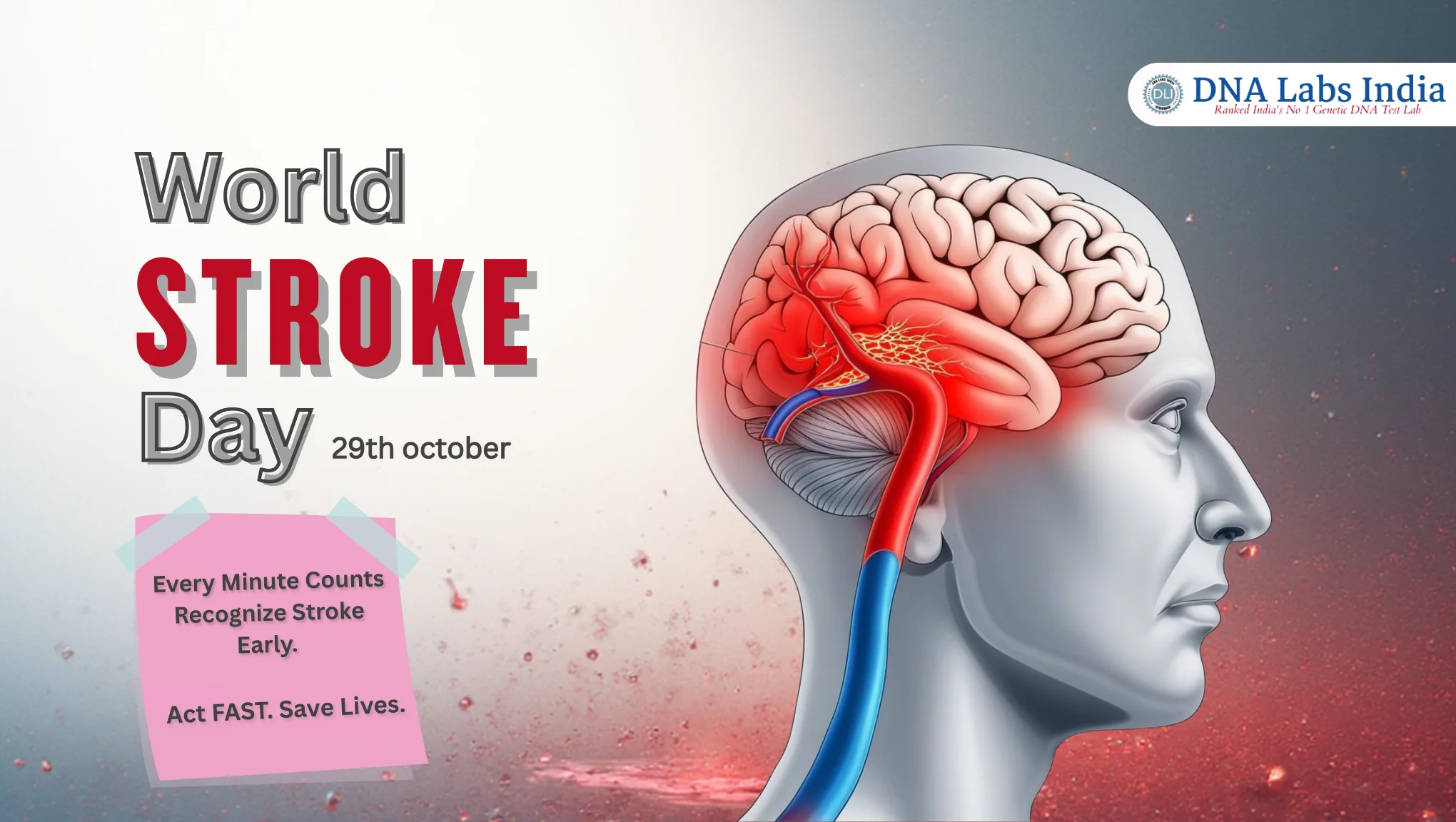
World Stroke Day 2025: Every Minute Counts – Recognize Stroke Early, Act Fast, Save Lives
Stroke Risk Genetic Screening – Key Facts
- Sample Required: Blood or Saliva
- Fasting Rules: Not required
- Turnaround Time (TAT): 7–10 business days
- Base Cost: [Insert Current 2026 Price]
Pathophysiology of Stroke
A stroke occurs when the blood supply to part of the brain is interrupted or reduced, depriving brain cells of oxygen and nutrients. Within minutes, neurons begin to die, leading to potential long-term disability or death. The 2025 World Stroke Day theme, “Every Minute Counts,” underscores the critical importance of immediate medical intervention.
Stroke Subtypes and Epidemiology
| Type | Cause | Percentage | Key Features |
|---|---|---|---|
| Ischemic Stroke | Blocked artery (thrombus or embolus) | ~85% | Most common; often preceded by TIA |
| Hemorrhagic Stroke | Burst blood vessel (aneurysm or AVM) | ~15% | More fatal; sudden severe headache |
| Transient Ischemic Attack (TIA) | Temporary blockage; resolves spontaneously | Warning sign | Symptoms last <24 hours; high risk of future stroke |
Recognizing Stroke: The FAST Algorithm
The FAST test is a simple, validated tool to identify stroke symptoms:
- F – Face: Ask the person to smile. Does one side droop?
- A – Arm: Ask them to raise both arms. Does one arm drift downward?
- S – Speech: Ask them to repeat a simple phrase. Is speech slurred or strange?
- T – Time: If any symptom is present, call emergency services immediately.
Every minute of delay destroys approximately 1.9 million neurons, emphasizing the need for rapid action.
Common Stroke Symptoms
- Sudden numbness or weakness on one side of the body
- Vision problems in one or both eyes
- Sudden dizziness, loss of balance, or difficulty walking
- Severe, unexplained headache
- Confusion or trouble understanding speech
Prevention: Modifiable Risk Factors
Up to 90% of strokes are preventable through lifestyle modifications and regular health monitoring. Key strategies include:
- Controlling blood pressure and blood sugar
- Maintaining a healthy weight
- Exercising regularly
- Eating a low-salt, high-fiber diet
- Avoiding smoking and limiting alcohol
- Managing stress effectively
- Undergoing preventive genetic and health screenings at certified labs like DNA Labs India
Genetic Predisposition and Screening
Genetic factors influence hypertension, hyperlipidemia, and coagulation disorders—all of which elevate stroke risk. Advanced Next-Generation Sequencing (NGS) panels can identify hereditary variants associated with cardiovascular and cerebrovascular diseases. By integrating genetic screening into preventive care, individuals can:
- Identify hereditary risk factors
- Initiate early preventive measures
- Personalize lifestyle and treatment plans
Explore DNA Health & Genetic Tests by DNA Labs India to learn more.
World Stroke Day 2025: “Every Minute Counts”
The 2025 campaign emphasizes urgent recognition and immediate action during a stroke. Public awareness, rapid emergency response, and accessible medical care are the pillars of reducing stroke-related mortality and disability.
Remember: In stroke care—time is brain, and Every Minute Counts.
DNA Labs India: Promoting Preventive Health Awareness
At DNA Labs India, we are committed to early detection and prevention. As an ISO 9001 certified lab, we offer advanced preventive genetic testing, cardiac panels, and neurological risk assessments to help you take proactive control of your health.
Book a test today to understand your risk and stay one step ahead of preventable diseases.
Frequently Asked Questions
1. What is the theme for World Stroke Day 2025?
The official theme is “Every Minute Counts.” It stresses the importance of timely action during a stroke to save lives and improve recovery.
2. Can strokes be prevented?
Yes, up to 90% of strokes can be prevented with healthy lifestyle choices, regular checkups, and management of risk factors like hypertension and diabetes.
3. What should I do if someone is having a stroke?
Use the FAST test—Face, Arm, Speech, Time—and call emergency services immediately.
4. Does genetics play a role in stroke risk?
Yes. Genetic predispositions can affect blood pressure, cholesterol, and clotting—all linked to stroke risk. Genetic testing helps you identify and manage these risks early.
Written by: DNA Labs India Editorial Team
Medically Reviewed by: Dr. [Name], Medical Geneticist
Last Updated: October 29, 2025