
ACY1 Gene Aminoacylase deficiency NGS Genetic Test
Short Name: ACY1 NGS Test
Also known as: Aminoacylase 1 Deficiency Genetic Test, ACY1 Deficiency DNA Test, Aminoacylase Deficiency NGS Panel, ACY1 Gene Mutation Analysis
ACY1 Gene Aminoacylase deficiency NGS Genetic Test test available at DNA Labs India for ₹20,000. Uses Next-Generation Sequencing (NGS), Sanger Confirmation of Variants, Bioinformatics Analysis on Blood / Saliva samples. Results in Results are typically available within 3 to 4 weeks from the date of sample receipt at the laboratory.. Free home collection in 300+ cities across India.

🩺 Medically Reviewed By
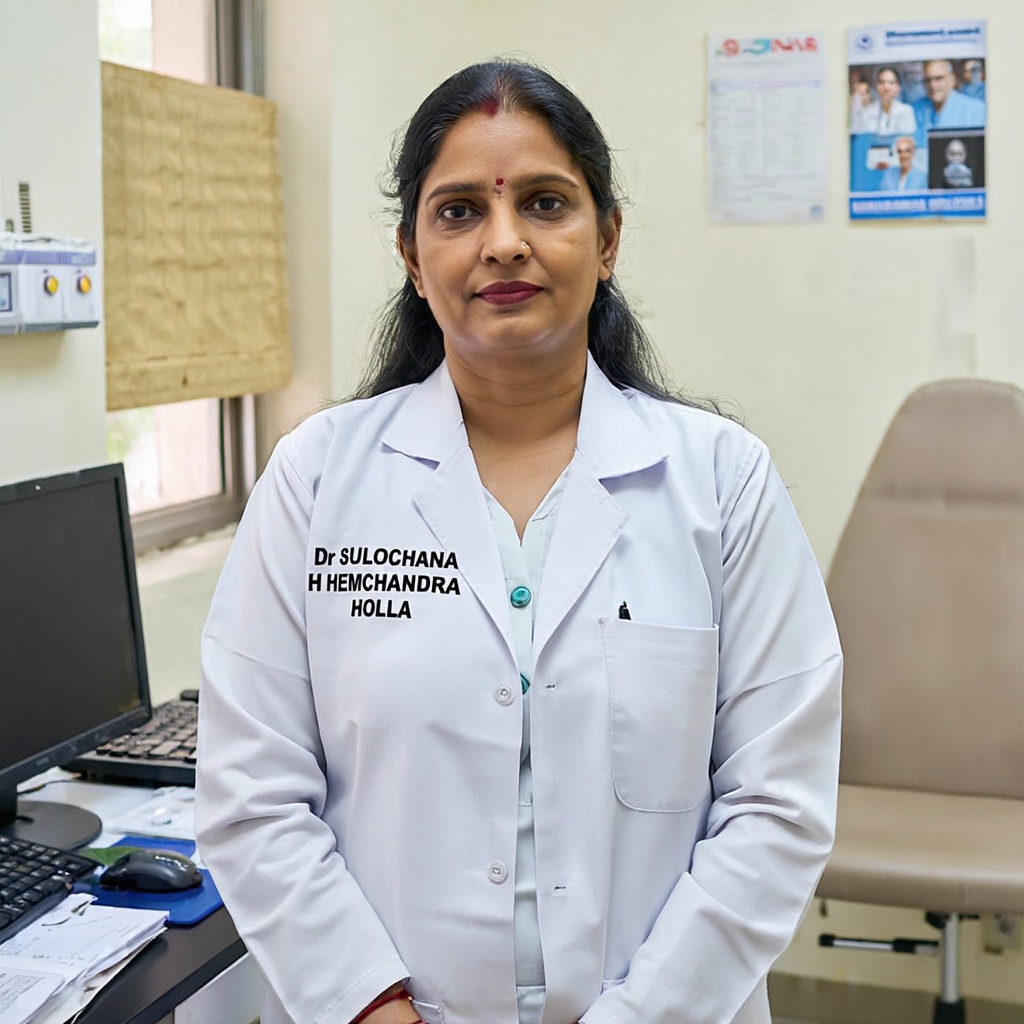
Dr SULOCHANA HEMCHANDRA HOLLA
Consultant Medical Geneticist · Reg: 8532
Last reviewed: September 7, 2026
Overview
The purpose of this test is to identify pathogenic mutations in the ACY1 gene using next-generation sequencing technology. It is used to confirm a clinical diagnosis of aminoacylase 1 deficiency, guide treatment and management decisions, facilitate carrier testing in family members, and support genetic counseling for recurrence risk assessment and reproductive planning.
- Test Code
- 1891
- CPT Code
- 81405
- ICD Code
- E72.8
- Price
- ₹20,000
- Sample Type
- Blood / Saliva
- Result Time
- Results are typically available within 3 to 4 weeks from the date of sample receipt at the laboratory.
- Fasting Required
- No
- Method
- Next-Generation Sequencing (NGS), Sanger Confirmation of Variants, Bioinformatics Analysis
Sample Collection
A pre-test genetic counseling session is strongly recommended to document the clinical history of the patient and to draw a detailed pedigree chart of family members affected with aminoacylase deficiency or related metabolic conditions. No fasting is required. Ensure informed consent is obtained prior to sample collection.
Method: Venipuncture or Saliva collection
Laboratory Analysis
Blood sample: 3–5 mL of venous blood will be drawn into an EDTA (lavender-top) tube using standard venipuncture technique. Saliva sample: The patient will be asked to provide approximately 2 mL of saliva into a specialized Oragene DNA collection kit following the kit instructions. Ensure proper labeling and barcode scanning of the sample.
Report Delivery
The sample will be transported to the laboratory under ambient room temperature conditions. Results will be available within 3 to 4 weeks. A post-test genetic counseling session will be arranged to discuss the findings, their clinical significance, and any recommended follow-up actions.
Timeline: Results are typically available within 3 to 4 weeks from the date of sample receipt at the laboratory.
Patient Instructions
About This Test
Who Should Get This Test
The purpose of this test is to identify pathogenic mutations in the ACY1 gene using next-generation sequencing technology. It is used to confirm a clinical diagnosis of aminoacylase 1 deficiency, guide treatment and management decisions, facilitate carrier testing in family members, and support genetic counseling for recurrence risk assessment and reproductive planning.
How to Prepare
- No fasting is required prior to blood or saliva collection
- A genetic counseling session must be completed before sample collection
- For blood collection, ensure the EDTA tube is gently inverted 8–10 times after venipuncture
- For saliva collection, refrain from eating, drinking, smoking, or chewing gum for 30 minutes prior
- Label the sample accurately with patient name, date of birth, and unique barcode
- Maintain sample at ambient room temperature during transport to the laboratory
Doctor's Notes
Reviewed by Dr SULOCHANA HEMCHANDRA HOLLA — MBBS, MD (Medical Genetics) · Reg. No. 8532
"ACY1 gene aminoacylase deficiency, though rare, can have significant neurological consequences if undiagnosed. I recommend this NGS test for any individual presenting with unexplained developmental delay, seizures, or intellectual disability, especially where a family history of metabolic disease exists. Early molecular diagnosis allows for better clinical management and empowers families with informed reproductive choices. Pre-test genetic counseling is essential to interpret results in the context of the family pedigree."
Last medically reviewed: September 7, 2026
Test Parameters & Specifications
Sample Stability
- Sample received without proper patient identification or informed consent
- Heavily hemolyzed, clotted, or insufficient blood volume
- Saliva sample contaminated with food debris or exceeding collection kit capacity
- Sample received in a leaking or damaged container
- Sample collected more than 7 days ago without appropriate stabilization
Understanding Your Results
Homozygous or Compound Heterozygous Pathogenic Variants
Confirms the diagnosis of ACY1 aminoacylase deficiency. The individual is affected. Genetic counseling and clinical management by a metabolic specialist are recommended.
Clinical action: Refer to a metabolic specialist for management. Evaluate family members for carrier status. Discuss recurrence risk for future pregnancies.
Single Heterozygous Pathogenic Variant (Carrier)
The individual is a carrier of ACY1 aminoacylase deficiency. Carriers are typically asymptomatic but have a 50% chance of passing the variant to offspring.
Clinical action: Genetic counseling for the family is recommended. Offer carrier testing to the reproductive partner if family planning is relevant.
Variant of Uncertain Significance (VUS)
A genetic variant was identified whose clinical significance is currently unknown. This result alone cannot confirm or exclude a diagnosis.
Clinical action: Correlate with clinical and biochemical findings. Consider family segregation studies. Re-evaluate periodically as variant databases are updated.
No Pathogenic Variant Detected
No pathogenic or likely pathogenic variants were identified in the ACY1 gene. This significantly reduces the likelihood of ACY1 aminoacylase deficiency but does not completely exclude it.
Clinical action: Consider alternative metabolic diagnoses. If clinical suspicion remains high, additional testing such as whole exome sequencing or metabolic biochemical assays may be indicated.
Consult a healthcare provider or clinical geneticist if you or your child experience unexplained developmental delay, intellectual disability, recurrent seizures, movement or coordination difficulties, speech and language problems, or behavioral concerns—particularly if there is a family history of metabolic disorders or consanguinity. Early consultation allows for timely diagnostic evaluation and management planning.
Limitations
- ⚠This test does not detect large genomic deletions or duplications; a separate CNV analysis may be required
- ⚠Deep intronic or regulatory region variants outside the targeted NGS panel may not be identified
- ⚠Variants of uncertain significance (VUS) may be reported and do not confirm or exclude disease
- ⚠Results must be interpreted in conjunction with clinical findings and biochemical test results
- ⚠This test does not assess mitochondrial DNA variants
Risks & Considerations
- ●Minor bruising or discomfort at the blood collection site
- ●Potential identification of variants of uncertain significance that may cause anxiety
- ●Psychological impact of a positive diagnosis requiring appropriate counseling support
Interfering Factors
- ●Recent blood transfusion (within 120 days) may affect DNA analysis results
- ●Contaminated or degraded DNA sample due to improper storage or handling
- ●Presence of a known pseudogene or homologous region may require confirmatory Sanger sequencing
- ●Low-quality or insufficient DNA yield from saliva collection in neonates
Compare With Similar Tests
| Test | ACY1 Gene Aminoacylase deficiency NGS Genetic Test | Whole Exome Sequencing (WES) | Organic Acid Profile – Urine | Amino Acid Profile – Plasma |
|---|---|---|---|---|
| Comparison | ACY1 Gene Aminoacylase deficiency NGS Genetic Test |
Frequently Asked Questions
What is ACY1 Gene Aminoacylase Deficiency?
How is ACY1 Gene Aminoacylase Deficiency inherited?
What are the common symptoms of ACY1 aminoacylase deficiency?
What sample is required for the ACY1 Gene NGS Genetic Test?
How long does it take to get the results of the ACY1 NGS Genetic Test?
What is the cost of the ACY1 Gene Aminoacylase Deficiency NGS Genetic Test in India?
Is fasting required before the ACY1 Gene NGS Genetic Test?
Can this test be performed on newborns or children?
What does a negative result mean?
What is a Variant of Uncertain Significance (VUS)?
Is home sample collection available for this test?
Do I need genetic counseling before taking this test?
Related Tests
Reference Laboratory Services
We serve as a reference laboratory for hospitals and clinics across India. Send samples from your facility with same-day pickup, priority processing, and results delivered through our online portal. Competitive institutional pricing available.
Your Data Privacy
Your medical data is protected under Indian law.
✓ Stored in India: All patient records are stored on servers located in India. No data is transferred outside the country.
✓ DPDP Act Compliant: Under the Digital Personal Data Protection Act 2023, you can request deletion of your records at any time by contacting support.
Book Your Test
Enter your details and we'll connect you within 15 minutes.