
AIPL1 Gene Cone-Rod Dystrophy NGS Genetic Test
Short Name: AIPL1 Cone-Rod Dystrophy NGS
Also known as: Cone-Rod Dystrophy AIPL1 Gene Test, AIPL1 Mutation Analysis, Retinal Dystrophy NGS Panel
AIPL1 Gene Cone-Rod Dystrophy NGS Genetic Test test available at DNA Labs India for ₹20,000. Uses Next-Generation Sequencing, Sanger Sequencing (Confirmation) on Blood samples. Results in The AIPL1 Gene Cone-Rod Dystrophy NGS Genetic Test report is available within 3 to 4 weeks after the sample reaches the laboratory. The report will be shared online and by email/WhatsApp as per your preference.. Free home collection in 300+ cities across India.

🩺 Medically Reviewed By
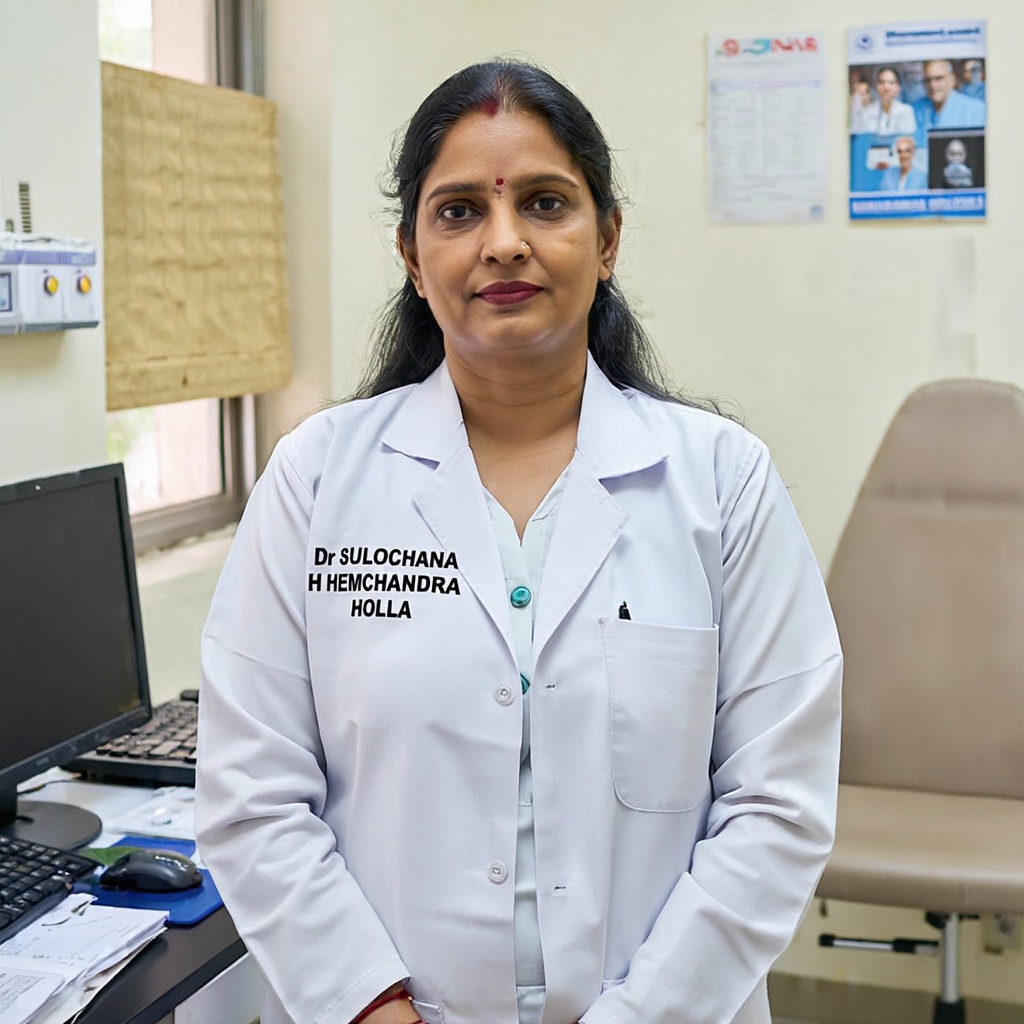
Dr SULOCHANA HEMCHANDRA HOLLA
Consultant Medical Geneticist · Reg: 8532
Last reviewed: September 7, 2026
Overview
The primary purpose of the AIPL1 Gene Cone-Rod Dystrophy NGS Genetic Test is to identify pathogenic variants in the AIPL1 gene that are responsible for cone-rod dystrophy. This test is indicated to confirm a clinical diagnosis, differentiate from other types of retinal dystrophy, assess the risk of disease in at-risk family members, and provide essential information for genetic counselling and potential participation in clinical trials.
- Test Code
- 3806
- ICD Code
- H35.52
- Price
- ₹20,000
- Sample Type
- Blood
- Result Time
- The AIPL1 Gene Cone-Rod Dystrophy NGS Genetic Test report is available within 3 to 4 weeks after the sample reaches the laboratory. The report will be shared online and by email/WhatsApp as per your preference.
- Fasting Required
- No
- Method
- Next-Generation Sequencing, Sanger Sequencing (Confirmation)
Sample Collection
No special preparation is required. Kindly provide a detailed clinical history and prior genetic counselling. It is recommended to carry the ophthalmologist's clinical notes and any prior retinal optical coherence tomography (OCT) or electroretinography (ERG) reports.
Method: Venipuncture
Laboratory Analysis
A peripheral blood sample is collected from a vein in the arm. The procedure is quick and routine, lasting just a few minutes.
Report Delivery
No specific post-collection precautions are necessary. You can resume normal activities immediately.
Timeline: The AIPL1 Gene Cone-Rod Dystrophy NGS Genetic Test report is available within 3 to 4 weeks after the sample reaches the laboratory. The report will be shared online and by email/WhatsApp as per your preference.
Patient Instructions
About This Test
Who Should Get This Test
The primary purpose of the AIPL1 Gene Cone-Rod Dystrophy NGS Genetic Test is to identify pathogenic variants in the AIPL1 gene that are responsible for cone-rod dystrophy. This test is indicated to confirm a clinical diagnosis, differentiate from other types of retinal dystrophy, assess the risk of disease in at-risk family members, and provide essential information for genetic counselling and potential participation in clinical trials.
How to Prepare
- Inform the phlebotomist if you have any bleeding disorder or are on blood thinners
- Do not fast for this test
- Carry a valid government ID and the filled test requisition form
- Report recent blood transfusions or transplantation
- Ensure the sample is collected in an EDTA tube
Doctor's Notes
Reviewed by Dr SULOCHANA HEMCHANDRA HOLLA — MBBS, MD (Medical Genetics) · Reg. No. 8532
"Genetic testing for cone-rod dystrophy not only confirms the diagnosis but also helps identify the disease progression risk and provides vital information for family screening."
Last medically reviewed: September 7, 2026
Test Parameters & Specifications
Sample Stability
- Hemolyzed or lipemic sample
- Clotted sample
- Sample received without proper labelling
- Sample received beyond acceptable stability timeframe
- Incorrect anticoagulant or tube
Understanding Your Results
Pathogenic variant detected
Confirms the diagnosis of AIPL1-associated cone-rod dystrophy. Genetic counselling and family testing are recommended.
Action: Ophthalmologic surveillance and consideration of clinical trials
Likely pathogenic variant detected
Highly likely to be causative. Further segregation analysis in family members may be useful.
Action: If clinical features match, treat as likely disease-causing
Variant of uncertain significance (VUS) detected
The variant has unclear clinical significance. Additional testing of family members may help interpret the variant.
Action: Correlate with phenotype and follow-up testing
No pathogenic variants detected
No disease-causing variants found in the analyzed genes. This does not exclude a genetic or non-genetic cause.
Action: Consider other gene panels or further ophthalmologic workup
If you or your child experience symptoms such as decreased visual acuity, difficulty seeing in bright light, loss of color vision, peripheral vision loss, or night blindness, please consult an ophthalmologist and a clinical geneticist for timely evaluation and genetic testing.
Limitations
- ⚠Large structural variants (e.g., deep intronic variants) may not be detected by standard NGS
- ⚠Only genes and variants included in the panel are analyzed
- ⚠Variants of uncertain significance (VUS) may be identified and require further interpretation
- ⚠A negative result does not completely exclude the possibility of a genetic cause
- ⚠Test is not intended for prenatal diagnosis or direct-to-consumer screening
Risks & Considerations
- ●Slight pain or discomfort at the needle insertion site
- ●Bruising or swelling at the collection site
- ●Very rare risk of infection or bleeding
- ●Emotional/psychological impact of receiving genetic test results
Interfering Factors
- ●Hemolyzed or clotted blood sample
- ●Recent blood transfusion within 4 weeks before the test
- ●Bone marrow transplantation can affect DNA analysis
- ●Rare technical or bioinformatic errors during NGS
- ●Incorrect sample labelling or handling
Compare With Similar Tests
| Test | AIPL1 Gene Cone-Rod Dystrophy NGS Genetic Test | ||||
|---|---|---|---|---|---|
| Comparison | AIPL1 Gene Cone-Rod Dystrophy NGS Genetic Test |
Frequently Asked Questions
What is AIPL1 gene cone-rod dystrophy?
Why is NGS genetic test recommended for this condition?
What is the cost of the AIPL1 Gene Cone-Rod Dystrophy NGS Genetic Test in India?
How is the sample collected for this test?
How long does it take to get the test report?
Does insurance cover this genetic test?
What is the role of genetic counselling in this test?
Can this test be performed on children?
What should I do if the test result is positive?
Are there any risks associated with this genetic test?
What is the accuracy of the AIPL1 NGS genetic test?
How do I book this test at DNA Labs India?
Related Tests
Leber's Hereditary Optic Neuropathy (LHON) Mitochondrial Mutation Detection Test
₹25,000Nx Gen Sequencing: Glaucoma Test
₹28,665Nx Gen Sequencing: Corneal Dystrophy Test
₹28,665Nx Gen Sequencing: Leber Congenital Amaurosis Test
₹28,665Nx Gen Sequencing: Optic Atrophy Test
₹28,665GPR143 Gene Albinism, Ocular Type I, Nettleship-Falls Type NGS Genetic Test
₹20,000Reference Laboratory Services
We serve as a reference laboratory for hospitals and clinics across India. Send samples from your facility with same-day pickup, priority processing, and results delivered through our online portal. Competitive institutional pricing available.
Your Data Privacy
Your medical data is protected under Indian law.
✓ Stored in India: All patient records are stored on servers located in India. No data is transferred outside the country.
✓ DPDP Act Compliant: Under the Digital Personal Data Protection Act 2023, you can request deletion of your records at any time by contacting support.
Book Your Test
Enter your details and we'll connect you within 15 minutes.