
ALG13 Gene Glycosylation disorder type 1S NGS Genetic Test
Short Name: ALG13-CDG Type 1S NGS Test
Also known as: ALG13-CDG Type 1S Genetic Test, Congenital Disorder of Glycosylation Type 1S NGS Test, ALG13 Gene Mutation Analysis, ALG13 Related Glycosylation Defect Genetic Test, CDG-1S NGS Genetic Test
ALG13 Gene Glycosylation disorder type 1S NGS Genetic Test test available at DNA Labs India for ₹20,000. Uses Next-Generation Sequencing (NGS), Sanger Sequencing (confirmation), Bioinformatics Variant Analysis on Blood or Extracted DNA or One drop Blood on FTA Card samples. Results in Results are typically available within 3 to 4 weeks from the date of sample receipt at the laboratory. Urgent cases may be accommodated upon prior arrangement with the laboratory. Results are delivered via the DNA Labs India online portal, email, and WhatsApp.. Free home collection in 300+ cities across India.

🩺 Medically Reviewed By
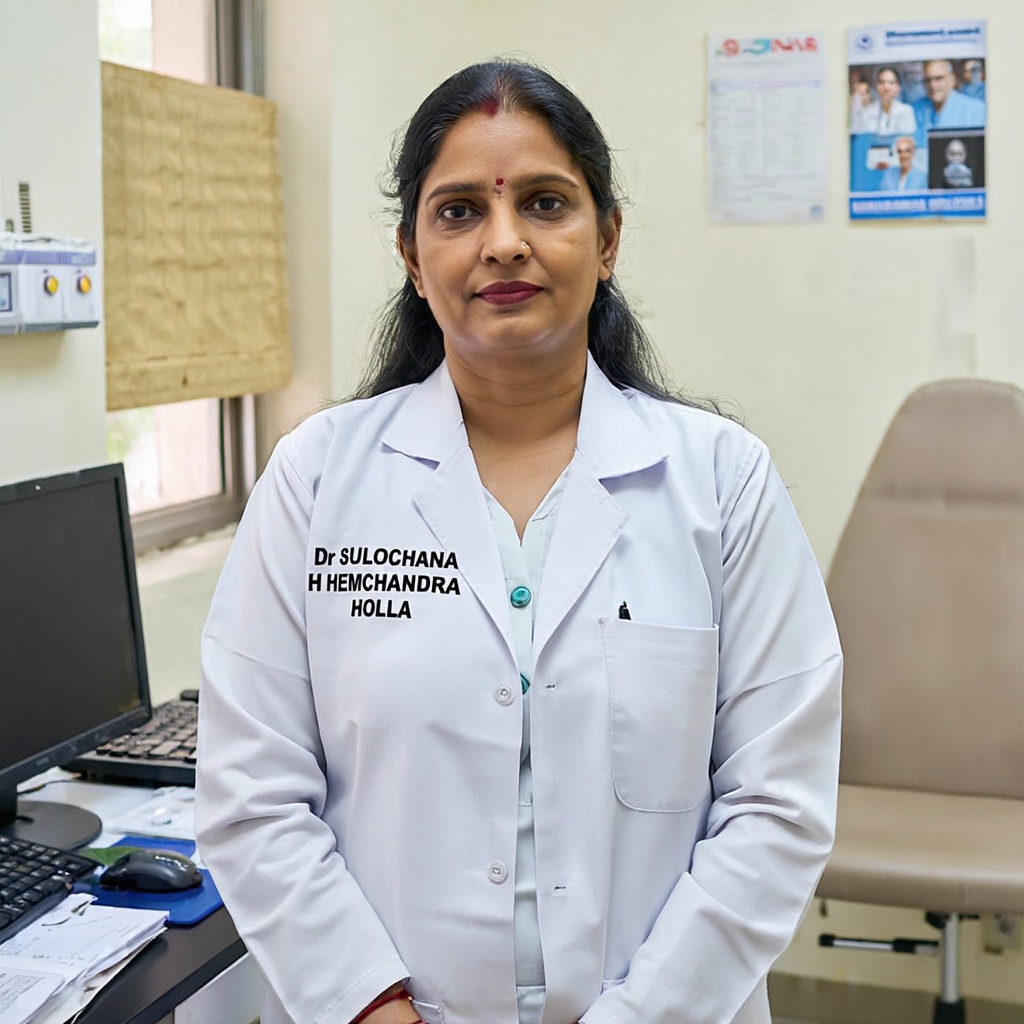
Dr SULOCHANA HEMCHANDRA HOLLA
Consultant Medical Geneticist · Reg: 8532
Last reviewed: September 7, 2026
Overview
The purpose of the ALG13 gene glycosylation disorder type 1S NGS genetic test is to detect pathogenic or likely pathogenic variants in the ALG13 gene that cause congenital disorder of glycosylation type 1S. This test is used to confirm a clinical diagnosis in symptomatic individuals, identify carriers within families, support prenatal and preconception genetic counselling, guide clinical management and therapeutic decisions, and enable recurrence risk assessment for family planning purposes.
- Test Code
- 2052
- CPT Code
- 81479
- ICD Code
- E77.8
- Price
- ₹20,000
- Sample Type
- Blood or Extracted DNA or One drop Blood on FTA Card
- Result Time
- Results are typically available within 3 to 4 weeks from the date of sample receipt at the laboratory. Urgent cases may be accommodated upon prior arrangement with the laboratory. Results are delivered via the DNA Labs India online portal, email, and WhatsApp.
- Fasting Required
- No
- Method
- Next-Generation Sequencing (NGS), Sanger Sequencing (confirmation), Bioinformatics Variant Analysis
Sample Collection
A genetic counselling session is recommended prior to sample collection. The clinical history of the patient, including developmental milestones, seizure history, family history of metabolic or genetic disorders, and any prior genetic test results, should be documented. A pedigree chart of family members affected with glycosylation disorder type 1S or related conditions should be drawn during counselling. No fasting is required for this test.
Method: Venipuncture
Laboratory Analysis
A peripheral blood sample of 3–5 mL is collected by venipuncture into a lavender-top (EDTA) vacutainer tube. Alternatively, one drop of blood on an FTA card or previously extracted DNA may be used. The sample should be gently mixed with the anticoagulant immediately after collection and labelled correctly with the patient's name, date of birth, and unique identifier.
Report Delivery
The blood sample should be stored at ambient room temperature (15–25°C) and transported to the laboratory within 48 hours of collection. Do not freeze whole blood samples. If using an FTA card, allow the blood spot to air-dry completely before placing it in the provided envelope. Results will be available within 3 to 4 weeks and delivered via the online portal, email, or WhatsApp.
Timeline: Results are typically available within 3 to 4 weeks from the date of sample receipt at the laboratory. Urgent cases may be accommodated upon prior arrangement with the laboratory. Results are delivered via the DNA Labs India online portal, email, and WhatsApp.
Patient Instructions
About This Test
Who Should Get This Test
The purpose of the ALG13 gene glycosylation disorder type 1S NGS genetic test is to detect pathogenic or likely pathogenic variants in the ALG13 gene that cause congenital disorder of glycosylation type 1S. This test is used to confirm a clinical diagnosis in symptomatic individuals, identify carriers within families, support prenatal and preconception genetic counselling, guide clinical management and therapeutic decisions, and enable recurrence risk assessment for family planning purposes.
How to Prepare
- Collect 3–5 mL peripheral blood in a lavender-top (EDTA) vacutainer tube
- Gently invert the tube 8–10 times immediately after collection to mix with anticoagulant
- Alternatively, use one drop of blood on the provided FTA card and allow to air-dry completely
- Previously extracted DNA (minimum 1 µg, concentration ≥50 ng/µL) is also acceptable
- Label the sample clearly with patient's full name, date of birth, and sample collection date
- Store and transport the sample at ambient room temperature (15–25°C); do not freeze whole blood
- Transport the sample to the laboratory within 48 hours of collection
Doctor's Notes
Reviewed by Dr SULOCHANA HEMCHANDRA HOLLA — MBBS, MD (Medical Genetics) · Reg. No. 8532
"ALG13-CDG Type 1S is an X-linked dominant condition that predominantly affects females. Families with a known history of glycosylation disorders or unexplained developmental delay and seizures in children should consider genetic testing. Pre-conception and prenatal counselling are strongly recommended for carriers. Early molecular diagnosis allows timely initiation of supportive therapies and informed family planning decisions."
Last medically reviewed: September 7, 2026
Test Parameters & Specifications
Sample Stability
- Severely hemolyzed, clotted, or visibly contaminated blood samples
- Samples received in non-EDTA anticoagulant tubes without prior approval
- Insufficient sample volume (less than 2 mL blood)
- Samples without proper patient identification or labelling
- Samples received more than 7 days after collection at ambient temperature
- Whole blood samples that have been frozen
Understanding Your Results
Confirms a molecular diagnosis of ALG13-CDG Type 1S. Correlates with the clinical phenotype. Genetic counselling for family members and carrier testing is recommended.
Strong evidence supports a diagnosis of ALG13-CDG Type 1S. Clinical correlation is advised. Family segregation studies may help confirm pathogenicity.
Insufficient evidence to classify the variant as pathogenic or benign. Clinical correlation, family studies, and functional assays may be needed. Repeat analysis may be considered as new data become available.
The identified variant is unlikely to be causative of ALG13-CDG Type 1S. Clinical reassessment and consideration of other genetic or metabolic causes is recommended.
No disease-causing variants were identified in the ALG13 gene. This result does not completely exclude ALG13-CDG if clinical suspicion remains high. Consider additional testing such as whole exome sequencing, a broader CDG gene panel, or functional glycosylation studies (e.g., serum transferrin isoelectric focusing).
Consult a clinical geneticist or your treating physician if your child presents with unexplained developmental delay, seizures that are difficult to control, microcephaly, low muscle tone, feeding difficulties, or abnormal facial features. Families with a known history of glycosylation disorders should seek genetic counselling before or during pregnancy. If a variant of uncertain significance (VUS) is identified, consult your geneticist for further evaluation and possible family segregation studies.
Limitations
- ⚠This test targets the coding exons and flanking intronic regions of the ALG13 gene; deep intronic, regulatory, or promoter region variants may not be detected
- ⚠Large copy number variations (deletions/duplications) and structural rearrangements may require additional testing such as chromosomal microarray or MLPA
- ⚠Variants of uncertain significance (VUS) may be identified and may require further clinical correlation, family studies, or functional assays for reclassification
- ⚠This test does not rule out glycosylation disorders caused by mutations in other genes in the glycosylation pathway
- ⚠Negative results do not completely exclude ALG13-CDG if clinical suspicion remains high; additional testing or functional glycosylation studies may be warranted
Risks & Considerations
- ●Minor bruising or discomfort at the venipuncture site, which typically resolves within 1–2 days
- ●Very small risk of infection at the blood draw site
- ●Lightheadedness or dizziness during or after blood collection (rare)
- ●Possible identification of variants of uncertain significance (VUS) which may cause anxiety and require further investigation
- ●Incidental findings related to carrier status for X-linked conditions may have implications for reproductive planning
Interfering Factors
- ●Hemolyzed, clotted, or degraded blood samples may compromise DNA extraction quality and yield
- ●Prior blood transfusion within the last 30 days may result in mixed DNA profiles and inaccurate variant detection
- ●Low DNA yield from insufficient sample volume may affect sequencing coverage and depth
- ●Mosaicism at low allele frequency may not be reliably detected by standard NGS pipelines
Compare With Similar Tests
| Test | ALG13 Gene Glycosylation disorder type 1S NGS Genetic Test | ||||||
|---|---|---|---|---|---|---|---|
| Comparison | ALG13 Gene Glycosylation disorder type 1S NGS Genetic Test |
Frequently Asked Questions
What is ALG13 Gene Glycosylation Disorder Type 1S?
What are the main symptoms of ALG13-CDG Type 1S?
How is ALG13-CDG Type 1S diagnosed?
What sample is required for the ALG13 gene NGS test?
What is the cost of the ALG13 gene NGS genetic test in India?
How long does it take to receive the test results?
Is there a cure for ALG13-CDG Type 1S?
Is ALG13-CDG Type 1S inherited?
Who should consider getting this genetic test?
Is genetic counselling required before taking this test?
Can this test be used for prenatal diagnosis?
Is free home sample collection available for this test?
Related Tests
Reference Laboratory Services
We serve as a reference laboratory for hospitals and clinics across India. Send samples from your facility with same-day pickup, priority processing, and results delivered through our online portal. Competitive institutional pricing available.
Your Data Privacy
Your medical data is protected under Indian law.
✓ Stored in India: All patient records are stored on servers located in India. No data is transferred outside the country.
✓ DPDP Act Compliant: Under the Digital Personal Data Protection Act 2023, you can request deletion of your records at any time by contacting support.
Book Your Test
Enter your details and we'll connect you within 15 minutes.