
DRPLA (Dentatorubral-Pallidoluysian Atrophy) Gene Analysis Test
Short Name: DRPLA Gene Analysis Test
Also known as: Dentatorubral-Pallidoluysian Atrophy
DRPLA (Dentatorubral-Pallidoluysian Atrophy) Gene Analysis Test test available at DNA Labs India for ₹7,500. Uses PCR Fragment Analysis on Whole blood samples. Results in Reports are typically delivered within 4-5 business days after sample receipt, with options for online portal, email, or WhatsApp delivery.. Free home collection in 300+ cities across India.

🩺 Medically Reviewed By
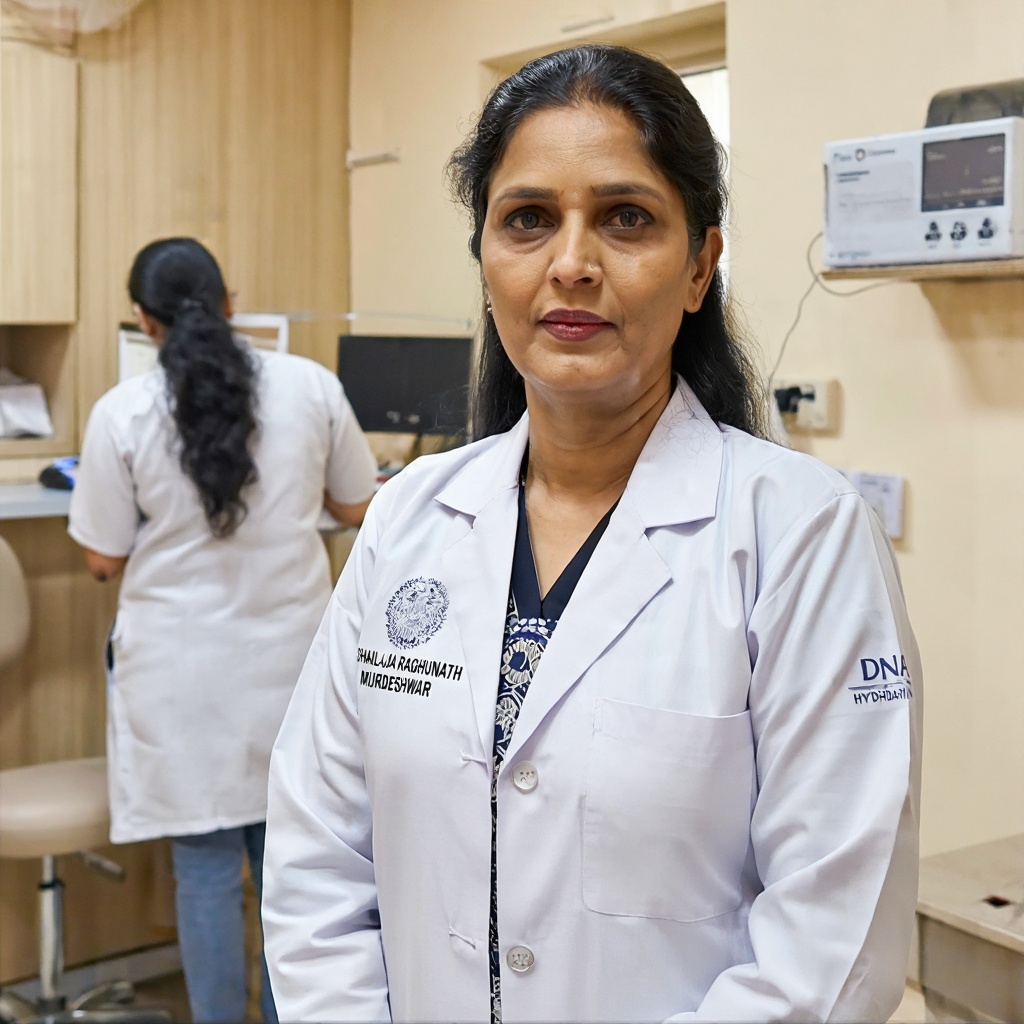
Dr SHAILAJA RAGHUNATH MURDESHWAR
Consultant Physician · Reg: 8052
Last reviewed: September 7, 2026
Overview
The purpose of the DRPLA Gene Analysis Test is to detect CAG repeat expansions in the ATN1 gene, which are responsible for causing Dentatorubral-Pallidoluysian Atrophy. This test helps confirm clinical diagnosis, differentiate DRPLA from other neurological disorders, guide management strategies, facilitate genetic counseling for at-risk family members, and support research into this condition. It is recommended for individuals with symptoms such as uncontrolled movements, tremors, balance issues, speech difficulties, or mental health problems, especially if there is a family history of similar disorders.
- Test Code
- 507
- Price
- ₹7,500
- Sample Type
- Whole blood
- Result Time
- Reports are typically delivered within 4-5 business days after sample receipt, with options for online portal, email, or WhatsApp delivery.
- Fasting Required
- No
- Method
- PCR Fragment Analysis
Sample Collection
Ensure the Genomics Clinical Information Requisition Form (Form 20) is duly filled. No fasting is required. Inform the healthcare provider of any medications or medical conditions.
Method: Venipuncture
Laboratory Analysis
A small blood sample (4 mL, minimum 2 mL) will be drawn via venipuncture into a Lavender Top (EDTA) tube. The process is quick and minimally invasive.
Report Delivery
Apply pressure to the puncture site to stop bleeding. The sample will be shipped refrigerated (not frozen) to the laboratory for analysis.
Timeline: Reports are typically delivered within 4-5 business days after sample receipt, with options for online portal, email, or WhatsApp delivery.
Patient Instructions
About This Test
Who Should Get This Test
The purpose of the DRPLA Gene Analysis Test is to detect CAG repeat expansions in the ATN1 gene, which are responsible for causing Dentatorubral-Pallidoluysian Atrophy. This test helps confirm clinical diagnosis, differentiate DRPLA from other neurological disorders, guide management strategies, facilitate genetic counseling for at-risk family members, and support research into this condition. It is recommended for individuals with symptoms such as uncontrolled movements, tremors, balance issues, speech difficulties, or mental health problems, especially if there is a family history of similar disorders.
How to Prepare
- Duly filled Genomics Clinical Information Requisition Form (Form 20) is mandatory.
- Collect 4 mL (2 mL min.) whole blood in a Lavender Top (EDTA) tube.
- Ship the sample refrigerated; do not freeze.
- Label the sample correctly with patient details.
- Ensure home collection is booked online for free service in listed cities.
Doctor's Notes
Reviewed by Dr SHAILAJA RAGHUNATH MURDESHWAR — MBBS, MD (General Medicine) · Reg. No. 8052
"Early genetic testing for DRPLA is essential for accurate diagnosis, symptom management, and family planning counseling in individuals with neurological symptoms or a family history of the disorder."
Last medically reviewed: September 7, 2026
Test Parameters & Specifications
Sample Stability
- Sample received without Genomics Clinical Information Requisition Form (Form 20)
- Insufficient sample volume (<2 mL)
- Sample hemolyzed, clotted, or improperly collected
- Sample stored at room temperature for more than 6 hours
- Incorrect tube type or missing labels
Understanding Your Results
Positive for pathogenic expansion (≥49 repeats)
Confirms diagnosis of DRPLA. Genetic counseling and management planning are recommended.
Intermediate range (36-47 repeats)
May indicate reduced penetrance or risk of expansion in offspring. Further clinical assessment and family studies advised.
Normal (<36 repeats)
No pathogenic expansion detected in the ATN1 gene. Clinical symptoms may be due to other causes; consider differential diagnosis.
Inconclusive or technical failure
Repeat testing or alternative methods may be needed. Consult with laboratory for guidance.
Consult a doctor if you experience symptoms such as uncontrolled movements, tremors, difficulty walking or balancing, speech or swallowing problems, or mental health issues, especially if there is a family history of DRPLA or similar neurological disorders. Early consultation can facilitate timely genetic testing and management.
Limitations
- ⚠This test only detects CAG repeat expansions in the ATN1 gene; it may not identify other genetic causes of similar symptoms.
- ⚠Results require clinical correlation and genetic counseling for accurate interpretation.
- ⚠False negatives or positives are rare but possible due to technical limitations.
- ⚠Does not predict disease progression or severity with absolute certainty.
- ⚠Not suitable for prenatal diagnosis without additional confirmatory testing.
Risks & Considerations
- ●Minimal risks from blood draw, such as slight pain, bruising, or infection at the puncture site.
- ●Rare allergic reaction to antiseptic used during collection.
- ●Emotional impact of genetic results; genetic counseling is recommended.
Interfering Factors
- ●Contaminated or improperly collected blood sample
- ●Missing or incomplete Genomics Clinical Information Requisition Form (Form 20)
- ●Sample storage beyond stability limits (e.g., frozen or at room temperature for too long)
- ●Technical errors during PCR analysis
- ●Presence of other genetic variants that may affect interpretation
Compare With Similar Tests
| Test | DRPLA (Dentatorubral-Pallidoluysian Atrophy) Gene Analysis Test | Huntington's Disease Gene Test | Spinocerebellar Ataxia (SCA) Panel | Whole Exome Sequencing | MRI Brain |
|---|---|---|---|---|---|
| Comparison | DRPLA (Dentatorubral-Pallidoluysian Atrophy) Gene Analysis Test | Both involve CAG repeat expansions but in different genes (HTT vs. ATN1). Symptoms overlap, but DRPLA may have more variable onset. | Tests multiple genes for ataxias; DRPLA is a specific type that may be included in comprehensive panels. | Broad genetic test that can identify DRPLA among other conditions; more comprehensive but costlier and with longer turnaround. | Imaging test that can show brain changes in DRPLA but cannot confirm genetic diagnosis; complementary to gene analysis. |
Frequently Asked Questions
What is DRPLA?
What does the DRPLA Gene Analysis Test detect?
How much does the DRPLA test cost in India?
What sample is required for the test?
Is fasting needed before the test?
How long does it take to get results?
What are the symptoms of DRPLA?
Who should consider this test?
What does a positive result mean?
Is home sample collection available?
What is the turnaround time for the test?
Are there any risks associated with the test?
Related Tests
MERRF (Myoclonic Epilepsy Associated with Ragged Red Fibres) Mutation Detection Test
₹16,000Myotonic Dystrophy Comprehensive Profile Test
₹11,000MYF6 Gene Centronuclear Myopathy Type 3 NGS Genetic Test
₹20,000SCN2A Gene Convulsions, benign familial infantile, 3 NGS Genetic Test
₹20,000PRRT2 Gene Convulsions, familial infantile, with paroxysmal choreoathetosis NGS Genetic Test
₹20,000CASK Gene FG syndrome type 4 NGS Genetic Test
₹20,000Reference Laboratory Services
We serve as a reference laboratory for hospitals and clinics across India. Send samples from your facility with same-day pickup, priority processing, and results delivered through our online portal. Competitive institutional pricing available.
Your Data Privacy
Your medical data is protected under Indian law.
✓ Stored in India: All patient records are stored on servers located in India. No data is transferred outside the country.
✓ DPDP Act Compliant: Under the Digital Personal Data Protection Act 2023, you can request deletion of your records at any time by contacting support.
Book Your Test
Enter your details and we'll connect you within 15 minutes.