
Infertility Screening Panel Females Test
Short Name: Infertility Screening Panel
Also known as: Female Fertility Panel, Female Hormone Panel, Infertility Workup Panel Female, Reproductive Hormone Screening Panel, Fertility Hormone Test for Women
Infertility Screening Panel Females Test test available at DNA Labs India for ₹3,000. Uses Chemiluminescent Immunoassay (CLIA), Automated Hematology Analyzer (CBC), Enzymatic Assay (FBS) on Serum samples. Results in Results are typically available within the same day to 24 hours after sample collection. You will receive a notification via your preferred delivery method (online portal, email, or WhatsApp). In some cases, results may take up to 48 hours depending on laboratory workload or if repeat testing is required.. Free home collection in 300+ cities across India.

🩺 Medically Reviewed By
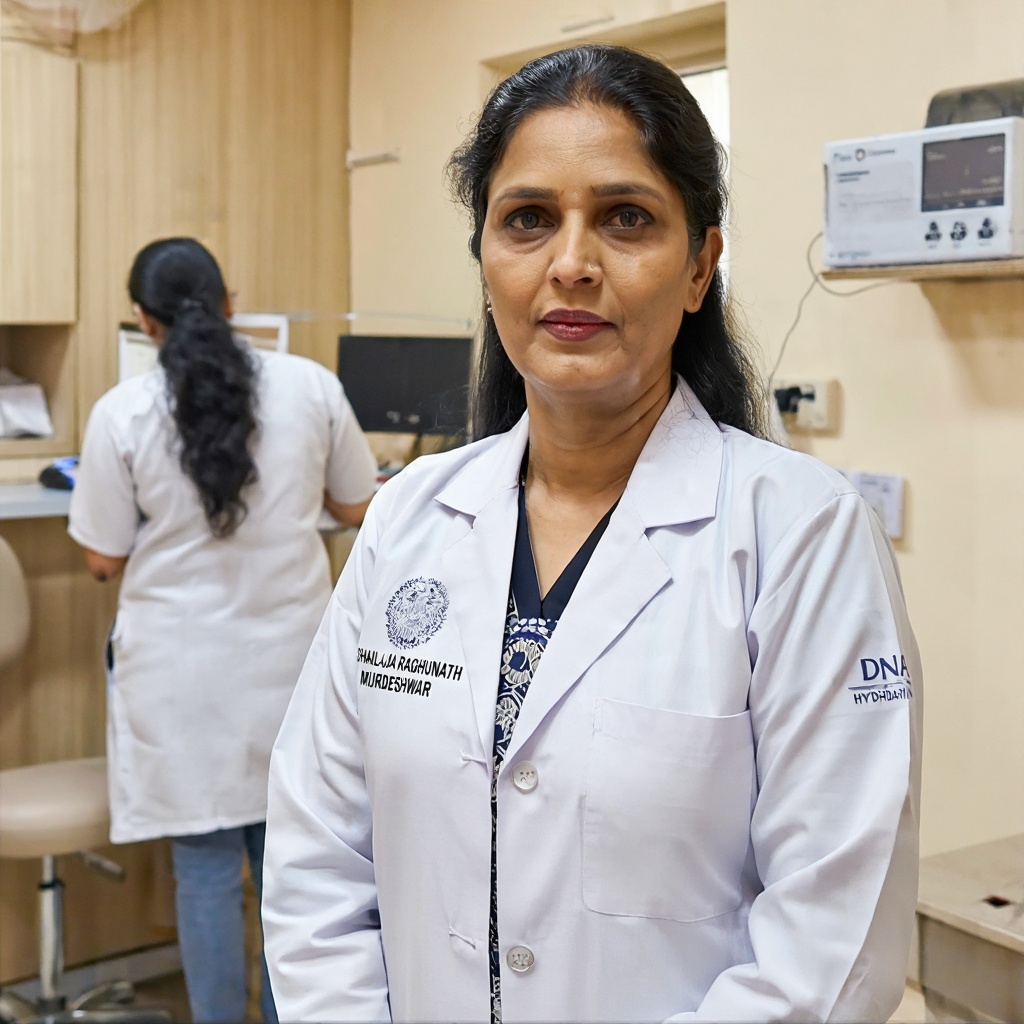
Dr SHAILAJA RAGHUNATH MURDESHWAR
Consultant Physician · Reg: 8052
Last reviewed: September 7, 2026
Overview
The Infertility Screening Panel for Females is ordered to evaluate hormonal and metabolic factors that may be responsible for difficulty in conceiving. This panel measures levels of FSH, LH, Prolactin, Testosterone (Total), TSH Ultrasensitive, Estradiol, CBC, and Fasting Blood Sugar. These markers help identify ovulatory dysfunction, diminished ovarian reserve, polycystic ovary syndrome (PCOS), hyperprolactinemia, thyroid disorders, and metabolic abnormalities such as diabetes or insulin resistance that can adversely affect female fertility. The test serves as a first-line evaluation for women presenting with infertility and guides further diagnostic and treatment decisions by the treating physician.
- Test Code
- 1116
- ICD Code
- N97
- Price
- ₹3,000
- Sample Type
- Serum
- Result Time
- Results are typically available within the same day to 24 hours after sample collection. You will receive a notification via your preferred delivery method (online portal, email, or WhatsApp). In some cases, results may take up to 48 hours depending on laboratory workload or if repeat testing is required.
- Fasting Required
- Yes
- Method
- Chemiluminescent Immunoassay (CLIA), Automated Hematology Analyzer (CBC), Enzymatic Assay (FBS)
Sample Collection
Overnight fasting for 8-12 hours is preferred. Collect the specimen approximately 4 hours after the patient has awakened. For females, the preferred sampling time is Day 2 or Day 3 of the menstrual cycle. Inform your physician about any medications, supplements, or hormonal treatments you are currently taking. Avoid strenuous exercise and alcohol consumption 24 hours before the test. Get adequate rest the night before sample collection.
Method: Venipuncture
Laboratory Analysis
A trained phlebotomist will perform a standard venipuncture, typically from the antecubital vein. Approximately 3 mL of blood will be collected into a Serum Separator Tube (SST). The procedure takes about 5 to 10 minutes. Mild discomfort or a small bruise at the puncture site may occur. Inform the phlebotomist if you have a history of fainting during blood draws or if you are on blood-thinning medications.
Report Delivery
Apply firm pressure to the puncture site with a cotton ball or gauze for 3 to 5 minutes. Avoid heavy lifting or strenuous activity with the affected arm for a few hours. You may resume normal eating and activities after sample collection. Reports are typically available within 24 hours and can be accessed through the online portal, email, or WhatsApp. Contact your physician to discuss the results and any necessary follow-up.
Timeline: Results are typically available within the same day to 24 hours after sample collection. You will receive a notification via your preferred delivery method (online portal, email, or WhatsApp). In some cases, results may take up to 48 hours depending on laboratory workload or if repeat testing is required.
Patient Instructions
About This Test
Who Should Get This Test
The Infertility Screening Panel for Females is ordered to evaluate hormonal and metabolic factors that may be responsible for difficulty in conceiving. This panel measures levels of FSH, LH, Prolactin, Testosterone (Total), TSH Ultrasensitive, Estradiol, CBC, and Fasting Blood Sugar. These markers help identify ovulatory dysfunction, diminished ovarian reserve, polycystic ovary syndrome (PCOS), hyperprolactinemia, thyroid disorders, and metabolic abnormalities such as diabetes or insulin resistance that can adversely affect female fertility. The test serves as a first-line evaluation for women presenting with infertility and guides further diagnostic and treatment decisions by the treating physician.
How to Prepare
- Overnight fasting for 8-12 hours is preferred before sample collection
- Collect specimen approximately 4 hours after the patient has awakened
- Preferred sampling time for females is Day 2 or Day 3 of the menstrual cycle
- 3 mL (minimum 1.5 mL) of blood collected in an SST (Serum Separator Tube)
- Avoid hormonal medications or supplements unless directed otherwise by your physician
- Refrain from strenuous physical activity and alcohol 24 hours prior to the test
- Ship specimen refrigerated or frozen to maintain sample integrity
Doctor's Notes
Reviewed by Dr SHAILAJA RAGHUNATH MURDESHWAR — MBBS, MD (General Medicine) · Reg. No. 8052
"As an endocrinologist, I recommend the Infertility Screening Panel for females who have been trying to conceive without success for six months or more. This panel evaluates critical hormonal markers including FSH, LH, Prolactin, Testosterone, and TSH, which are essential for identifying ovulatory dysfunction, thyroid-related fertility issues, and hyperprolactinemia. Early hormonal evaluation can significantly improve treatment outcomes by enabling timely and targeted intervention. Ideally, the test should be performed on Day 2 or Day 3 of the menstrual cycle to ensure accurate baseline hormone assessment. Normal results help narrow the differential diagnosis, while abnormal results guide further investigation and treatment planning in collaboration with your gynecologist or reproductive medicine specialist."
Last medically reviewed: September 7, 2026
Test Parameters & Specifications
Sample Stability
- Insufficient sample volume (less than 1.5 mL serum)
- Hemolyzed, lipemic, or icteric specimens that may interfere with assay accuracy
- Sample collected in incorrect tube type (non-SST tube)
- Specimen not maintained at recommended temperature during transit
- Sample received beyond the stability window for the storage condition
- Missing or mismatched patient identification details on the sample
Understanding Your Results
FSH (Follicle Stimulating Hormone)
LH (Luteinizing Hormone)
Prolactin
Testosterone, Total
TSH, Ultrasensitive
Estradiol (E2)
CBC (Complete Blood Count)
FBS (Fasting Blood Sugar)
Consult your gynecologist or endocrinologist if you have been unable to conceive after 6 to 12 months of unprotected intercourse, if your menstrual cycles are irregular or absent, if you experience symptoms such as excessive hair growth, unexplained weight gain, or severe acne, or if any parameter in this panel falls outside the normal reference range. Additionally, consult your physician if you have a known history of thyroid disorders, PCOS, diabetes, or recurrent pregnancy losses. Do not self-diagnose or self-treat based on test results alone.
Limitations
- ⚠This panel evaluates hormonal and metabolic causes of infertility but does not assess structural abnormalities of the uterus, fallopian tubes, or ovaries
- ⚠Normal hormone levels do not guarantee fertility; other factors including tubal patency and uterine anatomy may require separate evaluation
- ⚠Results represent a single point-in-time assessment and may not capture cyclical hormonal variations
- ⚠The panel does not include Anti-Mullerian Hormone (AMH), which is an important marker for ovarian reserve assessment
- ⚠Results should always be interpreted by a qualified physician in the context of clinical history, physical examination, and imaging findings
- ⚠Certain rare endocrine conditions may not be fully captured by this screening panel and may require additional specialized testing
Risks & Considerations
- ●Minor bruising or soreness at the venipuncture site
- ●Brief dizziness or lightheadedness during or after blood draw
- ●Very rare risk of infection at the puncture site
- ●Very rare risk of excessive bleeding in individuals with bleeding disorders or on anticoagulant therapy
Interfering Factors
- ●Hormonal contraceptives, hormone replacement therapy (HRT), or other exogenous hormones may suppress or alter FSH, LH, and Estradiol levels
- ●Recent radioactive iodine therapy or contrast-enhanced imaging may interfere with TSH measurement
- ●Medications such as metoclopramide, domperidone, antipsychotics, and certain antidepressants can elevate prolactin levels
- ●Acute physical or emotional stress can transiently elevate prolactin and cortisol levels
- ●Timing of sample collection relative to the menstrual cycle significantly affects FSH, LH, and Estradiol interpretation
- ●Biotin supplements in high doses may interfere with immunoassay-based hormone measurements
- ●Recent vigorous exercise or sleep deprivation may affect hormonal levels temporarily
Compare With Similar Tests
| Test | Infertility Screening Panel Females Test | Anti-Mullerian Hormone (AMH) Test | PCOS Screening Panel | Thyroid Profile (T3, T4, TSH) | Progesterone Test | Male Infertility Panel |
|---|---|---|---|---|---|---|
| Comparison | Infertility Screening Panel Females Test | AMH is a standalone marker of ovarian reserve and is not included in this panel. It is considered one of the most reliable markers for assessing the remaining egg supply. This panel provides a broader hormonal overview while AMH provides focused ovarian reserve assessment. | A PCOS panel may include similar hormone tests (FSH, LH, Testosterone) but also adds DHEA-S, 17-OH Progesterone, and insulin levels. This infertility screening panel is a broader first-line evaluation suitable for all infertile females, not just those suspected of PCOS. | A thyroid profile measures T3 and T4 in addition to TSH. This infertility panel includes only TSH Ultrasensitive as the primary thyroid screening marker. If TSH is abnormal, a full thyroid profile may be ordered for further evaluation. | A serum progesterone level (typically measured on Day 21 of the cycle) confirms ovulation. This is not included in the current screening panel and may be ordered separately if ovulatory dysfunction is suspected based on panel results. | Male infertility panels evaluate semen analysis, FSH, LH, Testosterone, and other markers in males. Couples experiencing infertility should consider both female and male evaluation, as male factors contribute to approximately 40-50% of infertility cases. |
Frequently Asked Questions
What is the Infertility Screening Panel for Females?
What tests are included in this infertility screening panel?
What is the cost of the Infertility Screening Panel Females Test in India?
Who should get the Infertility Screening Panel Females Test?
When is the best time to collect the sample for this test?
Is fasting required before the Infertility Screening Panel Females Test?
What type of sample is required for this test?
How long does it take to get the results of this test?
What do elevated FSH and LH levels indicate in this panel?
Can this test diagnose polycystic ovary syndrome (PCOS)?
Is home sample collection available for this test?
Do I need a doctor's prescription for this test?
Related Tests
Reference Laboratory Services
We serve as a reference laboratory for hospitals and clinics across India. Send samples from your facility with same-day pickup, priority processing, and results delivered through our online portal. Competitive institutional pricing available.
Your Data Privacy
Your medical data is protected under Indian law.
✓ Stored in India: All patient records are stored on servers located in India. No data is transferred outside the country.
✓ DPDP Act Compliant: Under the Digital Personal Data Protection Act 2023, you can request deletion of your records at any time by contacting support.
Book Your Test
Enter your details and we'll connect you within 15 minutes.