
PacBio Sequel II Library Preparation Test
Short Name: PacBio Sequel II Library Prep
Also known as: Sequel II Library Prep, PacBio Library Construction
PacBio Sequel II Library Preparation Test test available at DNA Labs India for ₹85,000. Uses PacBio Sequel II SMRT sequencing on Extracted DNA samples. Results in Reports are typically delivered within 20 days after sample receipt.. Free home collection in 300+ cities across India.

🩺 Medically Reviewed By
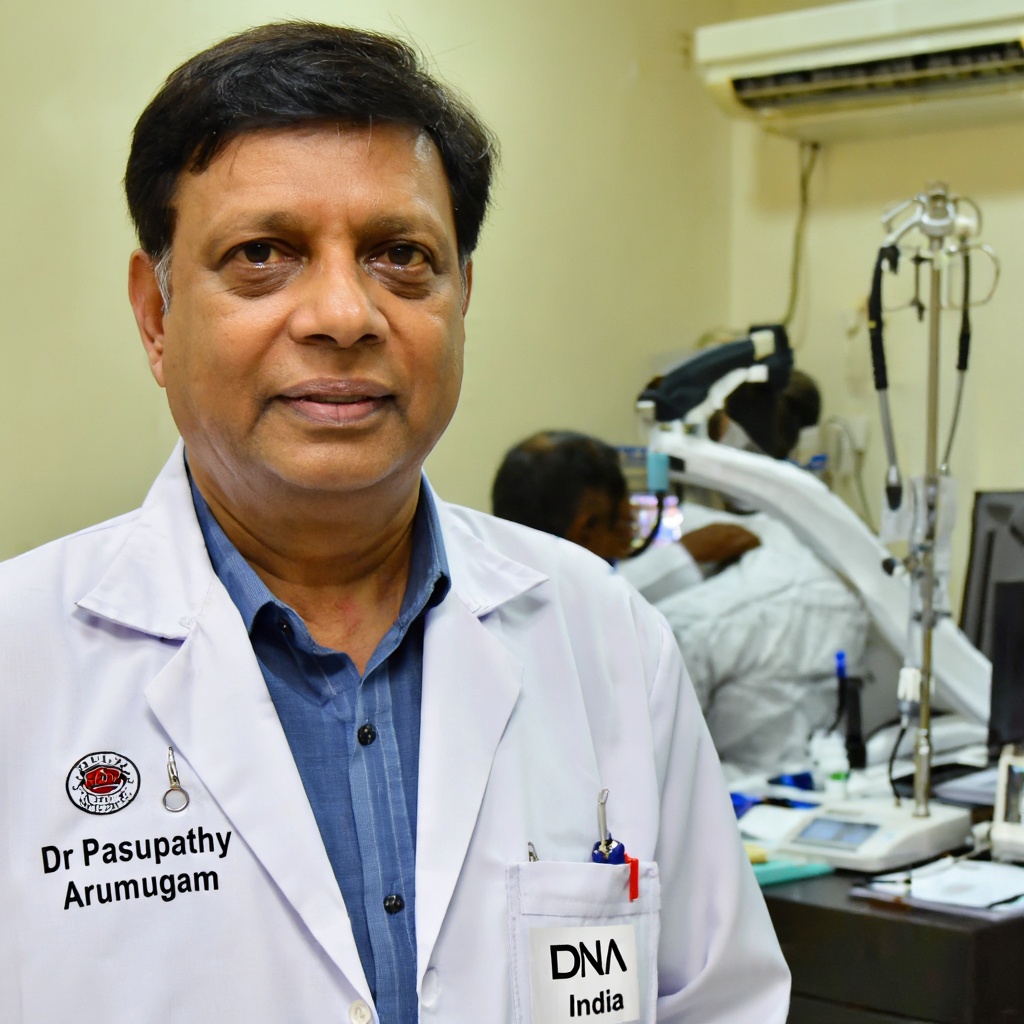
Dr Pasupathy Arumugam
Consultant Pathologist · Reg: 21521
Last reviewed: September 7, 2026
Overview
The purpose of PacBio Sequel II library preparation is to convert high-molecular-weight DNA into a sequencing-ready library. This process is essential for generating long reads that can span repetitive regions and complex structural variants, which are often missed by short-read sequencing. The library preparation service is designed to support various applications, including whole-genome sequencing, targeted sequencing, and metagenomics. By outsourcing library preparation to DNA Labs India, researchers can save time and resources while ensuring high-quality results. Our service is particularly beneficial for projects that require high accuracy, such as clinical diagnostics and population genomics. We follow standardized protocols and perform rigorous quality checks to ensure that the library meets the required specifications for PacBio Sequel II sequencing. This service is available to academic institutions, biotech companies, and clinical laboratories across India.
- Test Code
- 6376
- CPT Code
- 0000T
- ICD Code
- Z00.00
- Price
- ₹85,000
- Sample Type
- Extracted DNA
- Result Time
- Reports are typically delivered within 20 days after sample receipt.
- Fasting Required
- No
- Method
- PacBio Sequel II SMRT sequencing
Sample Collection
Ensure that the DNA sample is extracted using a method that preserves high molecular weight. Avoid excessive vortexing or pipetting to prevent shearing. Store DNA at -20°C or -80°C in a DNA LoBind tube.
Method: Blood or tissue sample for DNA extraction (if required)
Laboratory Analysis
If a blood sample is required for DNA extraction, a trained phlebotomist will collect blood in an EDTA tube. For tissue samples, follow the provided instructions for collection and transport.
Report Delivery
Samples should be shipped to the laboratory on dry ice or with cold packs to maintain stability. Ensure that the sample is properly labeled and accompanied by the required documentation.
Timeline: Reports are typically delivered within 20 days after sample receipt.
Patient Instructions
About This Test
Who Should Get This Test
The purpose of PacBio Sequel II library preparation is to convert high-molecular-weight DNA into a sequencing-ready library. This process is essential for generating long reads that can span repetitive regions and complex structural variants, which are often missed by short-read sequencing. The library preparation service is designed to support various applications, including whole-genome sequencing, targeted sequencing, and metagenomics. By outsourcing library preparation to DNA Labs India, researchers can save time and resources while ensuring high-quality results. Our service is particularly beneficial for projects that require high accuracy, such as clinical diagnostics and population genomics. We follow standardized protocols and perform rigorous quality checks to ensure that the library meets the required specifications for PacBio Sequel II sequencing. This service is available to academic institutions, biotech companies, and clinical laboratories across India.
How to Prepare
- Use sterile, DNA-free tubes
- Avoid repeated freeze-thaw cycles
- Label the tube with patient ID and date
- Ship samples on dry ice for long-distance transport
Doctor's Notes
Reviewed by Dr Pasupathy Arumugam — MBBS, MD (Pathology) · Reg. No. 21521
"Library preparation is a critical step in long-read sequencing. Proper handling ensures high-quality data for downstream analysis."
Last medically reviewed: September 7, 2026
Test Parameters & Specifications
Sample Stability
- Sample with visible degradation or smearing on gel
- DNA concentration below 10 ng/µL
- Sample contaminated with protein or organic solvents
- Sample not labeled correctly
Understanding Your Results
Sufficient quantity is required for successful library preparation. Low quantity may result in library failure.
A ratio of 1.8-2.0 indicates pure DNA. Lower values suggest protein contamination, higher values may indicate RNA contamination.
A DIN ≥ 7.0 indicates high molecular weight DNA, essential for long-read sequencing.
Adequate concentration is needed for optimal loading on the Sequel II instrument.
The size distribution should be consistent with the intended insert size for the sequencing run.
This test is not a diagnostic test. If you are a patient seeking genetic testing for clinical purposes, please consult a genetic counselor or physician to determine the appropriate test.
Limitations
- ⚠Requires high-molecular-weight DNA; poor quality may lead to library failure
- ⚠Cost may be prohibitive for small-scale projects
- ⚠Turnaround time may vary based on sample quality and workload
- ⚠Not suitable for targeted small panels due to high cost
Risks & Considerations
- ●No significant risks are associated with library preparation. If a blood sample is collected, there is a minimal risk of bruising or infection at the puncture site.
Interfering Factors
- ●Degraded or fragmented DNA
- ●Presence of contaminants (e.g., phenol, ethanol, salts)
- ●Insufficient DNA quantity
- ●RNA contamination
- ●Improper storage or handling of samples
Compare With Similar Tests
| Test | PacBio Sequel II Library Preparation | |||
|---|---|---|---|---|
| Comparison | PacBio Sequel II Library Preparation |
Frequently Asked Questions
What is PacBio Sequel II library preparation?
What is the cost of PacBio Sequel II library preparation at DNA Labs India?
What sample type is required for this test?
How long does it take to get the results?
Is home sample collection available?
What is the difference between library preparation and sequencing?
Can I use this service for clinical diagnostics?
What quality checks are performed on the library?
What is the minimum DNA quantity required?
Do you provide bioinformatics support?
What are the common reasons for library preparation failure?
How should I store my DNA sample before sending?
Related Tests
ACAT1 Gene Methylacetoacetic aciduria NGS Genetic Test
₹20,000SERHL2 Gene Serine hydrolase deficiency, SERHL2 related NGS Genetic Test
₹20,000Comprehensive Ear Nose Throat Panel NGS Genetic Test
₹20,000ATAC Sequencing
₹48,000PTF1A Gene Pancreatic and cerebellar agenesis NGS Genetic Test
₹20,000IARS2 Gene Cataracts, growth hormone deficiency, sensory neuropathy, sensorineural hearing loss, and skeletal dysplasia NGS Genetic Test
₹20,000Reference Laboratory Services
We serve as a reference laboratory for hospitals and clinics across India. Send samples from your facility with same-day pickup, priority processing, and results delivered through our online portal. Competitive institutional pricing available.
Your Data Privacy
Your medical data is protected under Indian law.
✓ Stored in India: All patient records are stored on servers located in India. No data is transferred outside the country.
✓ DPDP Act Compliant: Under the Digital Personal Data Protection Act 2023, you can request deletion of your records at any time by contacting support.
Book Your Test
Enter your details and we'll connect you within 15 minutes.