
Sequencing Library QC-qPCR Test
Also known as: Library QC qPCR, NGS Library Quantification, qPCR Library QC
Sequencing Library QC-qPCR Test test available at DNA Labs India for ₹2,800. Uses Quantitative PCR (qPCR) on Extracted DNA samples. Results in Reports are typically delivered within 1 week after sample collection. The turnaround time may vary depending on the location and sample condition.. Free home collection in 300+ cities across India.

🩺 Medically Reviewed By
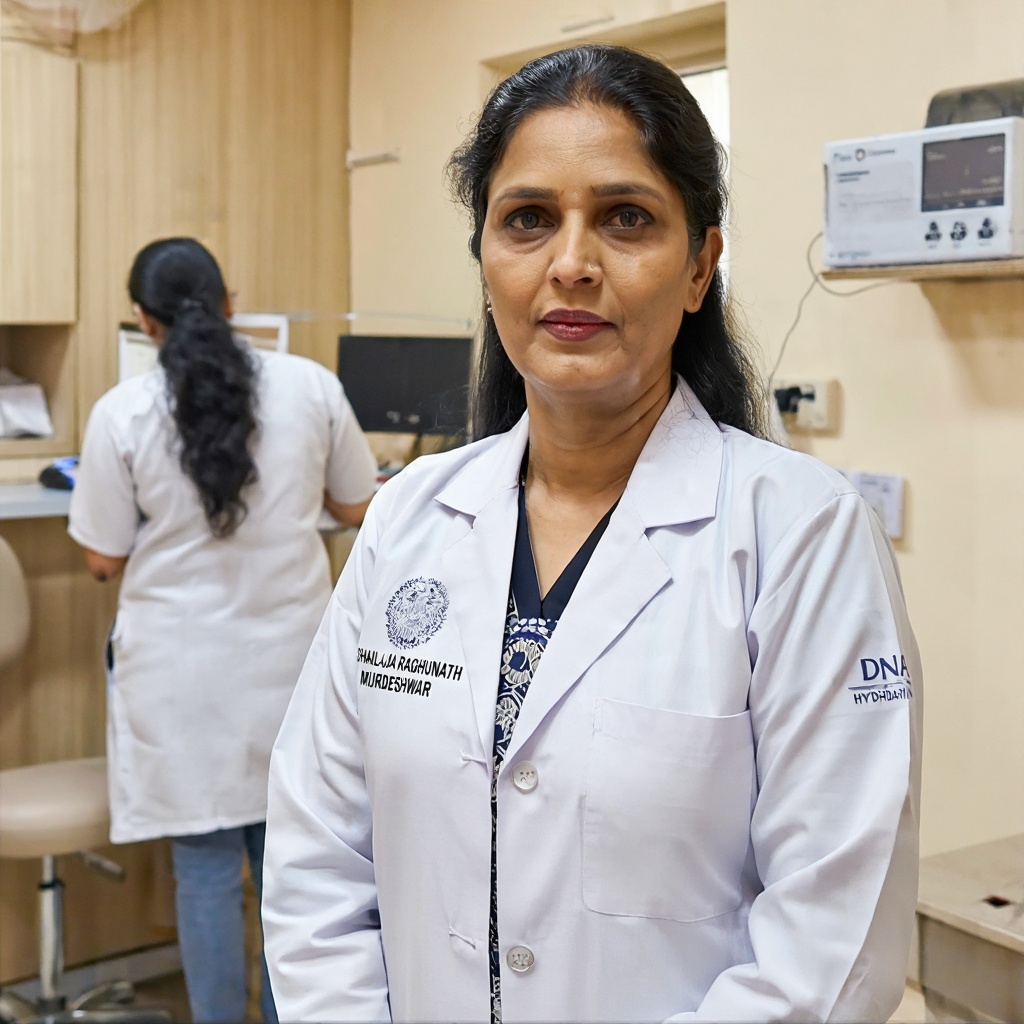
Dr SHAILAJA RAGHUNATH MURDESHWAR
Consultant Physician · Reg: 8052
Last reviewed: September 7, 2026
Overview
The primary purpose of Sequencing Library QC-qPCR is to determine the concentration of the DNA library and verify its quality before sequencing. This is crucial because accurate quantification ensures optimal cluster density on the flow cell, leading to high-quality sequencing data. The test also detects the presence of contaminants or inhibitors that could interfere with sequencing enzymes, thereby preventing failed runs and reducing costs. By providing precise measurements, this QC step enables researchers to make informed decisions about library dilution and pooling, ensuring efficient use of sequencing resources.
- Test Code
- 6438
- CPT Code
- 0000U
- ICD Code
- Z13.9
- Price
- ₹2,800
- Sample Type
- Extracted DNA
- Result Time
- Reports are typically delivered within 1 week after sample collection. The turnaround time may vary depending on the location and sample condition.
- Fasting Required
- No
- Method
- Quantitative PCR (qPCR)
Sample Collection
No special preparation is required. However, ensure that the extracted DNA sample is of adequate quantity and quality. If the sample is being collected at home, the patient should follow the instructions provided by the lab for sample collection and storage.
Method: Blood or tissue sample for DNA extraction (performed by lab)
Laboratory Analysis
The sample collection is performed by a trained phlebotomist. For blood samples, a standard venipuncture is used. For tissue or other samples, the appropriate collection method will be followed. The sample is then transported to the laboratory under controlled conditions.
Report Delivery
No specific aftercare is required. The patient can resume normal activities immediately. The sample will be processed in the laboratory, and the report will be delivered within one week.
Timeline: Reports are typically delivered within 1 week after sample collection. The turnaround time may vary depending on the location and sample condition.
Patient Instructions
About This Test
Who Should Get This Test
The primary purpose of Sequencing Library QC-qPCR is to determine the concentration of the DNA library and verify its quality before sequencing. This is crucial because accurate quantification ensures optimal cluster density on the flow cell, leading to high-quality sequencing data. The test also detects the presence of contaminants or inhibitors that could interfere with sequencing enzymes, thereby preventing failed runs and reducing costs. By providing precise measurements, this QC step enables researchers to make informed decisions about library dilution and pooling, ensuring efficient use of sequencing resources.
How to Prepare
- Ensure the sample is labeled correctly with patient name and ID.
- Use a sterile, DNase-free container for the sample.
- If the sample is not processed immediately, store at -20°C for short-term (up to 1 week) or -80°C for long-term.
- Avoid repeated freeze-thaw cycles.
- Transport the sample on dry ice if shipping from a distant location.
Doctor's Notes
Reviewed by Dr SHAILAJA RAGHUNATH MURDESHWAR — MBBS, MD (General Medicine) · Reg. No. 8052
"Sequencing library QC is a critical pre-sequencing step that ensures the integrity of the DNA library. A poorly quantified or contaminated library can lead to suboptimal sequencing output, increased costs, and unreliable variant calling. This qPCR-based assay provides accurate quantification and quality assessment, enabling researchers and clinicians to proceed with confidence."
Last medically reviewed: September 7, 2026
Test Parameters & Specifications
Sample Stability
- Sample with insufficient DNA concentration (< 1 ng/µL)
- Sample with visible contamination or precipitate
- Sample not labeled correctly
- Sample stored improperly (e.g., at room temperature for > 24 hours)
- Sample with high viscosity or clotted blood
Understanding Your Results
Library is suitable for sequencing. Proceed with dilution as per sequencing platform requirements.
Library may be too dilute for efficient cluster generation. Consider re-amplification or concentration before sequencing.
Library is too concentrated. Dilute appropriately to avoid over-clustering and reduced data quality.
Library may require purification (e.g., AMPure XP beads) to remove unwanted fragments before sequencing.
If you are a patient undergoing genetic testing, your referring physician will interpret the results in the context of your clinical condition. If you are a researcher, consult with your lab supervisor or bioinformatician for guidance on library preparation and sequencing. For any questions about the test, contact DNA Labs India at +91-XXXXXXXXXX.
Limitations
- ⚠This test is only for QC of sequencing libraries; it does not provide sequence data.
- ⚠Results are dependent on the quality of the input DNA; degraded DNA may not yield reliable results.
- ⚠qPCR quantification is relative to standards; absolute concentration may vary slightly.
- ⚠The test does not detect all possible contaminants; additional assays may be needed for specific inhibitors.
Risks & Considerations
- ●No significant risks are associated with this test. The sample collection is minimally invasive (blood draw) and carries standard risks such as bruising or infection at the puncture site.
- ●For tissue samples, the collection procedure may carry specific risks, which will be explained by the healthcare provider.
Interfering Factors
- ●RNA contamination in the DNA sample
- ●Residual ethanol or chaotropic salts from extraction
- ●Excessive freeze-thaw cycles of the library
- ●Incorrect storage temperature of the library
- ●Presence of PCR inhibitors (e.g., heparin, hemoglobin)
Compare With Similar Tests
| Test | Sequencing Library QC-qPCR | |||
|---|---|---|---|---|
| Comparison | Sequencing Library QC-qPCR |
Frequently Asked Questions
What is Sequencing Library QC-qPCR?
Why is library QC important before sequencing?
What sample is required for this test?
How much does the Sequencing Library QC-qPCR cost?
How long does it take to get the results?
Is fasting required for this test?
Can I get a home sample collection?
What does the test detect?
Who should get this test?
What is the difference between qPCR and other quantification methods?
Are there any risks associated with this test?
How should I prepare my DNA sample for the test?
Related Tests
ACAT1 Gene Methylacetoacetic aciduria NGS Genetic Test
₹20,000SERHL2 Gene Serine hydrolase deficiency, SERHL2 related NGS Genetic Test
₹20,000Comprehensive Ear Nose Throat Panel NGS Genetic Test
₹20,000ATAC Sequencing
₹48,000PTF1A Gene Pancreatic and cerebellar agenesis NGS Genetic Test
₹20,000IARS2 Gene Cataracts, growth hormone deficiency, sensory neuropathy, sensorineural hearing loss, and skeletal dysplasia NGS Genetic Test
₹20,000Reference Laboratory Services
We serve as a reference laboratory for hospitals and clinics across India. Send samples from your facility with same-day pickup, priority processing, and results delivered through our online portal. Competitive institutional pricing available.
Your Data Privacy
Your medical data is protected under Indian law.
✓ Stored in India: All patient records are stored on servers located in India. No data is transferred outside the country.
✓ DPDP Act Compliant: Under the Digital Personal Data Protection Act 2023, you can request deletion of your records at any time by contacting support.
Book Your Test
Enter your details and we'll connect you within 15 minutes.