


Key Facts at a Glance
- Sample Required: ECG and heart sound recording (non-invasive)
- Fasting Rules: Not required
- Turnaround Time (TAT): 15 seconds for AI analysis
- Base Cost: [Insert Current 2026 Price] (consult DNA Labs India for pricing)
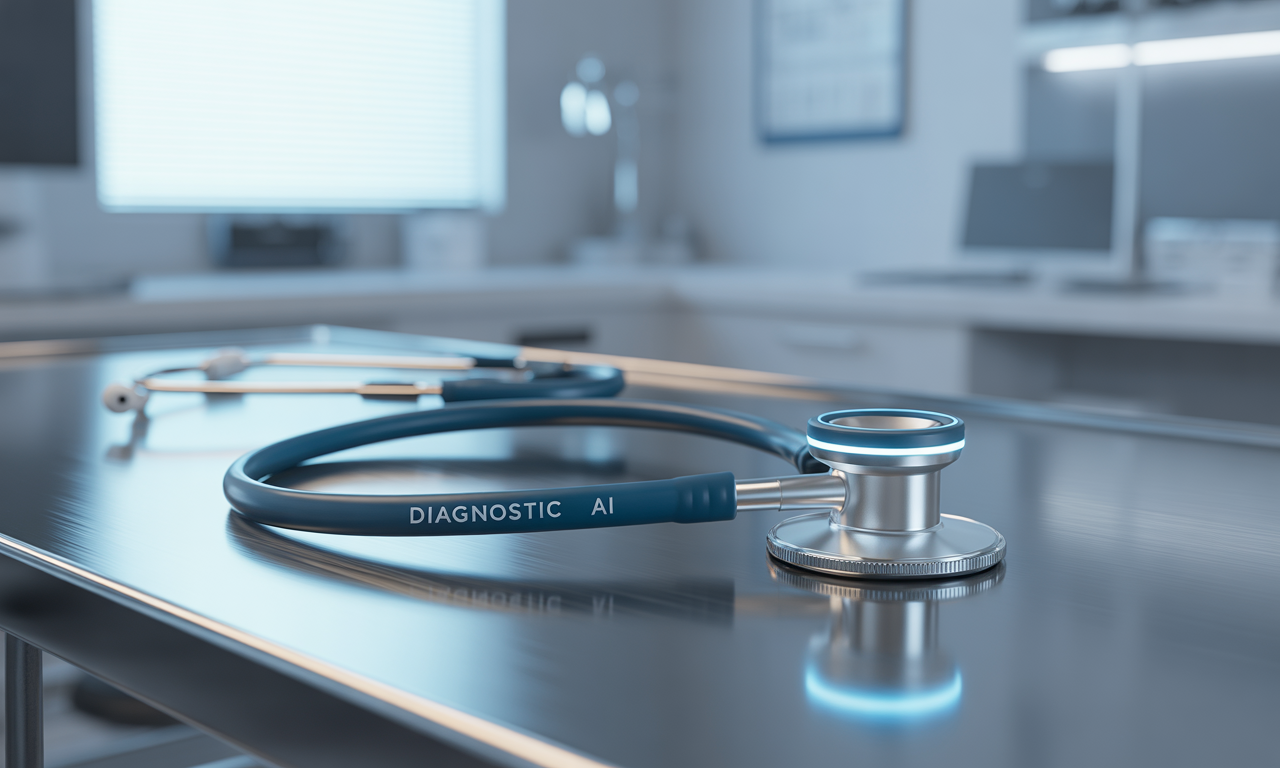
The new AI-powered stethoscope is transforming heart disease diagnosis by combining ECG monitoring and advanced audio analysis with instantaneous cloud-based AI assessment, enabling the rapid detection of three major heart conditions—heart failure, atrial fibrillation, and heart valve disease—in just 15 seconds. This innovation addresses a long-standing healthcare challenge: most heart failure cases are only diagnosed after emergency hospital admission, often when the disease is advanced.
Clinical Innovation: The AI-Enhanced Stethoscope
For over 200 years, the humble stethoscope remained unchanged in design and capability. Now, researchers at Imperial College London and Imperial College Healthcare NHS Trust—supported by the British Heart Foundation and National Institute for Health and Care Research—have reimagined it for the 21st century. The new device replaces the conventional chest piece with a digital sensor that records both ECG signals and heart sounds, sending this data to cloud-based AI algorithms trained on tens of thousands of real-world cases. Within seconds, clinicians are provided with a test result flagging whether a patient is at risk, directly to their smartphone.
Epidemiological Impact and Detection Rates
Heart failure affects more than one million people in the UK, yet in 70% of cases, it is only detected after the patient becomes acutely ill. The AI-enhanced stethoscope enables earlier identification, dramatically increasing the odds of timely treatment and better outcomes. In clinical trials involving over 12,000 patients, those examined with the smart device were more than twice as likely to be diagnosed with heart failure and nearly twice as likely to have heart valve disease recognized compared to traditional methods. Atrial fibrillation, which often strikes without symptoms and elevates stroke risk, was detected over three times more frequently.
| Condition | Detection Rate with AI Stethoscope | Detection Rate with Traditional Methods | Relative Improvement |
|---|---|---|---|
| Heart Failure | 2.3x more likely | Baseline | +130% |
| Atrial Fibrillation | 3.5x more likely | Baseline | +250% |
| Heart Valve Disease | 2x more likely | Baseline | +100% |
Implementation Barriers and Future Directions
Despite its promise, mass adoption faces hurdles. Within 12 months, 70% of GP surgeries given the stethoscopes either stopped using them or only used them sporadically, highlighting the need for better integration into clinical routines. The technology also produced some false positives—two-thirds of those flagged for suspected heart failure did not have it after confirmatory tests. Researchers stress that while this may spark extra investigations and anxiety, it also helps uncover cases that might have otherwise gone undetected.
Adoption and Expansion Plans
With FDA clearance and pilot programs underway in select UK practices, the technology's expansion is planned for Wales, South London, and Sussex. Experts like Dr. Sonya Babu-Narayan hail its potential to empower GPs with early diagnostic tools, facilitating community-based care for some of the most prevalent—and deadly—heart conditions. The journey ahead will focus on refining workflows and AI algorithms to maximize accuracy and minimize unnecessary follow-up, ultimately aiming for a future where heart disease can be caught—and treated—before it becomes a crisis.
Further Reading and Resources
- 1) Genetic Testing in Cardiology
- 2) AI Stethoscope Technology
- 3) Heart Failure Early Detection
- 4) Atrial Fibrillation Awareness
- 5) Heart Valve Disease Explained
Frequently Asked Questions
Q: What heart conditions can the AI stethoscope detect?
A: It can rapidly detect heart failure, atrial fibrillation (irregular heartbeat), and heart valve disease within about 15 seconds.
Q: How does the AI stethoscope work?
A: It combines a microphone recording heart sounds with an ECG to capture electrical heart activity. The data is analyzed by AI algorithms trained on tens of thousands of patient records in the cloud.
Q: How accurate is the AI stethoscope?
A: Clinical trials show it is about 2.3 times more likely to detect heart failure, 3.5 times more likely to identify atrial fibrillation, and nearly twice as likely to diagnose heart valve disease compared to traditional methods.
Q: Is the AI stethoscope widely available?
A: It is currently used in select GP surgeries in the UK, with plans to expand to more clinics.
Q: Can it replace traditional stethoscopes?
A: It enhances traditional auscultation but does not replace the need for comprehensive clinical evaluation and additional tests when necessary.
Q: Are there any limitations?
A: Some false positives may occur, leading to further tests. The technology is recommended for patients with suspected heart problems rather than routine screening for healthy individuals.
Complementary Genetic Testing by DNA Labs India
The Cardiology Panel NGS Genetic Test by DNA Labs India screens inherited heart disorders like cardiomyopathy and channelopathies using advanced sequencing. It complements the AI stethoscope by adding genetic risk assessment for early diagnosis and personalized care. DNA Labs India is an ISO 9001 certified lab, ensuring high-quality testing standards.
Written by: [Author Name]
Medically Reviewed by: [Reviewer Name]
Last Updated: [Date]