


At a Glance
Sample Required: Blood or saliva for genetic testing (if indicated)
Fasting Rules: No fasting required for genetic testing
Turnaround Time (TAT): 2-4 weeks for genetic analysis
Base Cost: [Insert Current 2026 Price]
What Is Atrial Fibrillation and Why Does Exercise Matter?
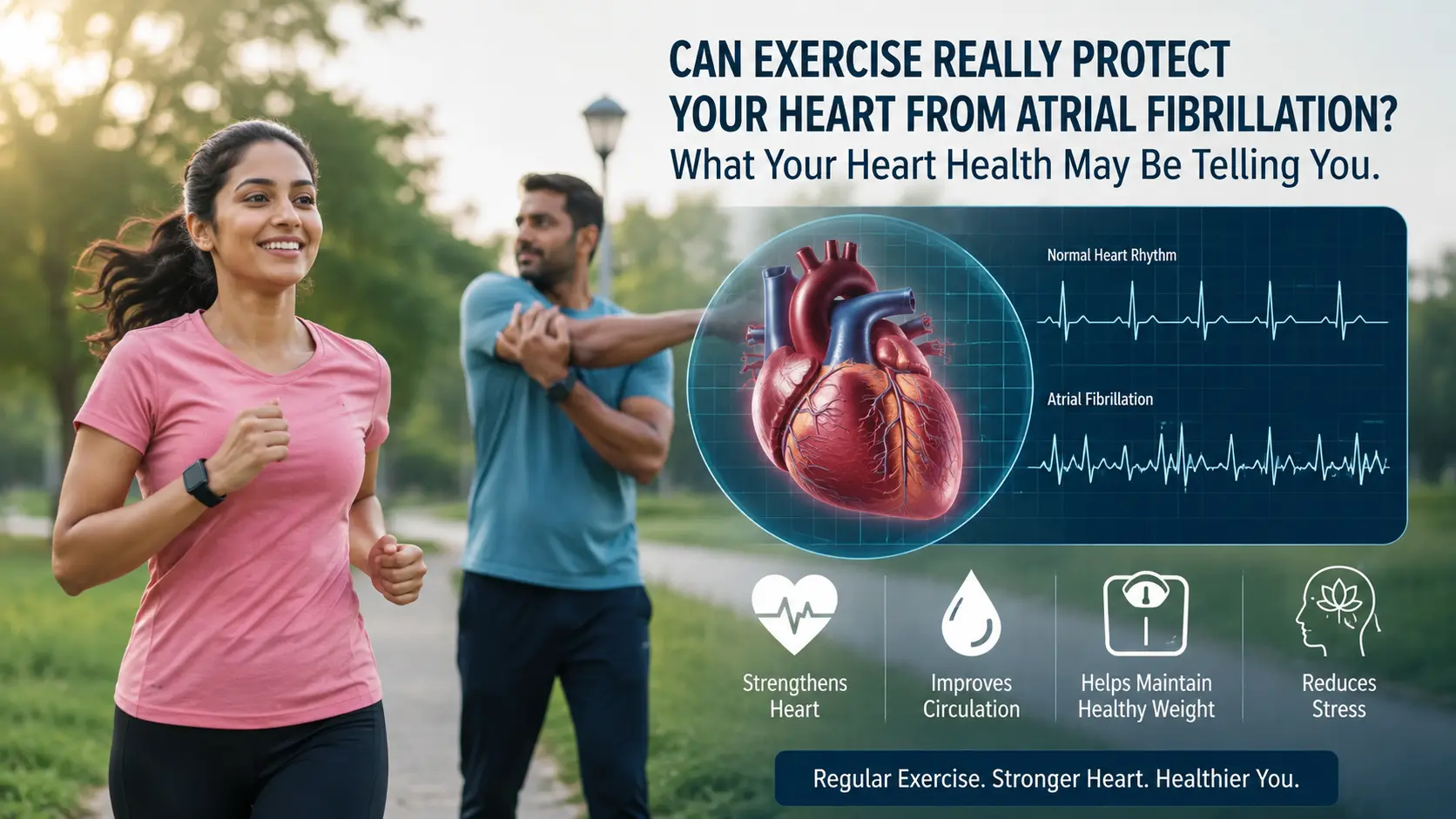
Atrial fibrillation (AF) is an irregular heart rhythm in which the upper chambers of the heart, called the atria, beat in a chaotic way instead of maintaining a normal coordinated rhythm. This can lead to poor blood flow, palpitations, and an increased risk of stroke.
AF is associated with several modifiable and non-modifiable risk factors:
- Increasing age
- High blood pressure
- Obesity
- Diabetes
- Sleep-disordered breathing
- Excessive alcohol consumption
- Cardiovascular disease
- Reduced physical fitness
- Other structural or electrical abnormalities of the heart
Lifestyle therefore matters. Exercise can improve cardiovascular fitness, help manage body weight and blood pressure, and influence several of the physiological factors associated with AF. However, more exercise is not automatically better. The relationship between physical activity and arrhythmia risk can be complex, particularly at very high levels of endurance training. Exercise programmes should be appropriate for an individual's cardiovascular condition and supervised when medically indicated.
Exercise Can Help Manage AF—But It Is Not a Genetic Test
The findings support structured exercise as an important part of AF management for appropriately selected patients. They do not mean that exercise can:
- Eliminate inherited arrhythmia syndromes
- Identify a disease-causing gene variant
- Replace an ECG or cardiac evaluation
- Determine whether an arrhythmia is genetically inherited
- Guarantee protection against future rhythm disorders
In other words, exercise addresses one part of cardiovascular risk; genetics can explain another.
Could an Abnormal Heart Rhythm Run in the Family?
Sometimes, yes. A history of unexplained fainting, sudden cardiac death at a young age, recurrent unexplained palpitations, documented dangerous arrhythmias, or a known inherited cardiac condition in the family can raise suspicion of a genetic cardiac disorder.
For example, if several relatives have experienced unexplained sudden cardiac death or serious rhythm problems at unusually young ages, a cardiologist or clinical geneticist may consider whether an inherited arrhythmia syndrome could be involved.
This does not mean that everyone with palpitations or AF needs genetic testing. Instead, the clinical context matters.
Why Exercise and Genetics Should Be Viewed Together—Not Against Each Other
It is tempting to think of heart health as a choice between "lifestyle" and "genetics." In reality, the two can interact. A person's cardiovascular health reflects a combination of:
Genes + age + blood pressure + metabolic health + body composition + sleep + physical activity + environmental factors + existing heart disease
Exercise can improve several modifiable risk factors. But a person can also inherit a susceptibility that cannot be corrected simply by becoming fitter. This is particularly important for people who experience symptoms that appear disproportionate to their lifestyle or who have a concerning family history.
What Should You Do If You Experience Palpitations During Exercise?
Do not automatically assume that palpitations are simply a sign of being "out of shape." Occasional awareness of the heartbeat can have many explanations, but symptoms such as:
- Fainting or near-fainting
- Chest discomfort
- Unexplained breathlessness
- Sustained rapid heartbeat
- Recurrent dizziness
- A racing or irregular heartbeat
- Symptoms occurring repeatedly during exercise
If you experience any of these, it is essential to consult a healthcare provider for a thorough evaluation, including an ECG and possibly genetic testing if indicated.
Genetic Testing for Inherited Arrhythmias
Modern genetic testing for inherited cardiac conditions now uses Next-Generation Sequencing (NGS) and Whole Exome Sequencing (WES) to identify disease-causing variants in genes associated with arrhythmia syndromes such as Long QT syndrome, Brugada syndrome, and catecholaminergic polymorphic ventricular tachycardia (CPVT). These advanced techniques offer higher sensitivity and faster turnaround times compared to older methods.
At DNA Labs India, we provide comprehensive genetic testing for inherited cardiac disorders. Our ISO 9001 certified lab ensures accurate and reliable results, helping you and your healthcare provider make informed decisions about your heart health.
Information Gain: Risk Factors and Their Impact on AF
| Factor | Modifiable? | Impact on AF |
|---|---|---|
| Age | No | Increases risk |
| High blood pressure | Yes | Increases risk |
| Obesity | Yes | Increases risk |
| Diabetes | Yes | Increases risk |
| Sleep-disordered breathing | Yes | Increases risk |
| Excessive alcohol | Yes | Increases risk |
| Cardiovascular disease | Partially | Increases risk |
| Reduced physical fitness | Yes | Increases risk |
| Genetic predisposition | No | Increases risk |
When to Consider Genetic Testing
Genetic testing for inherited arrhythmias is recommended when:
- There is a family history of sudden cardiac death at a young age (under 50)
- Multiple relatives have been diagnosed with an inherited cardiac condition
- You have experienced unexplained fainting or seizures during exercise
- An ECG shows abnormalities suggestive of a channelopathy
- A known pathogenic variant has been identified in a family member
If you meet any of these criteria, consult a cardiologist or medical geneticist to discuss whether genetic testing is appropriate for you.
Written by: [Author Name]
Medically Reviewed by: [Reviewer Name]
Last Updated: [Date]