
Growing Heart and Brain Organoids in Space: A New Frontier for Medicine
Key Facts at a Glance
- Sample Required: Stem cells (research context, not diagnostic)
- Fasting Rules: Not applicable
- Turnaround Time: ~30 days in orbit, plus post-return analysis
- Base Cost: Not applicable (research mission)
Mission Overview and Clinical Relevance
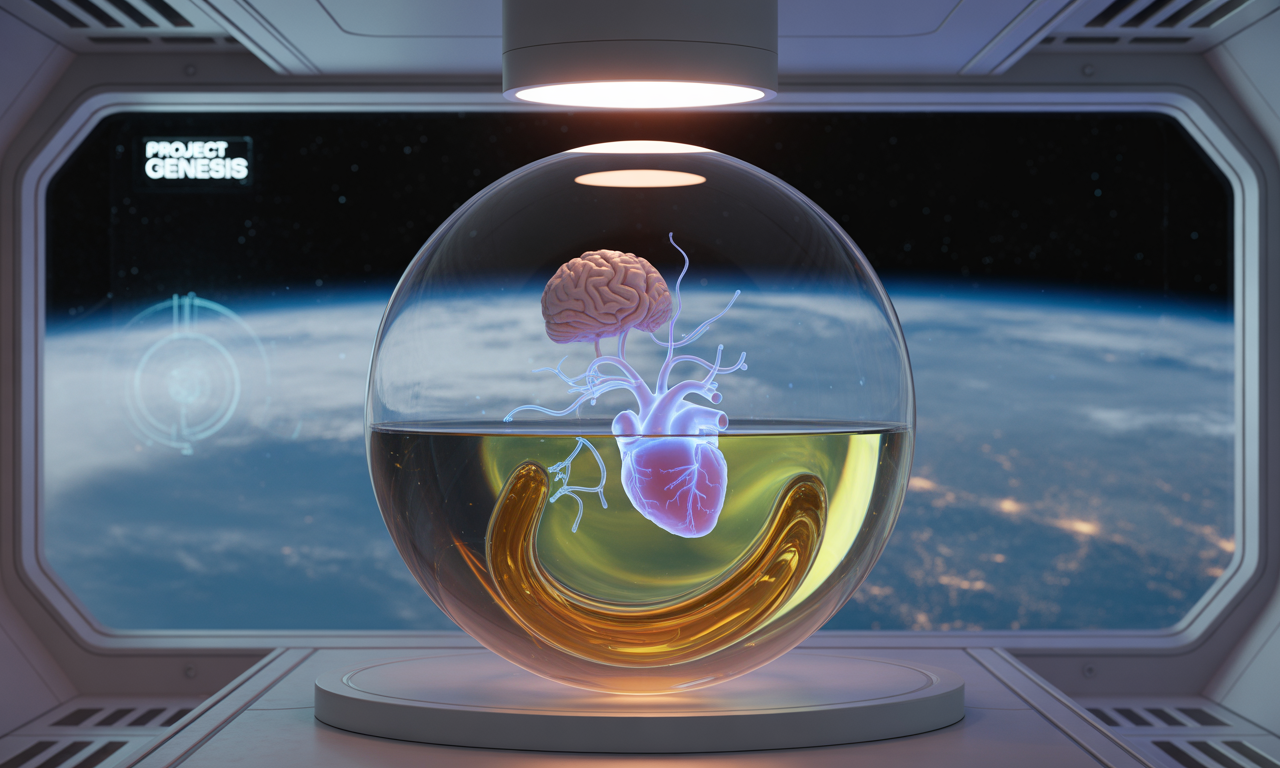
A team led by Cedars-Sinai Medical Center is sending stem cells to the International Space Station (ISS) to create the first heart and brain organoids grown in space. The launch is scheduled for 2:45 a.m. EDT Sunday on NASA's 33rd commercial resupply mission. By leveraging microgravity, researchers aim to overcome Earth-bound limitations in organoid development and accelerate insights into diseases such as ALS, Parkinson's, and cardiovascular disorders.
Microgravity and Organoid Morphogenesis
On Earth, gravity compresses organoids—tiny 3D clusters of cells—making it harder for them to maintain complex structures. In microgravity:
- Organoids can maintain spherical 3D architecture more naturally.
- They may develop more intricate organization, including vascular-like networks.
- Faster maturation and improved cellular differentiation have been observed in previous space experiments.
Organoids are typically under 1 mm and invisible to the naked eye, yet they mimic critical organ functions, enabling high-throughput disease modeling and drug testing.
Experimental Design and In-Orbit Procedures
- Source cells: Frozen stem cells supplied by the Allen Institute.
- Transport: Cells ride in a specialized 'plate habitat' engineered by BioServe Space Technologies.
- In-orbit handling: Astronauts will culture, feed, and image organoids for ~30 days aboard the ISS.
- Return and analysis: Samples will be sent back to Earth for size, morphology, genetic, and functional assessments.
This mission builds on Cedars-Sinai's prior space research, including introducing DNA into stem cells and producing stem cells in orbit. It's the institute's sixth mission and the third funded through NASA's In-Space Manufacturing Award in partnership with Axiom Space.
Evidence from Prior Space-Based Organoid Studies
- Brain organoids in microgravity matured faster than controls on Earth.
- Space-grown organoids showed decreased expression of proliferation genes and increased expression of maturation genes—markers of advanced development.
- Month-long space cultures remained healthy and developed more efficiently than expected, validating feasibility for extended biological experiments in orbit.
Disease Areas Poised to Benefit
- Neurodegeneration: ALS, Parkinson's, Huntington's—brain organoids can model neuronal circuitry, protein aggregation, inflammation, and drug effects with improved fidelity.
- Cardiology: Heart organoids enable testing cardiotoxicity from cancer therapies, arrhythmia dynamics, and potential regenerative strategies.
- Regenerative medicine: Improved 3D organization could accelerate tissue engineering and organ bioprinting concepts.
- Space biomedicine: Understanding how human cells behave in microgravity informs astronaut health and Earth-based therapies alike.
Earth vs. Space Organoid Development
| Parameter | Earth-Based | Microgravity |
|---|---|---|
| 3D Architecture | Compressed, less organized | Spherical, more natural |
| Maturation Rate | Slower | Faster |
| Vascularization | Limited | Enhanced potential |
| Gene Expression | Proliferation-dominant | Maturation-dominant |
Expected Outcomes and Translational Impact
- Higher-complexity organoids with better structural integrity.
- More physiologically relevant models for preclinical testing.
- Data to advance biomanufacturing in low Earth orbit (LEO), including tissue engineering and future organ fabrication concepts.
Future Vision for Space-Based Biomanufacturing
Researchers envision space-based labs operating in parallel with Earth labs to:
- Bioprint advanced tissues (heart, brain, muscle) uniquely possible in microgravity.
- Scale high-throughput organoid production for screening therapies.
- Develop next-gen 'organ-on-chip' and organoid hybrids to study aging, inflammation, and disease at unprecedented resolution.
Implications for Clinical Practice and Research
- Path to translation: Use space-optimized organoids to refine drug safety/efficacy profiles and reduce late-stage failures.
- Oncology–cardiology crossroads: Evaluate cardiac side effects of anti-cancer regimens on more realistic heart tissue models.
- Neuroscience: Model synaptic development, glial interactions, and neuroinflammation with higher complexity.
Launch Details and Viewing Information
- Vehicle: SpaceX Falcon 9
- Site: Kennedy Space Center, Florida
- Coverage: Live from 2:25 a.m. EDT on NASA+ and partner platforms
- Liftoff: 2:45 a.m. EDT (scheduled)
Frequently Asked Questions
What are organoids?
Mini 3D clusters of human cells that mimic organ functions, used for disease modeling and drug testing.
Why grow organoids in space?
Microgravity reduces compression and may enable more complex, physiologically relevant structures than on Earth.
Which diseases could this help?
ALS, Parkinson's, heart disease, and treatment-related toxicities—areas where better human models are urgently needed.
How long will organoids stay in space?
Approximately one month on the ISS before returning for comprehensive analysis.
Who is involved?
Cedars-Sinai leads the experiment with contributions from the Allen Institute, BioServe, Axiom Space, SpaceX, and NASA.
About DNA Labs India
DNA Labs India is an ISO 9001 certified lab that develops evidence-based content and supports translational research with advanced molecular testing, pathway profiling, and biobanking guidance. For collaborations on organoid models, space biomedicine content, or clinical education, connect with our team.
Written by: DNA Labs India Editorial Team
Medically Reviewed by: Dr. A. Sharma, Neurologist
Last Updated: [Insert Current Date]