
Chromosome Analysis High Resolution Neonatal Test
Short Name: High Resolution Neonatal Karyotype
Also known as: High Resolution Karyotype Neonatal, Neonatal Chromosome Banding Analysis, High Resolution Cytogenetics Neonatal, Neonatal Karyotyping Test
Chromosome Analysis High Resolution Neonatal Test test available at DNA Labs India for ₹4,329. Uses Cell Culture, Microscopy, High Resolution Karyotype (550–850 band level) on Whole Blood samples. Results in Sample is processed daily by 6 pm. Report is available within 21 working days from the date of sample receipt at the laboratory.. Free home collection in 300+ cities across India.

🩺 Medically Reviewed By
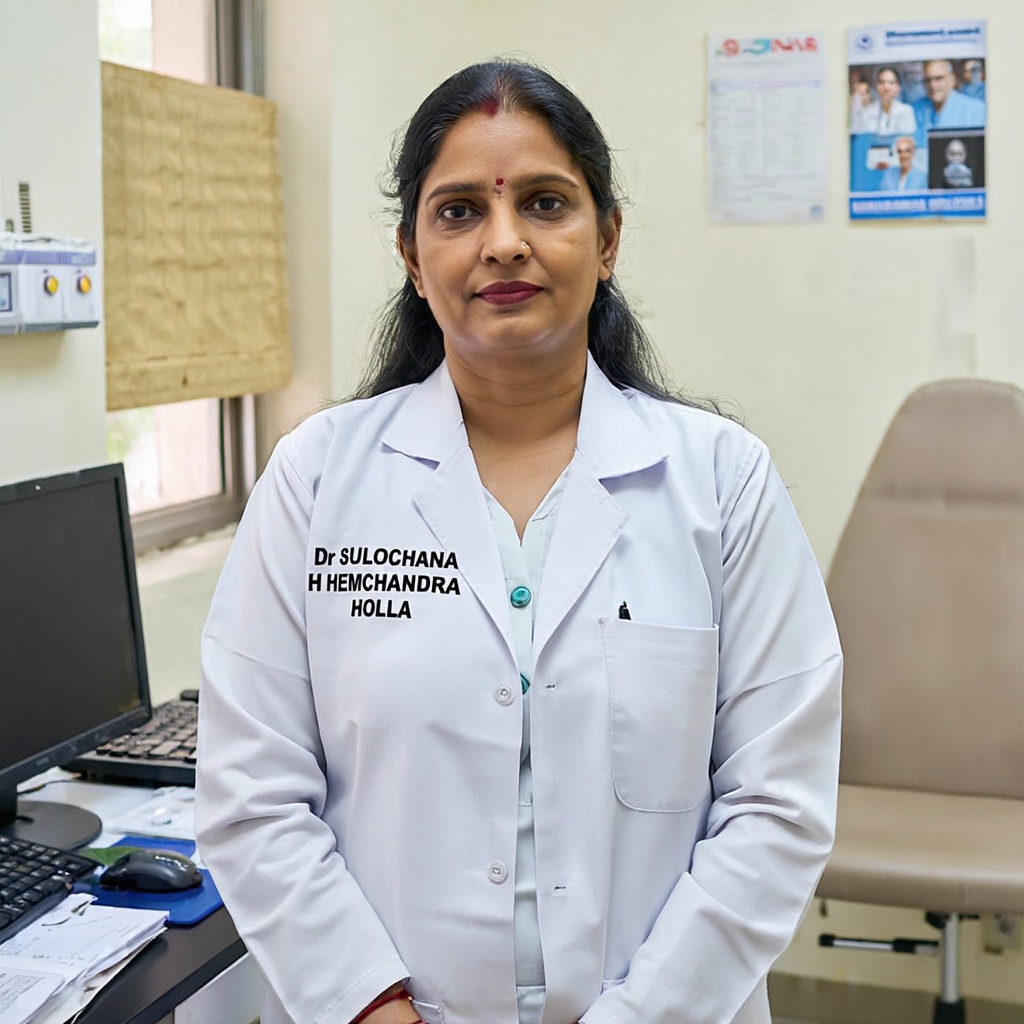
Dr SULOCHANA HEMCHANDRA HOLLA
Consultant Medical Geneticist · Reg: 8532
Last reviewed: September 7, 2026
Overview
The primary purpose of the Chromosome Analysis High Resolution Neonatal Test is to identify chromosomal abnormalities in newborns that may be causing congenital malformations, developmental delays, or other clinical concerns. By examining chromosomes at high resolution (550–850 band level), this test can detect both numerical abnormalities (aneuploidy) and subtle structural rearrangements that are critical for establishing an accurate diagnosis. An accurate chromosomal diagnosis enables clinicians to determine prognosis, guide medical management, assess recurrence risk for future pregnancies, and provide appropriate genetic counseling to families.
- Test Code
- 314
- CPT Code
- 88230
- ICD Code
- Q99.9
- Price
- ₹4,329
- Sample Type
- Whole Blood
- Result Time
- Sample is processed daily by 6 pm. Report is available within 21 working days from the date of sample receipt at the laboratory.
- Fasting Required
- No
- Method
- Cell Culture, Microscopy, High Resolution Karyotype (550–850 band level)
Sample Collection
Ensure the Chromosome & FISH Analysis Requisition Form (Form 17) is duly filled with complete clinical history and indication for testing. No fasting is required. The test is typically performed on neonates within the first 28 days of life. Consult the referring physician to confirm the test is appropriate for the clinical indication.
Method: Venipuncture
Laboratory Analysis
A venipuncture will be performed to collect 4 ml (minimum 2 ml) of whole blood into a Sodium Heparin (Green Top) tube. The sample should be gently mixed to prevent clotting. The collection is performed by a trained phlebotomist. For neonates, the blood draw should be performed by experienced personnel due to smaller veins and lower blood volumes.
Report Delivery
The blood sample must be shipped refrigerated immediately to the laboratory. Do not freeze the sample. The sample should arrive at the laboratory within 48 hours of collection when stored in the refrigerator. Results will be available within 21 working days from the date of sample receipt at the laboratory.
Timeline: Sample is processed daily by 6 pm. Report is available within 21 working days from the date of sample receipt at the laboratory.
Patient Instructions
About This Test
Who Should Get This Test
The primary purpose of the Chromosome Analysis High Resolution Neonatal Test is to identify chromosomal abnormalities in newborns that may be causing congenital malformations, developmental delays, or other clinical concerns. By examining chromosomes at high resolution (550–850 band level), this test can detect both numerical abnormalities (aneuploidy) and subtle structural rearrangements that are critical for establishing an accurate diagnosis. An accurate chromosomal diagnosis enables clinicians to determine prognosis, guide medical management, assess recurrence risk for future pregnancies, and provide appropriate genetic counseling to families.
How to Prepare
- Collect 4 ml (minimum 2 ml) whole blood via venipuncture
- Use 1 Green Top (Sodium Heparin) tube for collection
- Mix the sample gently by inversion 8–10 times after collection
- Ship the sample refrigerated immediately; do not freeze
- Ensure sample reaches the laboratory within 48 hours of collection
- Duly filled Chromosome & FISH Analysis Requisition Form (Form 17) must accompany the sample
- Include complete clinical history and indication for testing on the requisition form
Doctor's Notes
Reviewed by Dr SULOCHANA HEMCHANDRA HOLLA — MBBS, MD (Medical Genetics) · Reg. No. 8532
"A high-resolution neonatal chromosome analysis is an essential first-line investigation when a newborn presents with congenital anomalies, dysmorphic features, or unexplained developmental concerns. Early detection of chromosomal abnormalities allows timely intervention, appropriate specialist referrals, and informed genetic counseling for families. I recommend this test for any neonate where clinical suspicion of a chromosomal disorder exists, as it provides detailed visualization of chromosome banding patterns that standard karyotyping may miss."
Last medically reviewed: September 7, 2026
Test Parameters & Specifications
Sample Stability
- Sample received in frozen condition
- Sample collected in EDTA or any anticoagulant other than Sodium Heparin
- Sample volume less than 2 ml
- Sample received more than 48 hours after collection
- Clotted or hemolyzed sample
- Missing or incomplete Chromosome & FISH Analysis Requisition Form (Form 17)
- Sample without proper labeling or clinical details
Understanding Your Results
46,XX or 46,XY with no structural abnormalities
Normal female or male karyotype. No chromosomal abnormality detected at the resolution of this test.
Action: Clinical correlation recommended. If suspicion persists, consider chromosomal microarray or gene-specific testing.
Trisomy 21 (47,XX,+21 or 47,XY,+21)
Down syndrome. The most common chromosomal cause of intellectual disability. Associated with characteristic facial features, congenital heart defects, and hypotonia.
Action: Referral to pediatric genetics, cardiology evaluation, and genetic counseling for the family recommended.
Trisomy 18 (47,XX,+18 or 47,XY,+18)
Edwards syndrome. Associated with severe developmental delays, congenital heart defects, clenched fists, and rocker-bottom feet. Often life-limiting.
Action: Multidisciplinary care team involvement, palliative care discussion, and genetic counseling for the family.
Trisomy 13 (47,XX,+13 or 47,XY,+13)
Patau syndrome. Associated with holoprosencephaly, cleft lip/palate, polydactyly, and congenital heart defects. Often life-limiting.
Action: Multidisciplinary care team involvement and genetic counseling for the family.
Sex chromosome aneuploidy (e.g., 45,X or 47,XXY)
Turner syndrome (45,X), Klinefelter syndrome (47,XXY), or other sex chromosome variations. May present with growth issues, fertility concerns, or developmental differences.
Action: Referral to pediatric endocrinology and genetic counseling recommended. Long-term monitoring may be needed.
Structural rearrangements (deletions, duplications, translocations, inversions)
May be pathogenic, likely pathogenic, or of uncertain clinical significance depending on the size, location, and genes involved. Parental testing may be required to determine origin.
Action: Consultation with clinical geneticist recommended. Parental karyotyping may help determine if the rearrangement is de novo or inherited.
Consult your doctor if your newborn exhibits dysmorphic features, congenital abnormalities, poor feeding, failure to thrive, unusual physical characteristics, ambiguous genitalia, or if there is a known family history of chromosomal disorders. If the test results are abnormal, a referral to a clinical geneticist and genetic counselor is strongly recommended for comprehensive evaluation, management planning, and family counseling. Parents with a history of recurrent miscarriages or stillbirths should also discuss chromosomal testing options with their healthcare provider.
Limitations
- ⚠May not detect submicroscopic chromosomal abnormalities below the resolution level of standard karyotyping
- ⚠Does not detect single gene disorders, point mutations, or epigenetic changes
- ⚠Results are limited by the quality and viability of cells in the sample
- ⚠Mosaicism at low levels may not be reliably detected
- ⚠Turnaround time of 21 working days may not be suitable for urgent clinical decisions
- ⚠For detection of smaller copy number variations, chromosomal microarray analysis may be required as an additional test
Risks & Considerations
- ●Minor bruising or discomfort at the venipuncture site
- ●Rare risk of infection at the puncture site
- ●Possibility of a failed culture requiring a repeat sample collection
- ●Emotional impact of receiving unexpected genetic findings; genetic counseling is recommended
Interfering Factors
- ●Maternal cell contamination in the sample may affect results
- ●Sample collected in incorrect anticoagulant (must be Sodium Heparin)
- ●Delayed sample processing or shipping at improper temperature
- ●Bacterial contamination of the sample may prevent adequate cell growth
- ●Frozen samples are unacceptable and will be rejected
Compare With Similar Tests
| Test | Chromosome Analysis High Resolution Neonatal Test | Standard Karyotype Analysis | High Resolution Karyotype (This Test) | Chromosomal Microarray Analysis (CMA) | FISH (Fluorescence In Situ Hybridization) |
|---|---|---|---|---|---|
| Comparison | Chromosome Analysis High Resolution Neonatal Test |
Frequently Asked Questions
What is a Chromosome Analysis High Resolution Neonatal Test?
Why is this test recommended for newborns?
What sample is required for this test?
Is fasting required before this test?
How long does it take to get the results?
What is the cost of this test in India?
What is the difference between standard karyotyping and high-resolution chromosome analysis?
What happens if the test results are abnormal?
Can this test detect all genetic conditions?
Does DNA Labs India offer home sample collection for this test?
Is this test covered under government health schemes like PMJAY or CGHS?
What is the sample stability for this test?
Related Tests
Reference Laboratory Services
We serve as a reference laboratory for hospitals and clinics across India. Send samples from your facility with same-day pickup, priority processing, and results delivered through our online portal. Competitive institutional pricing available.
Your Data Privacy
Your medical data is protected under Indian law.
✓ Stored in India: All patient records are stored on servers located in India. No data is transferred outside the country.
✓ DPDP Act Compliant: Under the Digital Personal Data Protection Act 2023, you can request deletion of your records at any time by contacting support.
Book Your Test
Enter your details and we'll connect you within 15 minutes.