
DPAGT1 Gene Glycosylation disorder type 1J NGS Genetic Test
Short Name: DPAGT1 NGS Test
Also known as: DPAGT1-CDG, Congenital Disorder of Glycosylation Type 1J, CDG1J
DPAGT1 Gene Glycosylation disorder type 1J NGS Genetic Test test available at DNA Labs India for ₹20,000. Uses Next-Generation Sequencing (NGS) on Blood / Extracted DNA / One drop Blood on FTA Card samples. Results in 3 to 4 weeks after the sample reaches the laboratory. The report will be shared via email, WhatsApp, and online portal.. Free home collection in 300+ cities across India.

🩺 Medically Reviewed By
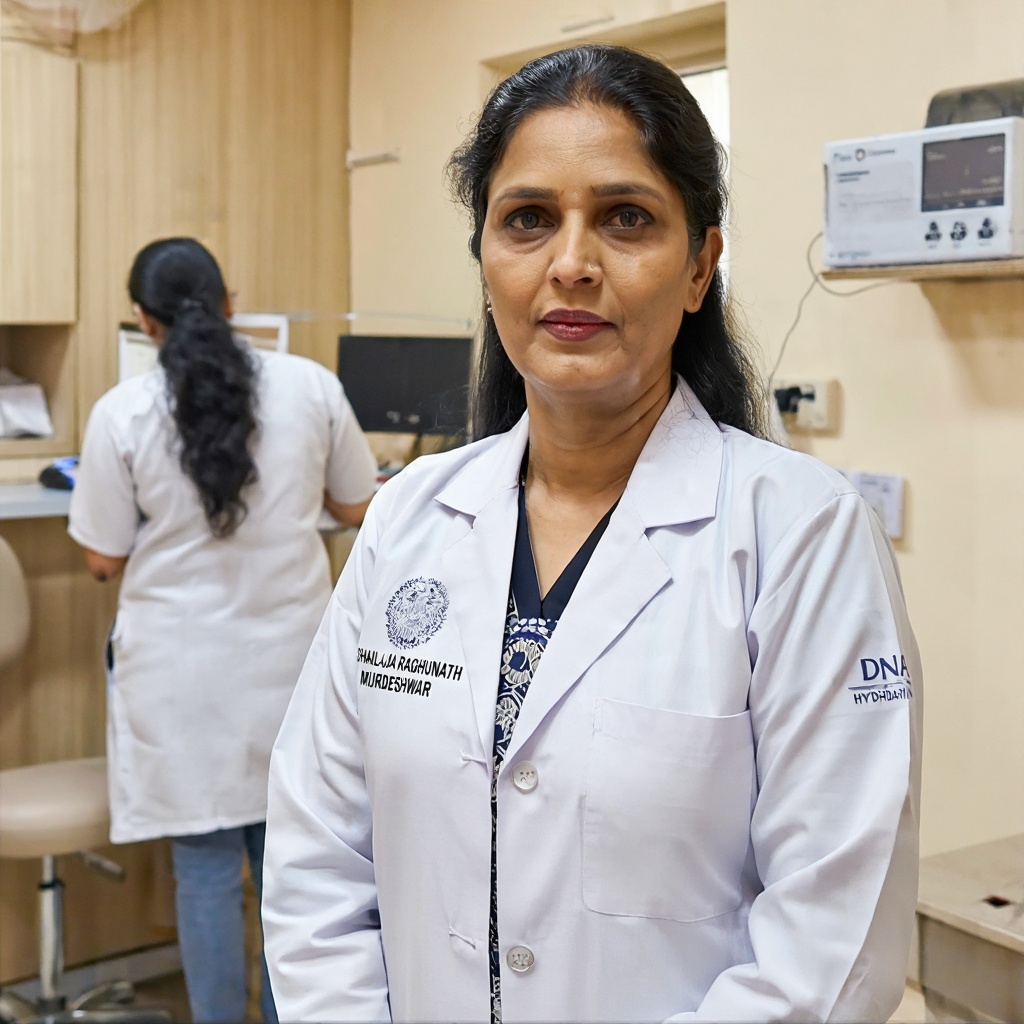
Dr SHAILAJA RAGHUNATH MURDESHWAR
Consultant Physician · Reg: 8052
Last reviewed: September 3, 2026
Overview
The purpose of this test is to confirm a clinical diagnosis of congenital disorder of glycosylation type 1J (DPAGT1-CDG) by identifying pathogenic variants in the DPAGT1 gene. It also aids carrier detection, management planning, recurrence risk assessment, and genetic counselling for affected families.
- Test Code
- 4111
- Price
- ₹20,000
- Sample Type
- Blood / Extracted DNA / One drop Blood on FTA Card
- Result Time
- 3 to 4 weeks after the sample reaches the laboratory. The report will be shared via email, WhatsApp, and online portal.
- Fasting Required
- No
- Method
- Next-Generation Sequencing (NGS)
Sample Collection
No fasting is necessary. The patient can drink water and take regular medications. Please bring any prior investigation reports, especially serum transferrin analysis or MRI brain. A referral from a physician is not mandatory, but a clinical history and family pedigree should be available. Pre-test genetic counselling is included in the test package and is strongly recommended.
Method: Venipuncture / Finger prick
Laboratory Analysis
A trained phlebotomist will collect 3-5 ml of venous blood in an EDTA vacutainer. If using the FTA card, one drop of blood obtained from a finger prick is directly applied onto the designated spot and allowed to air-dry. If you are submitting an extracted DNA sample, ensure it is placed in a sterile, DNAase-free tube.
Report Delivery
There are no specific precautions following blood collection. If you have given an FTA card sample, keep the card in a clean, dry envelope. The laboratory will process the sample once it is received. You can track the test status through the DNA Labs India portal or customer support.
Timeline: 3 to 4 weeks after the sample reaches the laboratory. The report will be shared via email, WhatsApp, and online portal.
Patient Instructions
About This Test
Who Should Get This Test
The purpose of this test is to confirm a clinical diagnosis of congenital disorder of glycosylation type 1J (DPAGT1-CDG) by identifying pathogenic variants in the DPAGT1 gene. It also aids carrier detection, management planning, recurrence risk assessment, and genetic counselling for affected families.
How to Prepare
- Label the sample immediately after collection with the patient's name, date of birth, and date/time.
- If blood is drawn in a vacutainer, mix gently by inverting 8-10 times to prevent clotting.
- For FTA card, ensure the sample area is fully saturated and allowed to air dry for at least 30 minutes.
- Do not refrigerate or freeze the FTA card.
- If sending extracted DNA, include the provided barcode/QR code label.
Doctor's Notes
Reviewed by Dr SHAILAJA RAGHUNATH MURDESHWAR — MBBS, MD (General Medicine) · Reg. No. 8052
"As an obstetrician, I often see families concerned about inherited conditions. For couples with a child affected by a glycosylation disorder, precise genetic testing of the DPAGT1 gene is essential for recurrence risk counselling and planning prenatal diagnosis in future pregnancies. The NGS test from DNA Labs India offers an accurate molecular confirmation that supports informed reproductive decisions."
Last medically reviewed: September 3, 2026
Test Parameters & Specifications
Sample Stability
- Sample in a heparin tube (heparin inhibits PCR).
- Clotted or grossly hemolyzed blood.
- Insufficient volume (<0.5 ml blood).
- Unlabeled or improperly labeled samples.
- Sample received in a leaking container or with excess heat exposure.
Understanding Your Results
Consult a pediatrician, neurologist, or clinical geneticist if the child has unexplained global developmental delay, intractable seizures, hypotonia, or multisystem involvement. A genetic consultation is essential to diagnose and manage rare disorders like DPAGT1-CDG.
Limitations
- ⚠Detection is limited to variants in the coding regions and conserved splice sites of the DPAGT1 gene.
- ⚠Large structural rearrangements, deep intronic variants, and regulatory element defects may not be identified by this NGS assay.
- ⚠This analysis does not evaluate other genes known to cause congenital disorders of glycosylation; a negative result does not exclude a CDG diagnosis.
- ⚠Mosaicism below the analytical sensitivity may be missed.
Risks & Considerations
- ●This is a low-risk test. Venipuncture may cause a minor bruise, pain, or rarely, infection. FTA card collection is virtually painless.
- ●Psychological and social risks may occur from genetic results; therefore pre/post-test counselling is offered.
Interfering Factors
- ●Maternal cell contamination in prenatal or neonatal samples
- ●Hemolyzed or clotted blood affecting DNA quality
- ●Insufficient DNA quantity from FTA card or extracted DNA
- ●High white blood cell count due to active infection may affect DNA extraction efficiency
Frequently Asked Questions
What is DPAGT1 gene glycosylation disorder type 1J?
How is the DPAGT1 NGS genetic test performed?
What is the cost of the DPAGT1 NGS genetic test at DNA Labs India?
Which sample types are accepted for this test?
Is fasting required for this test?
How long does it take to get the report?
Do I need genetic counselling before or after the test?
What does a positive result mean?
Can this test be done on a newborn or infant?
What are the limitations of the NGS test for DPAGT1?
What is the inheritance pattern of DPAGT1-CDG?
Is home sample collection available for this test?
Related Tests
Angelman Syndrome Test
₹10,000Duchenne / Becker Muscular Dystrophy (DMD / BMD) Gene Mutation Test
₹14,000Episodic Ataxia Type 1 Hotspot Test
₹11,500Episodic Ataxia Comprehensive Profile Hotspot Test
₹16,000Megalencephalic Leukoencephalopathy with Subcortical Cysts Van Der Knaap and Nalband MLC Gene Hotspot Mutation Test
₹7,500Analyzer 18 SMA 18 Test Panel
₹1,755Reference Laboratory Services
We serve as a reference laboratory for hospitals and clinics across India. Send samples from your facility with same-day pickup, priority processing, and results delivered through our online portal. Competitive institutional pricing available.
Your Data Privacy
Your medical data is protected under Indian law.
✓ Stored in India: All patient records are stored on servers located in India. No data is transferred outside the country.
✓ DPDP Act Compliant: Under the Digital Personal Data Protection Act 2023, you can request deletion of your records at any time by contacting support.
Book Your Test
Enter your details and we'll connect you within 15 minutes.