
Immunohistochemistry Myogenin Test
Short Name: IHC Myogenin
Also known as: IHC Myogenin, Myogenin Immunostain, Myf4 Immunohistochemistry, Myogenic Regulatory Factor 4 IHC
Immunohistochemistry Myogenin Test test available at DNA Labs India for ₹3,500. Uses Immunohistochemistry (IHC), Peroxidase-Antiperoxidase Technique on Tumour tissue in 10% Formal-saline or Formalin-fixed paraffin-embedded (FFPE) block samples. Results in Sample Daily by 6 pm; Report: Block 5 days, Tissue Biopsy 5 days, Tissue Large Complex 7 days. Free home collection in 300+ cities across India.

🩺 Medically Reviewed By
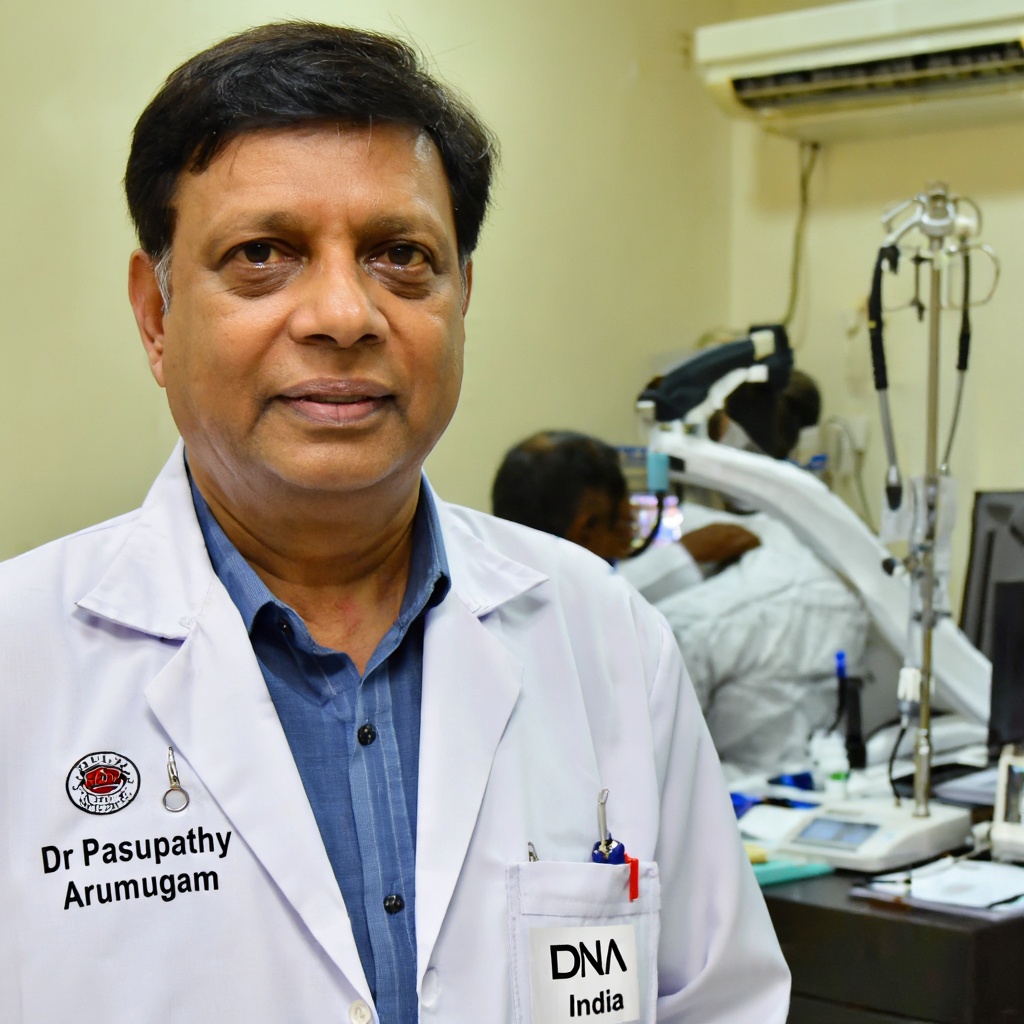
Dr Pasupathy Arumugam
Consultant Pathologist · Reg: 21521
Last reviewed: September 7, 2026
Overview
The primary purpose of the Immunohistochemistry Myogenin Test is to confirm the skeletal muscle origin of a tumour and to aid in the definitive diagnosis of rhabdomyosarcoma. It is an essential component of the immunohistochemical panel used in oncopathology to characterise soft tissue tumours. The test helps differentiate rhabdomyosarcoma from morphologically similar malignancies, guides treatment planning, and contributes to accurate tumour classification as per WHO guidelines.
- Test Code
- 946
- CPT Code
- 88342
- ICD Code
- C49.9
- Price
- ₹3,500
- Sample Type
- Tumour tissue in 10% Formal-saline or Formalin-fixed paraffin-embedded (FFPE) block
- Result Time
- Sample Daily by 6 pm; Report: Block 5 days, Tissue Biopsy 5 days, Tissue Large Complex 7 days
- Fasting Required
- No
- Method
- Immunohistochemistry (IHC), Peroxidase-Antiperoxidase Technique
Sample Collection
No special patient preparation is required. The test is performed on tissue obtained via biopsy or surgical excision. Provide a copy of the histopathology report, site of biopsy, and clinical history along with the specimen.
Method: Tissue Biopsy / Surgical Excision
Laboratory Analysis
The tissue specimen should be immediately placed in 10% neutral buffered formalin for proper fixation. Alternatively, an FFPE block from a prior procedure may be submitted.
Report Delivery
Label the specimen container clearly with patient details, site of biopsy, and date. Transport the specimen at room temperature to the laboratory. Ensure the accompanying histopathology report and clinical history are enclosed.
Timeline: Sample Daily by 6 pm; Report: Block 5 days, Tissue Biopsy 5 days, Tissue Large Complex 7 days
Patient Instructions
About This Test
Who Should Get This Test
The primary purpose of the Immunohistochemistry Myogenin Test is to confirm the skeletal muscle origin of a tumour and to aid in the definitive diagnosis of rhabdomyosarcoma. It is an essential component of the immunohistochemical panel used in oncopathology to characterise soft tissue tumours. The test helps differentiate rhabdomyosarcoma from morphologically similar malignancies, guides treatment planning, and contributes to accurate tumour classification as per WHO guidelines.
How to Prepare
- Submit tumour tissue in 10% Formal-saline or as a Formalin-fixed paraffin-embedded (FFPE) block
- Ship at room temperature
- Provide a copy of the histopathology report
- Mention the site of biopsy on the requisition form
- Include detailed clinical history and prior imaging findings if available
Doctor's Notes
Reviewed by Dr Pasupathy Arumugam — MBBS, MD (Pathology) · Reg. No. 21521
"Immunohistochemistry for myogenin is a critical diagnostic marker in the evaluation of small round cell tumours. Strong nuclear staining for myogenin is highly suggestive of rhabdomyosarcoma and helps differentiate it from other soft tissue sarcomas, Ewing sarcoma, and lymphoma. This test should always be interpreted in conjunction with morphology, clinical history, and a panel of other immunohistochemical markers for an accurate diagnosis."
Last medically reviewed: September 7, 2026
Test Parameters & Specifications
Sample Stability
- Tissue not fixed in 10% neutral buffered formalin
- Specimen received without clinical history or histopathology report
- Severely autolysed or necrotic tissue with no viable tumour cells
- Unlabelled or mislabelled specimen containers
- Tissue fixed for excessively long periods (>1 week) without prior assessment
Understanding Your Results
Highly consistent with rhabdomyosarcoma. Correlate with morphology and other IHC markers (desmin, myogenin, MyoD1) for definitive diagnosis.
Supports skeletal muscle differentiation. Consider the possibility of a mixed or dedifferentiated tumour. Clinical and radiological correlation recommended.
May indicate early or limited skeletal muscle differentiation. Repeat staining or additional markers may be warranted. Interpret with caution.
Does not support a rhabdomyosarcoma diagnosis. However, dedifferentiated or heavily treated tumours may lose antigen expression. Consider additional markers and clinical context.
Considered non-specific. Report as negative for myogenin expression. Technical repeat may be considered if clinical suspicion is high.
Consult your oncologist or treating physician if your IHC Myogenin Test returns a positive result or if the pathology report indicates a soft tissue tumour requiring further evaluation. Early consultation is important for accurate staging, treatment planning, and determining the need for additional tests such as molecular or genetic studies.
Limitations
- ⚠Myogenin may show focal or weak positivity in non-rhabdomyosarcoma tumours; clinical correlation is essential
- ⚠The test does not differentiate between subtypes of rhabdomyosarcoma (embryonal vs alveolar)
- ⚠A negative result does not completely exclude rhabdomyosarcoma, particularly in dedifferentiated tumours
- ⚠Must be interpreted as part of a full immunohistochemical panel and not in isolation
- ⚠Fresh-frozen tissue is not the standard specimen; FFPE tissue is required for optimal results
Risks & Considerations
- ●There are no direct risks to the patient from the IHC test itself, as it is performed on an already-collected tissue specimen
- ●The biopsy or surgical procedure used to obtain the tissue carries its own procedural risks, which should be discussed with the treating physician
Interfering Factors
- ●Inadequate fixation of tissue leading to false negative results
- ●Prolonged fixation in formalin (beyond 48-72 hours) causing antigen masking
- ●Decalcification of bony tumour specimens may degrade antigenicity
- ●Suboptimal antigen retrieval conditions during processing
- ●Tumour necrosis or extensive crush artefact reducing viable tumour cell availability
Compare With Similar Tests
| Test | Immunohistochemistry Myogenin Test | IHC Desmin | IHC MyoD1 | IHC Smooth Muscle Actin (SMA) | IHC WT1 |
|---|---|---|---|---|---|
| Comparison | Immunohistochemistry Myogenin Test |
Frequently Asked Questions
What is the Immunohistochemistry Myogenin Test?
What is myogenin and why is it important?
What type of sample is required for this test?
What does a positive myogenin result mean?
Can the test diagnose the subtype of rhabdomyosarcoma?
Is home sample collection available for this test?
What is the cost of the Immunohistochemistry Myogenin Test at DNA Labs India?
How long does it take to get the report?
Is this test the same as a muscle biopsy?
Are there any risks associated with this test?
Can a negative myogenin result rule out rhabdomyosarcoma?
Where can I get the Immunohistochemistry Myogenin Test done?
Related Tests
Reference Laboratory Services
We serve as a reference laboratory for hospitals and clinics across India. Send samples from your facility with same-day pickup, priority processing, and results delivered through our online portal. Competitive institutional pricing available.
Your Data Privacy
Your medical data is protected under Indian law.
✓ Stored in India: All patient records are stored on servers located in India. No data is transferred outside the country.
✓ DPDP Act Compliant: Under the Digital Personal Data Protection Act 2023, you can request deletion of your records at any time by contacting support.
Book Your Test
Enter your details and we'll connect you within 15 minutes.