
Myotonic Dystrophy Type 1 Test
Short Name: DM1 Test
Also known as: Steinert Disease, DM1 Genetic Test, Dystrophia Myotonica Type 1 Test, DMPK Gene Test, Myotonic Dystrophy DNA Test
Myotonic Dystrophy Type 1 Test test available at DNA Labs India for ₹8,500. Uses PCR (Polymerase Chain Reaction), Fragment Analysis on Whole Blood samples. Results in Sample must be received Monday by 11 AM. Report delivered by Friday of the same week.. Free home collection in 300+ cities across India.

🩺 Medically Reviewed By
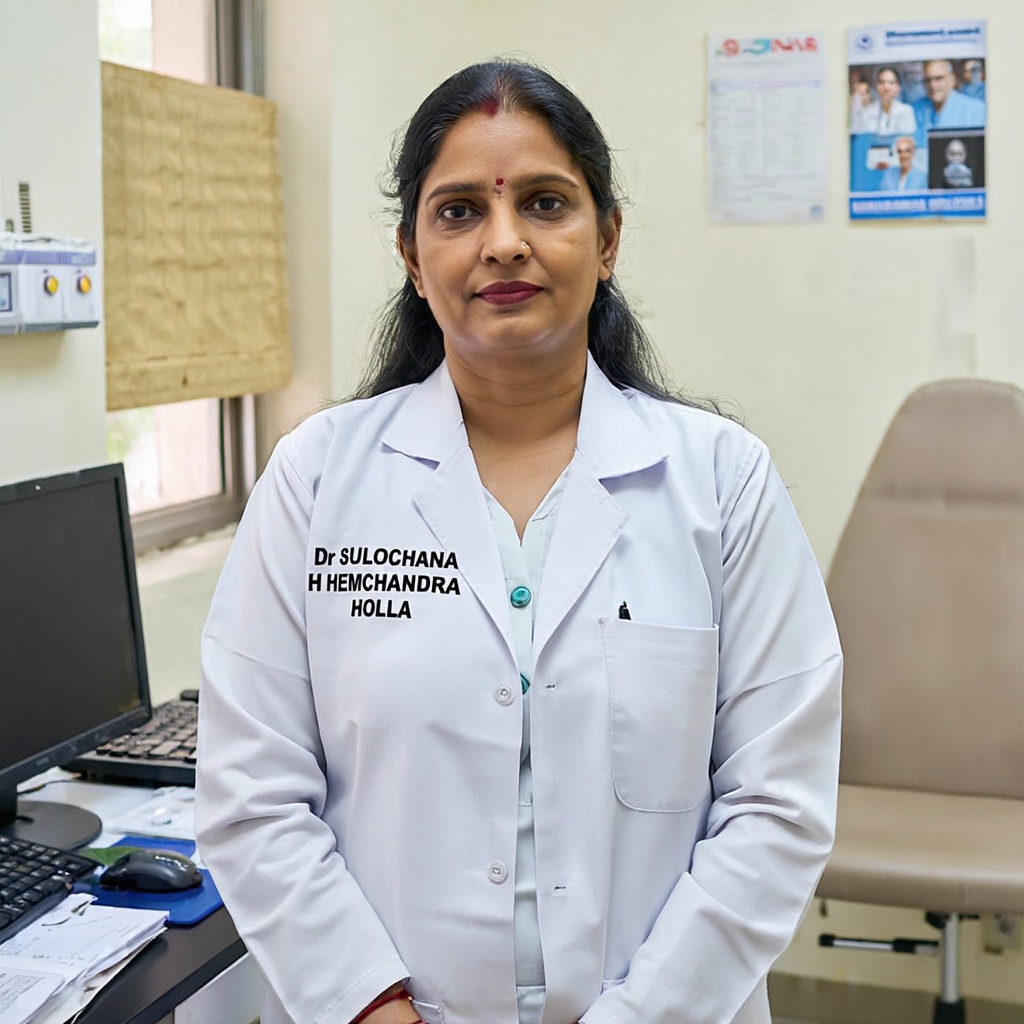
Dr SULOCHANA HEMCHANDRA HOLLA
Consultant Medical Geneticist · Reg: 8532
Last reviewed: September 7, 2026
Overview
The primary purpose of the Myotonic Dystrophy Type 1 Test is to detect the CTG trinucleotide repeat expansion in the DMPK gene that causes DM1. This test is used for diagnostic confirmation in individuals presenting with clinical features of myotonic dystrophy, presymptomatic testing for at-risk family members, carrier detection for genetic counseling and family planning, and prenatal diagnosis in families with a known DM1 mutation. Early and accurate genetic diagnosis enables timely cardiac surveillance, proactive management of symptoms, and informed reproductive decision-making.
- Test Code
- 1294
- CPT Code
- 81243
- ICD Code
- G71.11
- Price
- ₹8,500
- Sample Type
- Whole Blood
- Result Time
- Sample must be received Monday by 11 AM. Report delivered by Friday of the same week.
- Fasting Required
- No
- Method
- PCR (Polymerase Chain Reaction), Fragment Analysis
Sample Collection
No fasting is required. Ensure the Genomics Clinical Information Requisition Form (Form 20) is duly filled with complete clinical history and family pedigree information. Inform the healthcare provider about any recent blood transfusions (within the past 2 weeks). Stay well-hydrated before the blood draw.
Method: Venipuncture
Laboratory Analysis
A venipuncture will be performed to collect 4 mL (minimum 2 mL) of whole blood into a Lavender Top (EDTA) tube. The sample will be labeled correctly and mixed gently to prevent clotting. The collection process typically takes 5–10 minutes.
Report Delivery
Apply pressure to the puncture site with cotton for 3–5 minutes. The sample must be shipped refrigerated (2–8°C). DO NOT FREEZE the sample. Mild bruising at the collection site is normal and resolves within a few days.
Timeline: Sample must be received Monday by 11 AM. Report delivered by Friday of the same week.
Patient Instructions
About This Test
Who Should Get This Test
The primary purpose of the Myotonic Dystrophy Type 1 Test is to detect the CTG trinucleotide repeat expansion in the DMPK gene that causes DM1. This test is used for diagnostic confirmation in individuals presenting with clinical features of myotonic dystrophy, presymptomatic testing for at-risk family members, carrier detection for genetic counseling and family planning, and prenatal diagnosis in families with a known DM1 mutation. Early and accurate genetic diagnosis enables timely cardiac surveillance, proactive management of symptoms, and informed reproductive decision-making.
How to Prepare
- Genomics Clinical Information Requisition Form (Form 20) must be duly filled and submitted with the sample
- Collect 4 mL (2 mL min.) of whole blood in a Lavender Top (EDTA) tube
- Mix the blood gently by inverting the tube 8–10 times immediately after collection
- Ship the sample refrigerated (2–8°C) — DO NOT FREEZE
- Ensure the sample reaches the laboratory within the stability period
- Label the tube clearly with patient name, date of birth, and sample collection date
- Provide detailed family history and clinical information on the requisition form
Doctor's Notes
Reviewed by Dr SULOCHANA HEMCHANDRA HOLLA — MBBS, MD (Medical Genetics) · Reg. No. 8532
"Myotonic Dystrophy Type 1 is an autosomal dominant disorder with variable expressivity and genetic anticipation, meaning symptoms may worsen in successive generations. Individuals with a family history of DM1, unexplained muscle weakness, early-onset cataracts, or cardiac conduction abnormalities should consider genetic testing. Early diagnosis through DMPK gene analysis allows for proactive cardiac monitoring, management of myotonia, and informed genetic counseling for family planning decisions. I strongly recommend genetic counseling both before and after testing to help patients and families understand the implications of results."
Last medically reviewed: September 7, 2026
Test Parameters & Specifications
Sample Stability
- Sample received in a frozen condition
- Sample collected in a non-EDTA anticoagulant tube
- Hemolyzed, clotted, or insufficient volume sample
- Missing or incomplete Genomics Clinical Information Requisition Form (Form 20)
- Sample received beyond the stability period (more than 1 week refrigerated or more than 6 hours at room temperature)
- Unlabeled or mislabeled samples
Understanding Your Results
The number of CTG repeats falls within the normal range. This result is consistent with not having DM1 and not being a carrier for the condition. However, this test does not rule out other neuromuscular disorders.
Status: Normal
Range: 5–34 CTG repeats
This range is considered a premutation. Individuals are typically unaffected or minimally affected, but the expansion is unstable and may expand into the full mutation range in subsequent generations, leading to affected offspring (genetic anticipation). Genetic counseling is strongly recommended.
Status: Premutation / Intermediate
Range: 35–49 CTG repeats
A full mutation consistent with mild DM1, typically presenting in adulthood (40–70 years) with cataracts, mild myotonia, and mild muscle weakness. Cardiac monitoring is recommended.
Status: Full Mutation – Mild DM1
Range: 50–150 CTG repeats
A full mutation consistent with classical DM1, presenting typically between ages 10–40 with significant myotonia, progressive distal muscle weakness, cardiac conduction defects, cataracts, and possible multisystem involvement. Regular cardiac and respiratory monitoring is essential.
Status: Full Mutation – Classical DM1
Range: 100–1000 CTG repeats
A very large expansion consistent with congenital DM1, which presents at birth with severe hypotonia, respiratory failure, feeding difficulties, and significant developmental delays. This form is almost always maternally inherited and requires multidisciplinary neonatal care.
Status: Full Mutation – Congenital DM1
Range: >1000 CTG repeats
Consult your doctor if you or a family member experience unexplained muscle stiffness or difficulty relaxing muscles, progressive muscle weakness especially in the face, hands, or lower legs, early-onset cataracts, irregular heartbeat or fainting episodes, excessive daytime sleepiness, or difficulty swallowing. If you have a family history of myotonic dystrophy, genetic counseling and testing should be discussed at the earliest opportunity, especially before family planning. If your test results are positive or inconclusive, consult a clinical geneticist or neurologist for comprehensive evaluation and management.
Limitations
- ⚠This test detects CTG repeat expansions in the DMPK gene only and does not screen for Myotonic Dystrophy Type 2 (DM2), which is caused by a different gene (CNBP/ZNF9)
- ⚠Exact sizing of very large expansions may not be possible; results may be reported as a range
- ⚠Cannot determine the exact age of onset or severity of symptoms based on repeat size alone, due to variable expressivity
- ⚠Does not detect other genetic or acquired neuromuscular disorders
- ⚠Prenatal testing requires specialized sample collection and handling protocols
Risks & Considerations
- ●Minor bruising or discomfort at the venipuncture site
- ●Rare risk of infection at the needle insertion point
- ●Psychological impact of receiving a positive genetic diagnosis — genetic counseling is recommended before and after testing
- ●Risk of insurance or employment discrimination based on genetic information (consult local laws and regulations regarding genetic privacy)
Interfering Factors
- ●Degraded or insufficient DNA quality in the blood sample may affect test accuracy
- ●Very large expansions (>1000 repeats) may be difficult to fully size by standard PCR and may require additional Southern blot analysis
- ●Sample contamination during collection or transport may lead to inconclusive results
- ●Blood transfusion within the past 2 weeks may interfere with DNA extraction from patient's own cells
Compare With Similar Tests
| Test | Myotonic Dystrophy Type 1 Test | Myotonic Dystrophy Type 2 Test | Muscular Dystrophy Gene Panel | Creatine Kinase (CK) Test |
|---|---|---|---|---|
| Comparison | Myotonic Dystrophy Type 1 Test |
Frequently Asked Questions
What is Myotonic Dystrophy Type 1 (DM1)?
What does the Myotonic Dystrophy Type 1 Test detect?
Who should get tested for Myotonic Dystrophy Type 1?
What sample is required for the DM1 genetic test?
Is fasting required for the Myotonic Dystrophy Type 1 Test?
How much does the Myotonic Dystrophy Type 1 Test cost in India?
How long does it take to get the DM1 test results?
Is the DM1 test available with home sample collection?
What is the difference between Myotonic Dystrophy Type 1 and Type 2?
Can DM1 be diagnosed before birth?
What is genetic anticipation in Myotonic Dystrophy Type 1?
What should I do if my DM1 test result is positive?
Related Tests
Huntington Disease Mutation Detection Test
₹8,000Nx Gen Sequencing: Duchenne & Becker Muscular Dystrophy Test
₹23,400Nx Gen Sequencing: Tuberous Sclerosis Complex Test
₹27,495MED25 Gene CMT2B2 NGS Genetic Test
₹20,000FLNA Gene Intestinal pseudoobstraction, neuronal NGS Genetic Test
₹20,000CNKSR2 Gene Intellectual disability nonsyndromic, CNKSR2 related NGS Genetic Test
₹20,000Reference Laboratory Services
We serve as a reference laboratory for hospitals and clinics across India. Send samples from your facility with same-day pickup, priority processing, and results delivered through our online portal. Competitive institutional pricing available.
Your Data Privacy
Your medical data is protected under Indian law.
✓ Stored in India: All patient records are stored on servers located in India. No data is transferred outside the country.
✓ DPDP Act Compliant: Under the Digital Personal Data Protection Act 2023, you can request deletion of your records at any time by contacting support.
Book Your Test
Enter your details and we'll connect you within 15 minutes.