
NDUFAF3 Gene Leigh syndrome NGS Genetic Test
Short Name: NDUFAF3 Leigh Syndrome NGS
Also known as: NDUFAF3 Gene Sequencing, Leigh Syndrome NGS Genetic Test, Mitochondrial Complex I Assembly Factor 3 Gene Test
NDUFAF3 Gene Leigh syndrome NGS Genetic Test test available at DNA Labs India for ₹20,000. Uses NGS Technology on Blood or Extracted DNA or One drop Blood on FTA Card samples. Results in Reports are generally issued within 3 to 4 weeks after the sample reaches the laboratory.. Free home collection in 300+ cities across India.

🩺 Medically Reviewed By
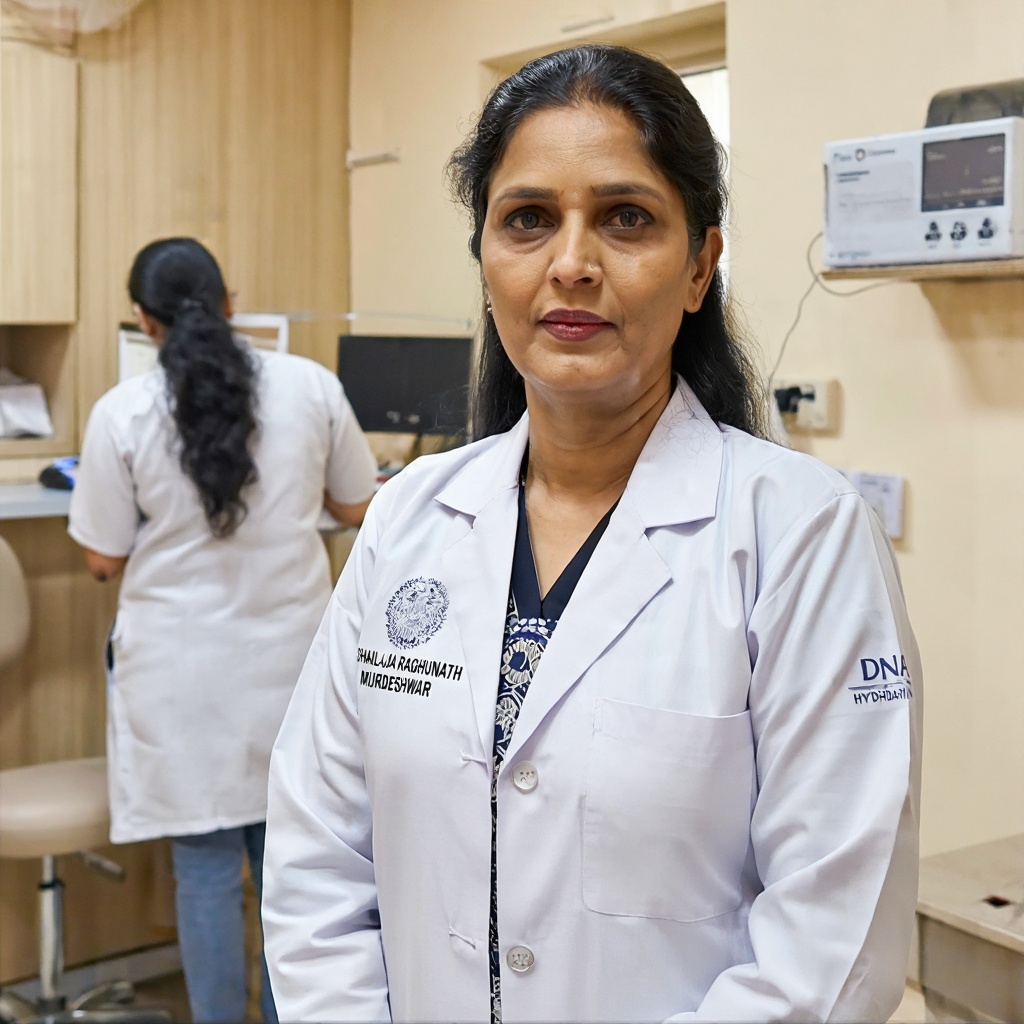
Dr SHAILAJA RAGHUNATH MURDESHWAR
Consultant Physician · Reg: 8052
Last reviewed: September 7, 2026
Overview
To identify pathogenic or likely pathogenic variants in the NDUFAF3 gene that cause Leigh syndrome. This test helps confirm the genetic aetiology in patients with clinical features of mitochondrial complex I deficiency or Leigh syndrome.
- Test Code
- 4171
- ICD Code
- G31.82
- Price
- ₹20,000
- Sample Type
- Blood or Extracted DNA or One drop Blood on FTA Card
- Result Time
- Reports are generally issued within 3 to 4 weeks after the sample reaches the laboratory.
- Fasting Required
- No
- Method
- NGS Technology
Sample Collection
No special preparation or fasting is needed. The patient's clinical history and a family pedigree should be provided. Genetic counselling is recommended before the sample is collected.
Method: Venipuncture / FTA card blood spot
Laboratory Analysis
A small blood sample is collected in an EDTA vacutainer by a trained phlebotomist. Alternatively, a blood spot is placed on an FTA card or a previously extracted DNA sample is submitted.
Report Delivery
There are no restrictions after sample collection. The patient can resume routine activities.
Timeline: Reports are generally issued within 3 to 4 weeks after the sample reaches the laboratory.
Patient Instructions
About This Test
Who Should Get This Test
To identify pathogenic or likely pathogenic variants in the NDUFAF3 gene that cause Leigh syndrome. This test helps confirm the genetic aetiology in patients with clinical features of mitochondrial complex I deficiency or Leigh syndrome.
How to Prepare
- Use EDTA tube for whole blood collection.
- Prepare FTA card with one blood spot and air-dry completely before packing.
- Label the sample with patient name, date of birth, and collection date.
Doctor's Notes
Reviewed by Dr SHAILAJA RAGHUNATH MURDESHWAR — MBBS, MD (General Medicine) · Reg. No. 8052
"A positive NDUFAF3 variant should be correlated with MRI findings, metabolic testing, and mitochondrial enzyme studies. Non-directive genetic counselling is strongly recommended for the entire family."
Last medically reviewed: September 7, 2026
Test Parameters & Specifications
Sample Stability
- Clotted or severely haemolysed blood
- Unlabelled sample
- Insufficient quantity of blood or DNA
- Improperly dried FTA card
Understanding Your Results
Consistent with NDUFAF3-related Leigh syndrome; confirmatory.
Usually diagnostic; additional clinical correlation advised.
Cannot be classified as disease-causing; further testing may be needed.
Decreases likelihood of NDUFAF3-related disease but does not exclude Leigh syndrome.
Consult a neurologist or clinical geneticist if there is developmental regression, hypotonia, seizures, breathing problems, or vision loss, especially in children or young adults with a family history of mitochondrial disease.
Limitations
- ⚠This test analyses NDUFAF3 only and does not rule out other nuclear or mitochondrial gene causes of Leigh syndrome.
- ⚠NGS may not detect all copy number variants, structural rearrangements, or deep intronic mutations.
- ⚠A variant of uncertain significance may require additional family studies or functional testing.
Risks & Considerations
- ●Blood draw risks: minor pain, bleeding or bruising at puncture site.
- ●Possibility of detecting a variant of uncertain significance, which may cause anxiety.
- ●Potential implications for family members; genetic counselling is advised.
- ●Genetic data privacy concerns; use of secure laboratory systems.
Interfering Factors
- ●Sample contamination with another individual's DNA
- ●Poor DNA quality or quantity
- ●Incomplete patient clinical information
- ●Use of heparinised blood tubes which can inhibit PCR
Compare With Similar Tests
| Test | NDUFAF3 Gene Leigh syndrome NGS Genetic Test | ||||
|---|---|---|---|---|---|
| Comparison | NDUFAF3 Gene Leigh syndrome NGS Genetic Test |
Frequently Asked Questions
What is the NDUFAF3 gene Leigh syndrome NGS genetic test?
Why is the NDUFAF3 gene tested for Leigh syndrome?
What sample is required for this test?
Do I need to fast before the test?
How long will the test report take?
What does a positive result mean?
What does a negative result mean?
Will I receive raw data with the report?
Is genetic counselling recommended?
Can this test detect all types of mitochondrial disorders?
What is the cost of this test?
Is home sample collection available for this test?
Related Tests
Angelman Syndrome Test
₹10,000Duchenne / Becker Muscular Dystrophy (DMD / BMD) Gene Mutation Test
₹14,000Episodic Ataxia Type 1 Hotspot Test
₹11,500Episodic Ataxia Comprehensive Profile Hotspot Test
₹16,000Megalencephalic Leukoencephalopathy with Subcortical Cysts Van Der Knaap and Nalband MLC Gene Hotspot Mutation Test
₹7,500Analyzer 18 SMA 18 Test Panel
₹1,755Reference Laboratory Services
We serve as a reference laboratory for hospitals and clinics across India. Send samples from your facility with same-day pickup, priority processing, and results delivered through our online portal. Competitive institutional pricing available.
Your Data Privacy
Your medical data is protected under Indian law.
✓ Stored in India: All patient records are stored on servers located in India. No data is transferred outside the country.
✓ DPDP Act Compliant: Under the Digital Personal Data Protection Act 2023, you can request deletion of your records at any time by contacting support.
Book Your Test
Enter your details and we'll connect you within 15 minutes.