
PDE6H Gene Achromatopsia Type 6 NGS Genetic Test
Short Name: PDE6H Achromatopsia Type 6 NGS Test
Also known as: PDE6H Gene Mutation Test, Achromatopsia Type 6 Genetic Test, PDE6H NGS Sequencing Test, Rod Monochromacy Type 6 Genetic Test, Cone Phosphodiesterase Gamma Subunit Gene Test
PDE6H Gene Achromatopsia Type 6 NGS Genetic Test test available at DNA Labs India for ₹20,000. Uses Next Generation Sequencing (NGS), Sanger Confirmation (if required), Bioinformatics Pipeline Analysis on Blood or Extracted DNA or One Drop Blood on FTA Card samples. Results in Results are typically available within 3 to 4 weeks from the date of sample receipt at the laboratory. Reports are delivered through the online portal, email, and WhatsApp. Raw Data, FASTQ, and VCF files are also provided upon request for transparency and secondary analysis.. Free home collection in 300+ cities across India.

🩺 Medically Reviewed By
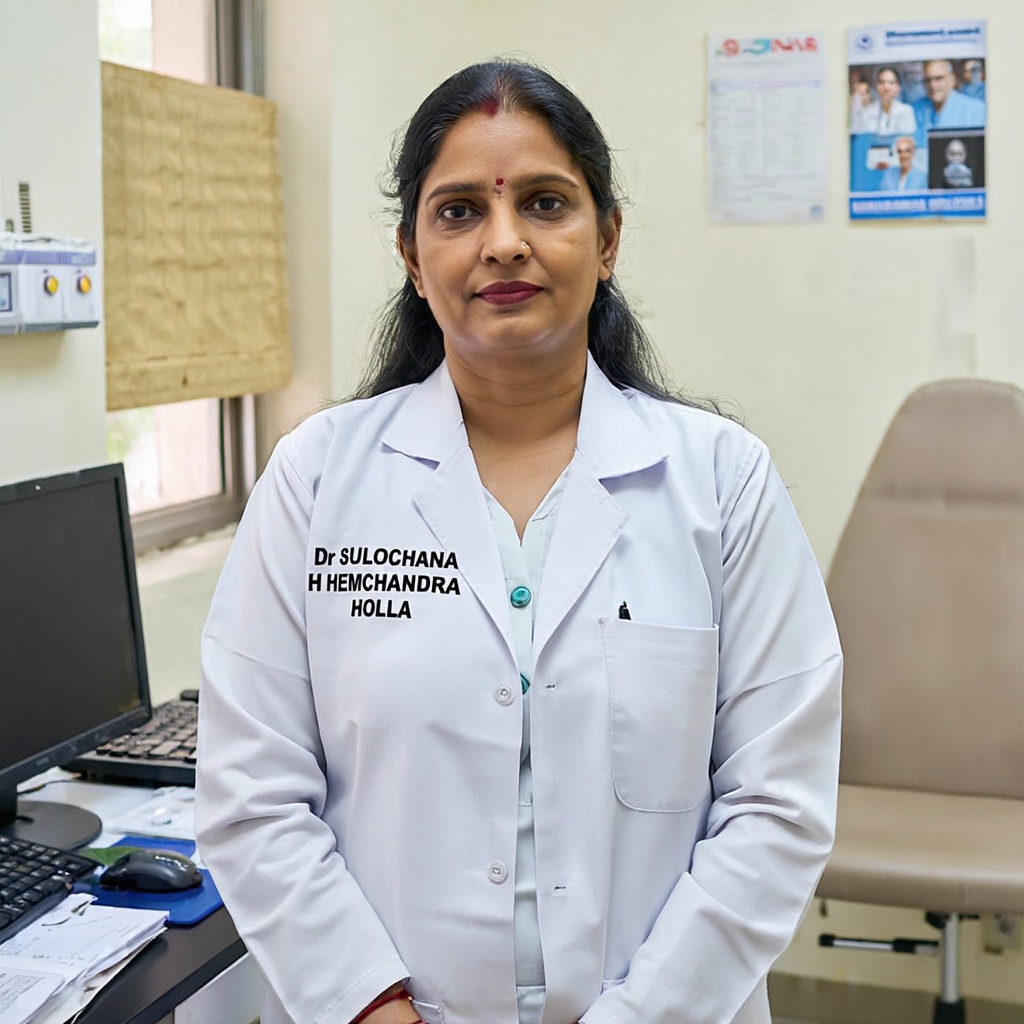
Dr SULOCHANA HEMCHANDRA HOLLA
Consultant Medical Geneticist · Reg: 8532
Last reviewed: September 7, 2026
Overview
The primary purpose of the PDE6H Gene Achromatopsia Type 6 NGS Genetic Test is to identify pathogenic or likely pathogenic mutations in the PDE6H gene that cause Achromatopsia Type 6. This test is used for molecular confirmation of clinical diagnosis in symptomatic individuals, carrier testing for family members of affected patients, prenatal or preconception carrier screening in families with a known history, and differential diagnosis of cone disorders and color vision deficiencies. The results guide ophthalmologists and clinical geneticists in disease management, visual rehabilitation planning, and genetic counseling for affected families.
- Test Code
- 1465
- CPT Code
- 81479
- ICD Code
- H53.51
- Price
- ₹20,000
- Sample Type
- Blood or Extracted DNA or One Drop Blood on FTA Card
- Result Time
- Results are typically available within 3 to 4 weeks from the date of sample receipt at the laboratory. Reports are delivered through the online portal, email, and WhatsApp. Raw Data, FASTQ, and VCF files are also provided upon request for transparency and secondary analysis.
- Fasting Required
- No
- Method
- Next Generation Sequencing (NGS), Sanger Confirmation (if required), Bioinformatics Pipeline Analysis
Sample Collection
No specific preparation such as fasting is required. The patient should provide a detailed clinical history and family pedigree information. A genetic counseling session is recommended prior to sample collection to understand test implications.
Method: Venipuncture (blood) or buccal swab
Laboratory Analysis
A venous blood sample (3-5 mL) is collected in an EDTA (lavender-top) vacutainer tube by a trained phlebotomist. Alternatively, a buccal (cheek) swab or one drop of blood on an FTA card may be used. The collection process is quick and minimally invasive.
Report Delivery
The sample is labeled, stored at ambient room temperature, and transported to the DNA Labs India laboratory following standard biosafety protocols. Results are typically available within 3 to 4 weeks and will be shared via the online portal, email, or WhatsApp.
Timeline: Results are typically available within 3 to 4 weeks from the date of sample receipt at the laboratory. Reports are delivered through the online portal, email, and WhatsApp. Raw Data, FASTQ, and VCF files are also provided upon request for transparency and secondary analysis.
Patient Instructions
About This Test
Who Should Get This Test
The primary purpose of the PDE6H Gene Achromatopsia Type 6 NGS Genetic Test is to identify pathogenic or likely pathogenic mutations in the PDE6H gene that cause Achromatopsia Type 6. This test is used for molecular confirmation of clinical diagnosis in symptomatic individuals, carrier testing for family members of affected patients, prenatal or preconception carrier screening in families with a known history, and differential diagnosis of cone disorders and color vision deficiencies. The results guide ophthalmologists and clinical geneticists in disease management, visual rehabilitation planning, and genetic counseling for affected families.
How to Prepare
- Collect 3-5 mL peripheral venous blood in an EDTA (lavender-top) vacutainer tube
- Alternatively, collect a buccal swab using a sterile collection kit or one drop of blood on an FTA card
- Ensure proper patient identification and labeling of the sample with name, date, and unique ID
- Store the sample at ambient room temperature (15-30°C); do not freeze
- Transport the sample to the laboratory within 48 hours of collection
- Include the signed consent form and clinical history form with the sample
Doctor's Notes
Reviewed by Dr SULOCHANA HEMCHANDRA HOLLA — MBBS, MD (Medical Genetics) · Reg. No. 8532
"Achromatopsia Type 6 is a rare autosomal recessive disorder caused by mutations in the PDE6H gene. Early genetic confirmation through NGS testing allows for accurate diagnosis, appropriate visual rehabilitation strategies such as tinted lenses and low-vision aids, and informed genetic counseling for affected families. Parents who are confirmed carriers can benefit from family planning guidance. I recommend this test for any patient presenting with congenital nystagmus, photophobia, and absent color vision to establish a definitive molecular diagnosis."
Last medically reviewed: September 7, 2026
Test Parameters & Specifications
Sample Stability
- Clotted blood sample or sample collected in wrong tube type (e.g., heparin instead of EDTA)
- Insufficient sample volume (less than 2 mL blood)
- Sample without proper labeling or identification
- Severely hemolyzed or contaminated sample
- Sample received without accompanying consent form or clinical history
Understanding Your Results
No pathogenic variants detected
Negative for PDE6H-related Achromatopsia Type 6
Two pathogenic or likely pathogenic variants detected (homozygous or compound heterozygous)
Confirmed diagnosis of Achromatopsia Type 6 (ACHM6)
One pathogenic or likely pathogenic variant detected (heterozygous carrier)
Carrier of Achromatopsia Type 6 – genetic counseling recommended
One or more variants of uncertain significance (VUS) detected
Inconclusive – requires further evaluation and follow-up
Consult a clinical geneticist or ophthalmologist if the test reveals pathogenic variants consistent with Achromatopsia Type 6, if a VUS is detected and further clarification is needed, if the patient exhibits progressive vision changes, if family members wish to undergo carrier testing, or if the couple is planning a family and wants to understand recurrence risks. Genetic counseling is recommended for all families receiving a positive or carrier result.
Limitations
- ⚠This test targets only the PDE6H gene and does not screen for mutations in other achromatopsia-associated genes (e.g., CNGA3, CNGB3, GNAT2, ATF6, PDE6C)
- ⚠Deep intronic variants, large copy number variations (CNVs), and regulatory region mutations may not be fully detected by standard NGS panels
- ⚠Variants of uncertain significance (VUS) cannot be definitively classified as disease-causing without additional family studies or functional data
- ⚠A negative result does not completely exclude achromatopsia if caused by mutations in other genes or undetected structural variants
- ⚠This test is not validated for prenatal diagnosis from chorionic villus sampling (CVS) or amniocentesis without prior validation studies
Risks & Considerations
- ●Minimal risk associated with blood draw: slight bruising, soreness, or very rarely, infection at the needle site
- ●Psychological impact of genetic results: anxiety, distress, or family tension upon receiving a positive or carrier result
- ●Risk of incidental findings or variants of uncertain significance requiring further investigation
- ●No physical risks associated with buccal swab or FTA card collection methods
Interfering Factors
- ●Recent blood transfusion (within 120 days) may affect DNA quality and results
- ●Heparin-treated blood samples can interfere with NGS library preparation
- ●Degraded or insufficient DNA quantity may require recollection
- ●Presence of somatic mosaicism may limit detection sensitivity
- ●Highly homologous pseudogene regions may occasionally affect read mapping accuracy
Compare With Similar Tests
| Test | PDE6H Gene Achromatopsia Type 6 NGS Genetic Test | CNGA3 Gene Achromatopsia Type 2 NGS Genetic Test | CNGB3 Gene Achromatopsia Type 3 NGS Genetic Test | Comprehensive Achromatopsia Gene Panel NGS Test |
|---|---|---|---|---|
| Comparison | PDE6H Gene Achromatopsia Type 6 NGS Genetic Test |
Frequently Asked Questions
What is Achromatopsia Type 6?
What gene is responsible for Achromatopsia Type 6?
How is Achromatopsia Type 6 inherited?
What are the symptoms of Achromatopsia Type 6?
How is the PDE6H Gene Achromatopsia Type 6 NGS Genetic Test performed?
What is the cost of the PDE6H Gene Achromatopsia Type 6 NGS Genetic Test?
What sample is required for this genetic test?
How long does it take to get the results?
Is home sample collection available for this test?
Who should get the PDE6H Gene Achromatopsia Type 6 NGS Genetic Test?
What is the difference between this single-gene test and a comprehensive achromatopsia panel?
Does DNA Labs India provide raw sequencing data along with the clinical report?
Related Tests
Nx Gen Sequencing: Usher Syndrome Test
₹28,665Nx Gen Sequencing: Retinitis Pigmentosa Test
₹20,000CACNA1F Gene Aland Island Eye Disease NGS Genetic Test
₹20,000TGFBI Gene Corneal Dystrophy, Epithelial Basement Membrane NGS Genetic Test
₹20,000ADAMTSL4 Gene Ectopia Lentis Et Pupillae NGS Genetic Test
₹20,000TSPAN12 Gene Exudative Vitreoretinopathy Type 5 NGS Genetic Test
₹20,000Reference Laboratory Services
We serve as a reference laboratory for hospitals and clinics across India. Send samples from your facility with same-day pickup, priority processing, and results delivered through our online portal. Competitive institutional pricing available.
Your Data Privacy
Your medical data is protected under Indian law.
✓ Stored in India: All patient records are stored on servers located in India. No data is transferred outside the country.
✓ DPDP Act Compliant: Under the Digital Personal Data Protection Act 2023, you can request deletion of your records at any time by contacting support.
Book Your Test
Enter your details and we'll connect you within 15 minutes.