
FISH - MDS Panel - Chromosomes 5q, 7q, 8q & 20q Test
Short Name: FISH MDS Panel
Also known as: MDS FISH Panel, FISH for MDS, Chromosomal Abnormality Panel for MDS, MDS Cytogenetic FISH Panel, FISH Del(5q) Del(7q) Trisomy 8 Del(20q) Test
FISH - MDS Panel - Chromosomes 5q, 7q, 8q & 20q Test test available at DNA Labs India for ₹12,000. Uses Fluorescence In Situ Hybridization (FISH), Molecular Cytogenetics on Whole Blood or Bone Marrow Aspirate samples. Results in Sample accepted daily by 4:00 PM. Report available within 4 working days. Results are delivered via Online Portal, Email, and WhatsApp.. Free home collection in 300+ cities across India.

🩺 Medically Reviewed By
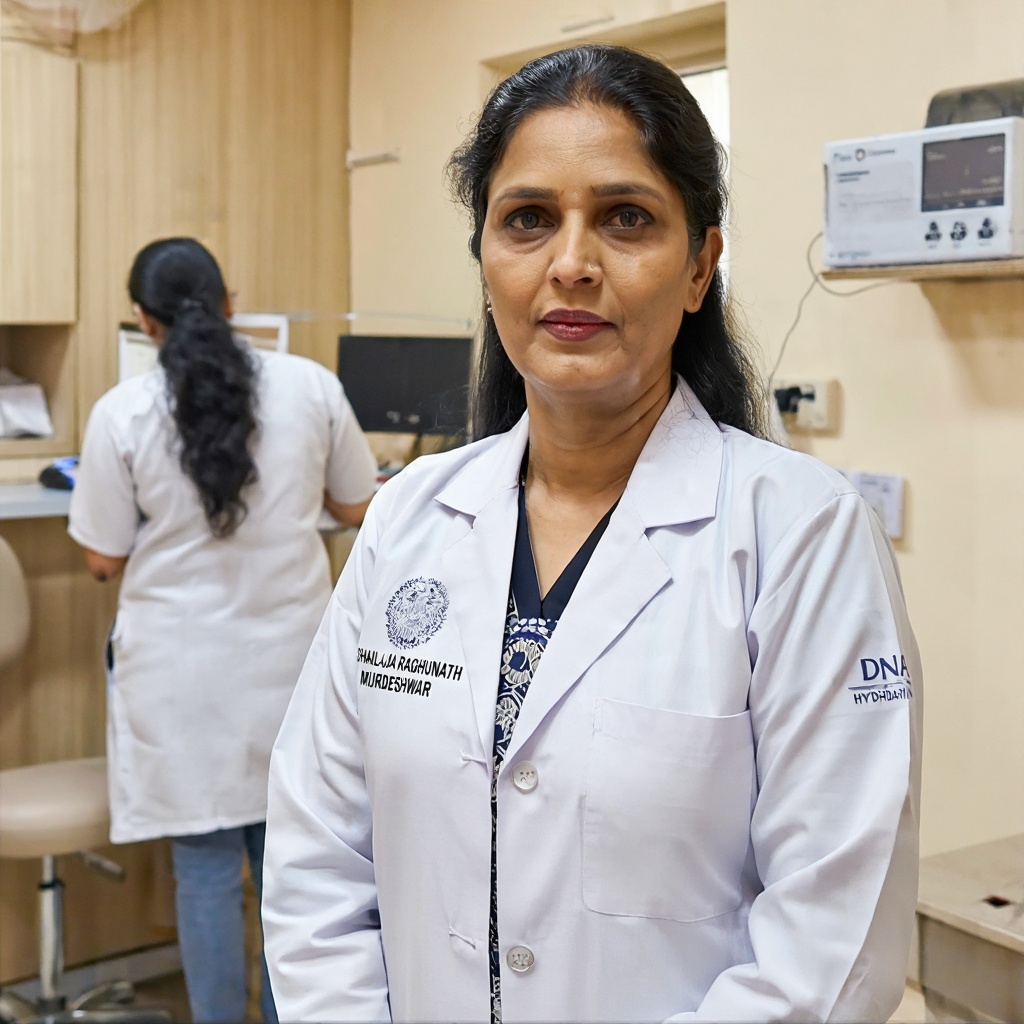
Dr SHAILAJA RAGHUNATH MURDESHWAR
Consultant Physician · Reg: 8052
Last reviewed: September 7, 2026
Overview
The primary purpose of the FISH MDS Panel is to identify recurrent chromosomal abnormalities associated with Myelodysplastic Syndromes. These findings aid in diagnosis confirmation, WHO subtype classification, prognostic stratification, treatment selection (such as lenalidomide for del(5q) syndrome), and disease monitoring during and after therapy.
- Test Code
- 590
- CPT Code
- 88271, 88275
- ICD Code
- D46.9
- Price
- ₹12,000
- Sample Type
- Whole Blood or Bone Marrow Aspirate
- Result Time
- Sample accepted daily by 4:00 PM. Report available within 4 working days. Results are delivered via Online Portal, Email, and WhatsApp.
- Fasting Required
- No
- Method
- Fluorescence In Situ Hybridization (FISH), Molecular Cytogenetics
Sample Collection
Ensure the Chromosome & FISH Analysis Requisition Form (Form 17) is duly completed. Inform the physician about any ongoing treatments, prior chemotherapy, or recent transfusions that may affect results.
Method: Venipuncture (whole blood) or Bone Marrow Aspiration
Laboratory Analysis
Sample is collected via venipuncture (5 mL whole blood) or bone marrow aspiration (4 mL). Blood or bone marrow is drawn directly into Green Top (Sodium Heparin) tubes. A minimum of 3 mL whole blood or 2 mL bone marrow is required.
Report Delivery
Label the sample properly and transport at 18-22°C. Do not freeze or refrigerate. Ensure the sample reaches the laboratory within 48 hours of collection for optimal cell viability.
Timeline: Sample accepted daily by 4:00 PM. Report available within 4 working days. Results are delivered via Online Portal, Email, and WhatsApp.
Patient Instructions
About This Test
Who Should Get This Test
The primary purpose of the FISH MDS Panel is to identify recurrent chromosomal abnormalities associated with Myelodysplastic Syndromes. These findings aid in diagnosis confirmation, WHO subtype classification, prognostic stratification, treatment selection (such as lenalidomide for del(5q) syndrome), and disease monitoring during and after therapy.
How to Prepare
- Duly filled Chromosome & FISH Analysis Requisition Form (Form 17) is mandatory
- Collect 5 mL (min. 3 mL) whole blood OR 4 mL (min. 2 mL) bone marrow in 2 Green Top (Sodium Heparin) tubes
- Ship the sample at 18-22°C; DO NOT FREEZE
- Avoid using EDTA tubes for this test
- Ensure sample reaches the lab within 48 hours at room temperature
- Free home sample collection available for online bookings across India
Doctor's Notes
Reviewed by Dr SHAILAJA RAGHUNATH MURDESHWAR — MBBS, MD (General Medicine) · Reg. No. 8052
"The FISH MDS Panel targeting chromosomes 5q, 7q, 8q, and 20q is an essential adjunct to conventional karyotyping in the evaluation of suspected MDS. Detection of del(5q) may indicate the 5q- syndrome subtype with a relatively favorable prognosis, while del(7q) or monosomy 7 is associated with a poorer outcome. Trisomy 8 and del(20q) are other recurrent abnormalities that help refine the WHO classification and inform treatment decisions, including eligibility for targeted therapies such as lenalidomide. I recommend this test for all patients with unexplained cytopenias and dysplastic bone marrow findings."
Last medically reviewed: September 7, 2026
Test Parameters & Specifications
Sample Stability
- Sample received in EDTA tubes instead of sodium heparin
- Sample received frozen or at temperatures outside 18-22°C range
- Sample volume below minimum requirement
- Missing or incomplete Chromosome & FISH Analysis Requisition Form (Form 17)
- Sample older than 48 hours at room temperature
- Heavily hemolyzed or clotted sample
Understanding Your Results
No deletions or gains detected on chromosomes 5q, 7q, 8q, or 20q. This does not entirely exclude MDS, as other chromosomal or molecular abnormalities may be present.
Action: Correlate with clinical picture, CBC, bone marrow morphology, and consider conventional karyotyping or molecular testing.
Deletion of the long arm of chromosome 5 identified. If isolated (sole abnormality), consistent with MDS with isolated del(5q) (5q- syndrome), which generally carries a favorable prognosis.
Action: Consider lenalidomide therapy. Monitor for disease progression and blast count.
Deletion of 7q or loss of chromosome 7 is associated with poor prognosis and higher risk of AML transformation.
Action: Aggressive monitoring; consider allogeneic stem cell transplant evaluation if eligible.
Extra copy of chromosome 8 or gain of 8q region. One of the most common abnormalities in MDS with intermediate prognostic significance.
Action: Integrate with IPSS-R scoring. Monitor for disease evolution.
Deletion of the long arm of chromosome 20. When present as a sole abnormality, generally associated with favorable to intermediate prognosis.
Action: Monitor disease course. Correlate with morphology and clinical findings.
Two or more chromosomal abnormalities identified. Generally associated with higher-risk MDS and poorer prognosis.
Action: Urgent hematological evaluation. Consider intensive treatment approaches including transplant evaluation.
Consult your hematologist or oncologist if you experience persistent unexplained fatigue, shortness of breath, frequent infections, easy bruising, or unexplained bleeding. If you have been diagnosed with unexplained cytopenias or dysplastic bone marrow changes, discuss FISH testing with your physician. Abnormal FISH results should always be reviewed by a specialist who can integrate them with your complete clinical picture to guide management decisions.
Limitations
- ⚠FISH detects only targeted chromosomal regions; it does not replace a comprehensive karyotype or genomic analysis
- ⚠Results may be negative despite the presence of MDS if the targeted abnormalities are absent
- ⚠Low-level mosaicism below the detection threshold (typically <5% of interphase nuclei) may not be identified
- ⚠This panel does not detect point mutations, gene rearrangements, or cryptic translocations outside the targeted loci
- ⚠Bone marrow samples generally provide higher sensitivity than peripheral blood samples for FISH analysis in MDS
Risks & Considerations
- ●For blood draw: Minimal risk; slight bruising or discomfort at the puncture site
- ●For bone marrow aspiration: Mild to moderate pain at the aspiration site, minor bleeding, or infection (rare)
- ●No radiation exposure as FISH is a laboratory-based fluorescent microscopy technique
Interfering Factors
- ●Sample contamination or improper handling during collection and transport
- ●Insufficient viable cells in the sample
- ●Use of incorrect anticoagulant (EDTA instead of sodium heparin)
- ●Delayed sample processing beyond stability window
- ●Sample stored at incorrect temperature (freezing destroys cell morphology)
Compare With Similar Tests
| Test | FISH - MDS Panel - Chromosomes 5q, 7q, 8q & 20q Test | Conventional Karyotyping | Next-Generation Sequencing (NGS) for MDS | Bone Marrow Biopsy with Morphology | Complete Blood Count (CBC) |
|---|---|---|---|---|---|
| Comparison | FISH - MDS Panel - Chromosomes 5q, 7q, 8q & 20q Test | Karyotyping analyzes the entire chromosome set but requires dividing cells and may take 2-3 weeks. FISH is faster (4 days) and more sensitive for detecting specific targeted abnormalities, but examines only selected chromosomal regions. | NGS detects gene mutations (e.g., SF3B1, TET2, ASXL1) at the DNA level. FISH detects large chromosomal deletions and gains. Both are complementary; NGS provides molecular mutation data while FISH provides chromosomal structural information. | Morphological examination identifies dysplastic changes and blast percentage. FISH complements morphology by identifying underlying chromosomal causes that are not visible on microscopic examination. | CBC identifies cytopenias (low blood counts) that may suggest MDS but cannot confirm the diagnosis. FISH provides specific chromosomal information that helps confirm MDS and determine prognosis. |
Frequently Asked Questions
What is the FISH MDS Panel for Chromosomes 5q, 7q, 8q & 20q?
Who should undergo the FISH MDS Panel test?
What sample is required for this test?
Is fasting required before the FISH MDS Panel test?
What does a normal FISH MDS Panel result mean?
What does an abnormal FISH MDS Panel result indicate?
How long does it take to get the FISH MDS Panel results?
What is the cost of the FISH MDS Panel test at DNA Labs India?
How is FISH different from conventional karyotyping?
Is the FISH MDS Panel test painful?
Can FISH MDS Panel results guide treatment decisions?
Does DNA Labs India offer home sample collection for the FISH MDS Panel test?
Related Tests
Reference Laboratory Services
We serve as a reference laboratory for hospitals and clinics across India. Send samples from your facility with same-day pickup, priority processing, and results delivered through our online portal. Competitive institutional pricing available.
Your Data Privacy
Your medical data is protected under Indian law.
✓ Stored in India: All patient records are stored on servers located in India. No data is transferred outside the country.
✓ DPDP Act Compliant: Under the Digital Personal Data Protection Act 2023, you can request deletion of your records at any time by contacting support.
Book Your Test
Enter your details and we'll connect you within 15 minutes.