
FMF First Trimester Screen Test
Short Name: FMF FT Screen
Also known as: Fetal Medicine Foundation First Trimester Screen, FMF Combined Test, First Trimester Combined Screening, First Trimester Maternal Serum Screen, First Trimester Down Syndrome Screen
FMF First Trimester Screen Test test available at DNA Labs India for ₹3,500. Uses ECLIA (Electrochemiluminescence Immunoassay) on Serum samples. Results in Same day report for samples received on Tue / Thu / Sat by 9 AM. Free home collection in 300+ cities across India.

🩺 Medically Reviewed By
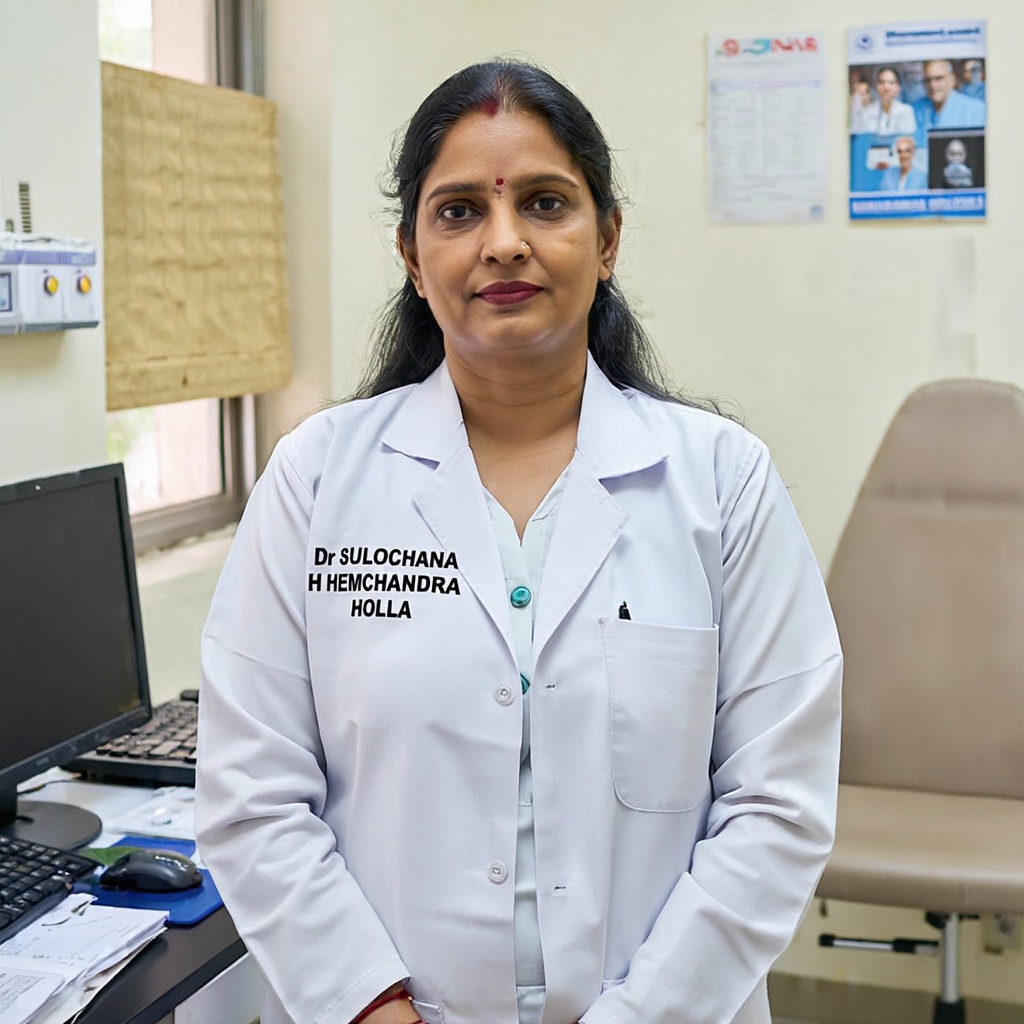
Dr SULOCHANA HEMCHANDRA HOLLA
Consultant Medical Geneticist · Reg: 8532
Last reviewed: September 7, 2026
Overview
The primary purpose of the FMF First Trimester Screen Test is to identify pregnancies at increased risk of chromosomal abnormalities, particularly Down syndrome (Trisomy 21) and Edwards syndrome (Trisomy 18), during the first trimester. This early screening enables timely clinical decision-making, appropriate genetic counselling, and the option for confirmatory diagnostic testing if required. The test also aids in assessing the overall wellbeing of the pregnancy by evaluating key maternal and fetal markers.
- Test Code
- 626
- Price
- ₹3,500
- Sample Type
- Serum
- Result Time
- Same day report for samples received on Tue / Thu / Sat by 9 AM
- Fasting Required
- No
- Method
- ECLIA (Electrochemiluminescence Immunoassay)
Sample Collection
No fasting is required. Ensure you have a duly filled Maternal Serum Screen Requisition Form (Form 11) with all mandatory details including maternal date of birth, LMP, and ultrasound report (11-13 weeks gestation with CRL, NT, and nasal bone). Inform the healthcare provider about any IVF history, smoking status, diabetic status, body weight, number of fetuses, and previous history of Trisomy 21.
Method: Venipuncture
Laboratory Analysis
A trained phlebotomist will collect approximately 2 mL of blood via venipuncture from a vein in the arm. The blood is drawn into a Serum Separator Tube (SST). The procedure typically takes less than 5 minutes and involves minimal discomfort.
Report Delivery
Apply gentle pressure on the puncture site with a cotton ball for 2-3 minutes. A small bruise may form at the site, which is normal and resolves within a few days. The sample is shipped refrigerated or frozen to the laboratory. Results are typically available on the same day for samples received on Tuesday, Thursday, or Saturday by 9 AM.
Timeline: Same day report for samples received on Tue / Thu / Sat by 9 AM
Patient Instructions
About This Test
Who Should Get This Test
The primary purpose of the FMF First Trimester Screen Test is to identify pregnancies at increased risk of chromosomal abnormalities, particularly Down syndrome (Trisomy 21) and Edwards syndrome (Trisomy 18), during the first trimester. This early screening enables timely clinical decision-making, appropriate genetic counselling, and the option for confirmatory diagnostic testing if required. The test also aids in assessing the overall wellbeing of the pregnancy by evaluating key maternal and fetal markers.
How to Prepare
- Complete the Maternal Serum Screen Requisition Form (Form 11) accurately with all mandatory fields
- Provide the ultrasound report between 11-13 weeks gestation including CRL, NT, and nasal bone status
- Include maternal date of birth (dd/mm/yy), last menstrual period (LMP), and gestational age
- Mention the number of fetuses (singleton, twins, etc.)
- Disclose diabetic status, current body weight, IVF history, and smoking status
- Report any previous history of Trisomy 21 pregnancy
- The sample (2 mL serum in SST) must be shipped refrigerated or frozen to maintain stability
- No fasting is required before sample collection
- Test is valid between 9-13 weeks gestation (ideal 10-13 weeks)
Doctor's Notes
Reviewed by Dr SULOCHANA HEMCHANDRA HOLLA — MBBS, MD (Medical Genetics) · Reg. No. 8532
"The FMF First Trimester Screen is one of the most widely recommended prenatal screening tests globally. It combines maternal serum biochemistry with ultrasound markers to provide an individualised risk assessment for chromosomal anomalies such as Down syndrome (Trisomy 21) and Edwards syndrome (Trisomy 18). I recommend this screening to all pregnant women between 11 and 13 weeks of gestation as part of standard antenatal care. An elevated risk result does not confirm a diagnosis but indicates the need for further confirmatory testing such as CVS or amniocentesis. Early screening allows timely decision-making and appropriate counselling for expectant parents."
Last medically reviewed: September 7, 2026
Test Parameters & Specifications
Sample Stability
- Sample received without the mandatory Maternal Serum Screen Requisition Form (Form 11)
- Incomplete demographic or clinical details on the requisition form (missing LMP, DOB, or ultrasound data)
- Sample collected outside the valid gestational window of 9-13 weeks
- Haemolysed, lipaemic, or insufficient sample volume (less than 1 mL serum)
- Sample not shipped at the required temperature (refrigerated or frozen)
- Absence of ultrasound report with NT, CRL, and nasal bone assessment
- Duplicate sample received without prior communication
Understanding Your Results
The calculated risk is below the cut-off threshold. This suggests a low probability of Down syndrome. Routine antenatal care is recommended. No further testing is typically required for this indication unless other clinical concerns arise.
The calculated risk exceeds the screening cut-off. This does not confirm Down syndrome but indicates increased probability. Confirmatory diagnostic testing such as Chorionic Villus Sampling (CVS) or amniocentesis is recommended. Genetic counselling should be offered.
The risk for Edwards syndrome is below the threshold. Routine antenatal care is recommended with standard follow-up.
The risk for Edwards syndrome is elevated. Confirmatory CVS or amniocentesis with fetal karyotyping is recommended. Genetic counselling should be arranged.
An increased nuchal translucency measurement (≥ 3.5 mm) even with normal serum markers warrants specialist fetal medicine review. Additional structural assessment and fetal echocardiography may be recommended.
Very low PAPP-A may indicate risk for adverse pregnancy outcomes such as pre-eclampsia, fetal growth restriction, or preterm delivery, even when the chromosomal risk is low. Close monitoring of fetal growth in the second and third trimesters is recommended.
Consult your obstetrician or fetal medicine specialist if your FMF First Trimester Screen result indicates high risk for any chromosomal abnormality. Additionally, consult your doctor if you experience unexplained vaginal bleeding, severe abdominal pain, or have concerns about your pregnancy at any stage. If your NT measurement is significantly elevated (≥ 3.5 mm), a specialist fetal medicine consultation is recommended regardless of overall screening risk. Always discuss your screening results with a qualified healthcare provider to understand what they mean for your specific pregnancy and to plan any necessary follow-up testing.
Limitations
- ⚠This is a screening test, not a diagnostic test — it estimates risk and cannot confirm or rule out chromosomal abnormalities with certainty
- ⚠The detection rate is approximately 85-90%, meaning 10-15% of affected pregnancies may screen as low risk (false negatives)
- ⚠A false positive rate of approximately 5% means some unaffected pregnancies may be flagged as high risk
- ⚠The test is only valid between 9-13 weeks gestation (ideal window 11-13 weeks) and cannot be performed outside this timeframe
- ⚠The test primarily screens for Trisomy 21 and Trisomy 18; it does not detect all genetic or chromosomal conditions
- ⚠Screening accuracy depends heavily on the quality of ultrasound measurements (NT, CRL, nasal bone)
- ⚠A high-risk result requires confirmatory diagnostic testing such as CVS or amniocentesis for definitive diagnosis
- ⚠Results may be affected by incomplete or inaccurate patient demographic information
Risks & Considerations
- ●Minimal risk associated with blood draw — slight bruising or discomfort at the puncture site
- ●False positive results may cause unnecessary anxiety and lead to additional invasive testing
- ●False negative results (10-15% miss rate) may provide false reassurance
- ●Psychological stress associated with a high-risk screening result pending confirmatory testing
Interfering Factors
- ●Incorrect gestational age dating may affect the accuracy of risk calculations
- ●Multiple pregnancies (twins or higher-order multiples) alter biochemical marker levels and require adjusted interpretation
- ●Maternal weight can influence serum marker concentrations, requiring weight-adjusted MoM values
- ●IVF pregnancies may have different baseline marker levels requiring specific correction factors
- ●Maternal smoking status affects PAPP-A and free β-hCG levels and must be accurately recorded
- ●Insulin-dependent diabetes mellitus (pre-gestational) can lower marker levels
- ●Vaginal bleeding prior to sample collection may affect serum biochemistry
- ●Incorrect or incomplete demographic details on the requisition form may compromise risk calculation accuracy
Compare With Similar Tests
| Test | FMF First Trimester Screen Test | Double Marker Test | Triple Marker Test | Quadruple Marker Test | NIPT (Non-Invasive Prenatal Testing) | Integrated Test (First + Second Trimester Combined) |
|---|---|---|---|---|---|---|
| Comparison | FMF First Trimester Screen Test |
Frequently Asked Questions
What is the FMF First Trimester Screen Test?
When is the best time to do the FMF First Trimester Screen Test?
What does a high-risk FMF First Trimester Screen result mean?
How accurate is the FMF First Trimester Screen Test?
Is the FMF First Trimester Screen Test the same as the Double Marker Test?
Do I need to fast before the FMF First Trimester Screen Test?
What documents do I need to bring for the test?
How much does the FMF First Trimester Screen Test cost?
What happens if my screening result is high risk?
Can the FMF First Trimester Screen Test detect all birth defects?
Is the FMF First Trimester Screen Test safe during pregnancy?
Can I take the FMF First Trimester Screen Test if I am carrying twins?
Related Tests
Reference Laboratory Services
We serve as a reference laboratory for hospitals and clinics across India. Send samples from your facility with same-day pickup, priority processing, and results delivered through our online portal. Competitive institutional pricing available.
Your Data Privacy
Your medical data is protected under Indian law.
✓ Stored in India: All patient records are stored on servers located in India. No data is transferred outside the country.
✓ DPDP Act Compliant: Under the Digital Personal Data Protection Act 2023, you can request deletion of your records at any time by contacting support.
Book Your Test
Enter your details and we'll connect you within 15 minutes.