
Histopathology Direct Immunofluorescence (DIF) Skin / Conjunctival Biopsy Panel Test
Short Name: DIF Skin/Conjunctival Biopsy Panel
Also known as: Direct Immunofluorescence Test, DIF Biopsy Panel, Skin/Conjunctival DIF Test
Histopathology Direct Immunofluorescence (DIF) Skin / Conjunctival Biopsy Panel Test test available at DNA Labs India for ₹4,500. Uses Cryoprocessing, Fluorescence Microscopy on Skin / Conjunctival Biopsy specimen samples. Results in Report available in 4 working days after sample receipt.. Free home collection in 300+ cities across India.

🩺 Medically Reviewed By
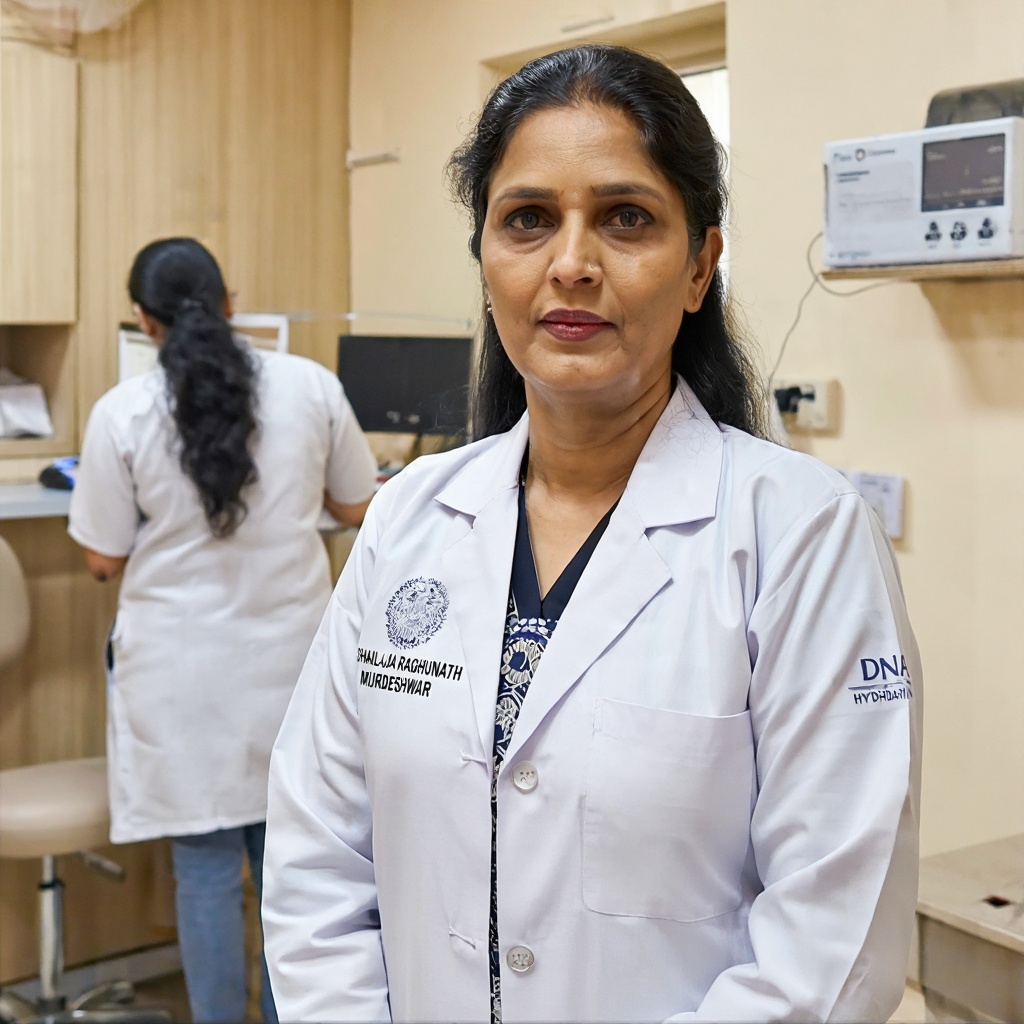
Dr SHAILAJA RAGHUNATH MURDESHWAR
Consultant Physician · Reg: 8052
Last reviewed: September 7, 2026
Overview
The purpose of the Histopathology Direct Immunofluorescence (DIF) Skin/Conjunctival Biopsy Panel Test is to detect and characterize immune deposits in skin or conjunctival biopsies to diagnose autoimmune diseases and some infections. This test helps identify conditions such as lupus erythematosus, bullous pemphigoid, pemphigus vulgaris, and others by examining for specific immunoglobulins and complement proteins, guiding appropriate treatment decisions.
- Test Code
- 758
- Price
- ₹4,500
- Sample Type
- Skin / Conjunctival Biopsy specimen
- Result Time
- Report available in 4 working days after sample receipt.
- Fasting Required
- No
- Method
- Cryoprocessing, Fluorescence Microscopy
Sample Collection
Provide brief clinical history to the healthcare provider. Ensure biopsy measures at least 3 mm in size.
Method: Biopsy collection under local anesthesia
Laboratory Analysis
A small biopsy is taken from the skin or conjunctiva under local anesthesia by a trained professional.
Report Delivery
Preserve the biopsy specimen in buffered normal saline immediately and ship refrigerated to the laboratory.
Timeline: Report available in 4 working days after sample receipt.
Patient Instructions
About This Test
Who Should Get This Test
The purpose of the Histopathology Direct Immunofluorescence (DIF) Skin/Conjunctival Biopsy Panel Test is to detect and characterize immune deposits in skin or conjunctival biopsies to diagnose autoimmune diseases and some infections. This test helps identify conditions such as lupus erythematosus, bullous pemphigoid, pemphigus vulgaris, and others by examining for specific immunoglobulins and complement proteins, guiding appropriate treatment decisions.
How to Prepare
- Give brief clinical history to the lab
- Biopsy should measure minimum 3 mm
- Preserve specimen in buffered normal saline
- Ship refrigerated at 2-8°C
Doctor's Notes
Reviewed by Dr SHAILAJA RAGHUNATH MURDESHWAR — MBBS, MD (General Medicine) · Reg. No. 8052
"This test is crucial for diagnosing autoimmune skin and eye conditions, enabling targeted treatment and management."
Last medically reviewed: September 7, 2026
Test Parameters & Specifications
Sample Stability
- Insufficient biopsy size (< 3 mm)
- Improper preservation (e.g., not in buffered saline)
- Delayed shipment beyond 24 hours
- Contaminated sample
Understanding Your Results
Linear IgG and C3 deposits at basement membrane
Intercellular IgG and C3 deposits
Granular IgA deposits along basement membrane
Positive for multiple immunoglobulins with varied patterns
Negative for immune deposits
Consult a doctor if you experience persistent skin rashes, eye inflammation, joint pain, fatigue, or other symptoms suggestive of autoimmune diseases, especially if previous tests are inconclusive.
Limitations
- ⚠Requires sufficient biopsy size for analysis
- ⚠Results may be influenced by biopsy quality
- ⚠Cannot detect all autoimmune conditions
- ⚠May need correlation with clinical history and other tests
Risks & Considerations
- ●Minimal risk of infection at biopsy site
- ●Possible scarring or pigmentation changes
- ●Bleeding or bruising
- ●Rare allergic reaction to local anesthetic
Interfering Factors
- ●Improper biopsy size or site
- ●Inadequate preservation or transportation
- ●Recent use of topical medications on biopsy area
- ●Contamination of sample
Compare With Similar Tests
| Test | Histopathology Direct Immunofluorescence (DIF) Skin / Conjunctival Biopsy Panel Test | Indirect Immunofluorescence Test | Standard Skin Biopsy | Autoimmune Antibody Panel (Blood) | HLA Typing |
|---|---|---|---|---|---|
| Comparison | Histopathology Direct Immunofluorescence (DIF) Skin / Conjunctival Biopsy Panel Test |
Frequently Asked Questions
What is the Histopathology Direct Immunofluorescence (DIF) Skin/Conjunctival Biopsy Panel Test?
Why is this test recommended?
What conditions can this test diagnose?
How is the test performed?
What are the symptoms that may indicate the need for this test?
What is the cost of the test in India?
How should I prepare for the test?
What does a positive result mean?
Are there any risks associated with the biopsy?
How long does it take to get results?
Is home sample collection available for this test?
What cities offer home collection for this test?
Related Tests
Reference Laboratory Services
We serve as a reference laboratory for hospitals and clinics across India. Send samples from your facility with same-day pickup, priority processing, and results delivered through our online portal. Competitive institutional pricing available.
Your Data Privacy
Your medical data is protected under Indian law.
✓ Stored in India: All patient records are stored on servers located in India. No data is transferred outside the country.
✓ DPDP Act Compliant: Under the Digital Personal Data Protection Act 2023, you can request deletion of your records at any time by contacting support.
Book Your Test
Enter your details and we'll connect you within 15 minutes.