
SDHD Gene Cowden syndrome type 3 NGS Genetic Test
Short Name: SDHD Gene Cowden Syndrome Type 3
Also known as: SDHD Gene Sequencing Test, Cowden Syndrome Type 3 Genetic Test, Hereditary Paraganglioma-Pheochromocytoma Syndrome Test, SDHD Mutation Analysis, Succinate Dehydrogenase Subunit D Gene Test
SDHD Gene Cowden syndrome type 3 NGS Genetic Test test available at DNA Labs India for ₹20,000. Uses Next Generation Sequencing (NGS), Bioinformatics Analysis and Variant Calling, Sanger Confirmation for Reported Variants on Blood or Extracted DNA or One Drop Blood on FTA Card samples. Results in Results are typically available within 3 to 4 weeks from the date of sample receipt at the laboratory. Reports are delivered via online portal, email, and WhatsApp.. Free home collection in 300+ cities across India.

🩺 Medically Reviewed By
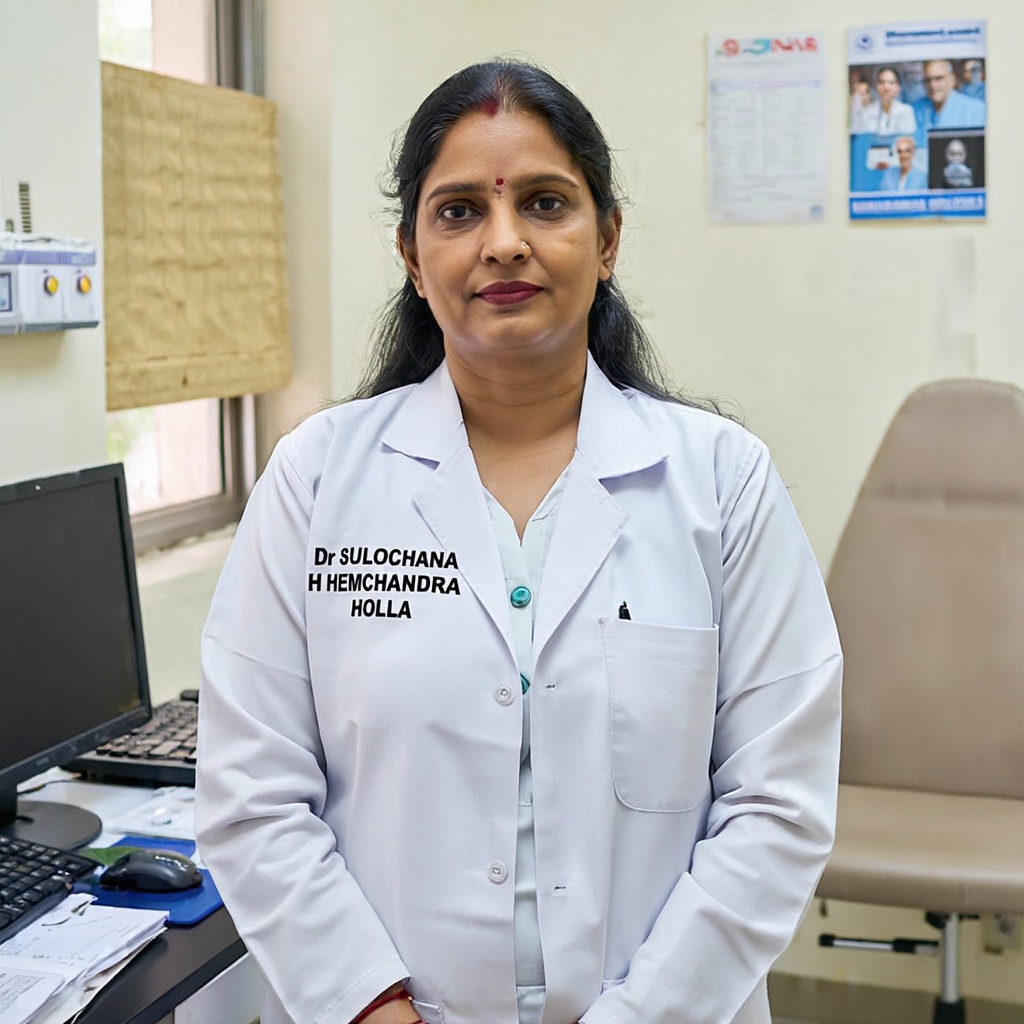
Dr SULOCHANA HEMCHANDRA HOLLA
Consultant Medical Geneticist · Reg: 8532
Last reviewed: September 7, 2026
Overview
The SDHD Gene Cowden Syndrome Type 3 NGS Genetic Test is performed to identify mutations in the SDHD gene responsible for Cowden syndrome type 3 and hereditary paraganglioma-pheochromocytoma syndrome. This test serves multiple clinical purposes: confirming a clinical diagnosis in symptomatic individuals, identifying at-risk family members through cascade testing, guiding personalized surveillance protocols for early tumor detection, informing risk-reducing treatment strategies, and assisting in family planning decisions. The NGS methodology ensures comprehensive coverage of the SDHD gene with high analytical sensitivity and specificity, enabling detection of single nucleotide variants, small insertions and deletions, and other clinically relevant sequence changes.
- Test Code
- 2865
- ICD Code
- Q85.8
- Price
- ₹20,000
- Sample Type
- Blood or Extracted DNA or One Drop Blood on FTA Card
- Result Time
- Results are typically available within 3 to 4 weeks from the date of sample receipt at the laboratory. Reports are delivered via online portal, email, and WhatsApp.
- Fasting Required
- No
- Method
- Next Generation Sequencing (NGS), Bioinformatics Analysis and Variant Calling, Sanger Confirmation for Reported Variants
Sample Collection
A genetic counselling session is strongly recommended before sample collection. Provide your complete medical history, detailed family history spanning at least three generations, and any previous genetic test results. No fasting or special preparation is required. Inform the laboratory of any recent blood transfusions, bone marrow transplants, or current medications that may affect sample quality.
Method: Venipuncture / FTA Card / Saliva
Laboratory Analysis
A trained phlebotomist will collect approximately 3-5 mL of peripheral venous blood using standard venipuncture technique into an EDTA (lavender top) vacutainer tube. Alternatively, a saliva sample or one drop of blood on an FTA card may be used. The collection process typically takes 5-10 minutes and involves minimal discomfort.
Report Delivery
Apply gentle pressure to the puncture site with a sterile cotton ball for 2-3 minutes. You may resume normal activities immediately. The sample will be transported to the laboratory under controlled temperature conditions. Results are typically available within 3 to 4 weeks from sample receipt. A follow-up genetic counselling appointment is strongly recommended to discuss results and their clinical implications.
Timeline: Results are typically available within 3 to 4 weeks from the date of sample receipt at the laboratory. Reports are delivered via online portal, email, and WhatsApp.
Patient Instructions
About This Test
Who Should Get This Test
The SDHD Gene Cowden Syndrome Type 3 NGS Genetic Test is performed to identify mutations in the SDHD gene responsible for Cowden syndrome type 3 and hereditary paraganglioma-pheochromocytoma syndrome. This test serves multiple clinical purposes: confirming a clinical diagnosis in symptomatic individuals, identifying at-risk family members through cascade testing, guiding personalized surveillance protocols for early tumor detection, informing risk-reducing treatment strategies, and assisting in family planning decisions. The NGS methodology ensures comprehensive coverage of the SDHD gene with high analytical sensitivity and specificity, enabling detection of single nucleotide variants, small insertions and deletions, and other clinically relevant sequence changes.
How to Prepare
- Collect 3-5 mL of peripheral venous blood in an EDTA (lavender top) vacutainer tube
- Alternatively, use an FTA card with one drop of whole blood or provide a saliva sample in an approved collection kit
- Label the sample clearly with patient's full name, date of birth, date of collection, and sample type
- Gently invert the EDTA tube 8-10 times immediately after collection to prevent clotting
- Transport the sample at 2-8°C; ambient temperature is acceptable if delivery is within 24 hours
- For extracted DNA, ensure a minimum concentration of 20 ng/µL and a total volume of at least 50 µL
- Include the completed test requisition form and signed informed consent document with the sample
Doctor's Notes
Reviewed by Dr SULOCHANA HEMCHANDRA HOLLA — MBBS, MD (Medical Genetics) · Reg. No. 8532
"Genetic testing for SDHD mutations is a critical step in the diagnostic workup of patients with suspected hereditary paraganglioma-pheochromocytoma syndrome or Cowden syndrome type 3. Identifying a pathogenic variant allows for targeted surveillance protocols, including regular imaging and biochemical screening, which can detect tumors at an early and treatable stage. I recommend this test for any patient with a personal or family history of paragangliomas, pheochromocytomas, or early-onset thyroid cancer, especially when there is a pattern suggestive of autosomal dominant inheritance with paternal parent-of-origin effects characteristic of SDHD-related disorders."
Last medically reviewed: September 7, 2026
Test Parameters & Specifications
Sample Stability
- Hemolyzed, clotted, or visibly contaminated blood sample
- Insufficient sample volume or inadequate DNA concentration
- Sample without proper labeling, identification, or documentation
- Sample received beyond the specified stability period
- Missing or incomplete test requisition form or informed consent
- Sample collected in incorrect tube type (e.g., heparin tube instead of EDTA)
Understanding Your Results
Pathogenic Variant Detected
A disease-causing mutation in the SDHD gene has been identified. This confirms a diagnosis of SDHD-related Cowden syndrome type 3 or hereditary paraganglioma-pheochromocytoma syndrome. The patient has an increased lifetime risk of developing paragangliomas, pheochromocytomas, renal cell carcinoma, gastrointestinal stromal tumors, and other associated neoplasms. Regular surveillance including annual biochemical screening (plasma or urine metanephrines) and periodic imaging is recommended. Cascade testing of first-degree relatives is strongly advised.
Clinical action: Initiate surveillance protocol. Refer to endocrinology and oncology. Offer genetic counselling and cascade testing to at-risk family members.
Likely Pathogenic Variant Detected
A variant with strong but not definitive evidence of pathogenicity has been identified. Clinical management should be similar to that for a pathogenic variant. Correlation with clinical findings, family segregation studies, and functional data is recommended to achieve definitive classification.
Clinical action: Initiate surveillance protocol. Recommend family segregation studies. Schedule periodic variant reclassification review.
Variant of Uncertain Significance (VUS)
A genetic variant was identified, but current evidence is insufficient to determine whether it is disease-causing or benign. This result should not be used for clinical decision-making. Family studies and periodic re-evaluation against updated databases may help clarify the variant's significance over time.
Clinical action: Do not alter clinical management based on VUS alone. Recommend family segregation studies. Re-evaluate periodically as new data becomes available.
No Pathogenic Variant Detected
No disease-causing mutations were identified in the SDHD gene. This result does not completely exclude a hereditary cancer predisposition syndrome, as mutations in other genes (PTEN, SDHB, SDHC, SDHAF2) may be responsible for the clinical presentation. Clinical correlation and consideration of expanded gene panel testing may be warranted.
Clinical action: Consider testing for other Cowden syndrome-associated genes if clinical suspicion remains. Continue routine clinical screening as indicated by symptoms and family history.
Consult your doctor or genetic counsellor if you have a family history of Cowden syndrome, paragangliomas, or pheochromocytomas; if you develop unexplained neck masses, persistent or episodic hypertension, excessive sweating, or palpitations; if you have multiple thyroid nodules or early-onset thyroid cancer; if you notice skin lesions such as trichilemmomas or thick scaly patches on the hands and feet; or if you have been diagnosed with Lhermitte-Duclos disease or gastrointestinal hamartomatous polyps. Early consultation enables timely genetic testing and surveillance.
Limitations
- ⚠This test does not detect large genomic rearrangements beyond the detection capability of NGS technology
- ⚠Variants of uncertain significance (VUS) may be identified and cannot be used for definitive clinical decision-making
- ⚠Results must be interpreted in conjunction with clinical findings, family history, and other diagnostic information
- ⚠This test does not screen for mutations in other Cowden syndrome-associated genes such as PTEN, SDHB, SDHC, or SDHAF2
- ⚠Intronic variants deep within non-coding regions may not be fully captured
- ⚠Mosaicism at low levels may not be detected by standard NGS methodology
Risks & Considerations
- ●Minimal physical risk associated with blood draw, including minor bruising or discomfort at the puncture site
- ●Potential psychological distress or anxiety related to test results, particularly if a pathogenic variant is identified
- ●Possible implications for insurance and employment due to genetic information, though protections may vary by jurisdiction
- ●Risk of identifying variants of uncertain significance (VUS) which may cause uncertainty and anxiety without providing definitive clinical guidance
Interfering Factors
- ●Hemolyzed blood samples may degrade DNA quality and affect sequencing results
- ●Recent blood transfusion (within 4-6 weeks) may introduce donor DNA and compromise test accuracy
- ●Prior bone marrow or stem cell transplant may yield donor DNA rather than patient DNA
- ●Contamination during sample collection or transport may lead to false results
- ●Low DNA concentration or degraded DNA may result in insufficient coverage depth
Compare With Similar Tests
| Test | SDHD Gene Cowden syndrome type 3 NGS Genetic Test | ||||||
|---|---|---|---|---|---|---|---|
| Comparison | SDHD Gene Cowden syndrome type 3 NGS Genetic Test |
Frequently Asked Questions
What is the SDHD Gene Cowden Syndrome Type 3 NGS Genetic Test?
Who should consider getting the SDHD Gene test?
What sample is required for this test?
How long does it take to receive the results?
Is the SDHD Gene NGS Genetic Test covered by insurance in India?
What does a positive test result mean?
Can this test be performed on children?
Is genetic counselling required before testing?
What is the difference between Cowden syndrome type 3 and other types?
What are paragangliomas and how are they related to SDHD mutations?
Can a negative test result completely rule out Cowden syndrome?
Does DNA Labs India offer home sample collection for this test?
Related Tests
Reference Laboratory Services
We serve as a reference laboratory for hospitals and clinics across India. Send samples from your facility with same-day pickup, priority processing, and results delivered through our online portal. Competitive institutional pricing available.
Your Data Privacy
Your medical data is protected under Indian law.
✓ Stored in India: All patient records are stored on servers located in India. No data is transferred outside the country.
✓ DPDP Act Compliant: Under the Digital Personal Data Protection Act 2023, you can request deletion of your records at any time by contacting support.
Book Your Test
Enter your details and we'll connect you within 15 minutes.