
Chromotouch Chromosome SNP Microarray Optima Products of Conception Test
Short Name: Chromotouch POC SNP Microarray
Also known as: POC Microarray Test, Products of Conception Chromosomal Microarray Analysis, SNP Array for Pregnancy Loss Tissue, Chromotouch Optima POC Test, Pregnancy Loss Genetic Testing
Chromotouch Chromosome SNP Microarray Optima Products of Conception Test test available at DNA Labs India for ₹18,500. Uses Affymetrix Optima Suite SNP Microarray, Chromosomal Microarray Analysis (CMA) on Products of Conception (POC) Tissue samples. Results in Sample accepted daily by 4 PM. Reports are typically available within 10 working days from the date of sample receipt at the laboratory.. Free home collection in 300+ cities across India.

🩺 Medically Reviewed By
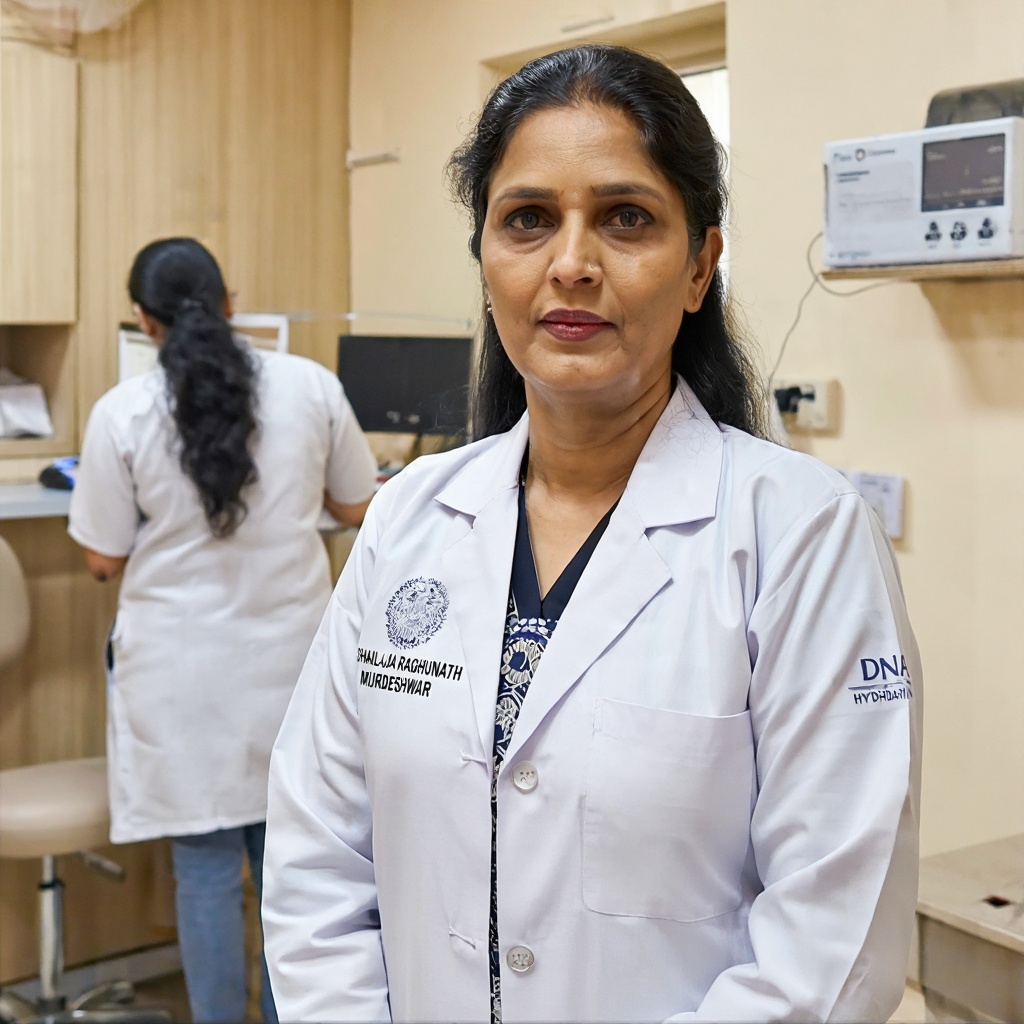
Dr SHAILAJA RAGHUNATH MURDESHWAR
Consultant Physician · Reg: 8052
Last reviewed: September 7, 2026
Overview
The primary purpose of the Chromotouch Chromosome SNP Microarray Optima POC Test is to determine whether a chromosomal abnormality was the underlying cause of a pregnancy loss. By analyzing the genetic material from the products of conception, this test helps identify specific chromosomal errors—including aneuploidies, structural rearrangements, copy number variants, and loss of heterozygosity—that may have contributed to the miscarriage or fetal demise. This information is crucial for accurate recurrence risk counseling, evaluation of parental carrier status when indicated, and informed decision-making regarding future pregnancies. It is particularly valuable in cases of recurrent pregnancy loss where conventional karyotyping has failed or returned normal results, as the higher resolution of SNP microarray can detect cryptic imbalances missed by traditional methods.
- Test Code
- 321
- CPT Code
- 81229
- ICD Code
- O02.1
- Price
- ₹18,500
- Sample Type
- Products of Conception (POC) Tissue
- Result Time
- Sample accepted daily by 4 PM. Reports are typically available within 10 working days from the date of sample receipt at the laboratory.
- Fasting Required
- No
- Method
- Affymetrix Optima Suite SNP Microarray, Chromosomal Microarray Analysis (CMA)
Sample Collection
A duly filled Genomic Microarray Requisition Form (Form 19) is mandatory before sample collection. Ensure the collecting physician is aware that the tissue must be submitted in normal saline (not formalin). Inform the laboratory of the clinical history, gestational age at loss, and any prior genetic testing.
Method: Surgical collection (D&C / EVAC) by gynecologist; tissue submitted in normal saline
Laboratory Analysis
The products of conception tissue (minimum 2 mg, recommended 5 mg) must be carefully collected during D&C or evacuation procedure under sterile conditions. The tissue should be immediately placed in a sterile container with normal saline at room temperature. Avoid formalin fixation. Ensure proper patient identification and labeling of the specimen container.
Report Delivery
Transport the specimen to the laboratory at room temperature as soon as possible. Refrigerated storage (2-8°C) is acceptable for up to 24 hours. Do not freeze the sample. The laboratory will proceed with DNA extraction and microarray analysis upon receipt of the sample along with the completed Form 19.
Timeline: Sample accepted daily by 4 PM. Reports are typically available within 10 working days from the date of sample receipt at the laboratory.
Patient Instructions
About This Test
Who Should Get This Test
The primary purpose of the Chromotouch Chromosome SNP Microarray Optima POC Test is to determine whether a chromosomal abnormality was the underlying cause of a pregnancy loss. By analyzing the genetic material from the products of conception, this test helps identify specific chromosomal errors—including aneuploidies, structural rearrangements, copy number variants, and loss of heterozygosity—that may have contributed to the miscarriage or fetal demise. This information is crucial for accurate recurrence risk counseling, evaluation of parental carrier status when indicated, and informed decision-making regarding future pregnancies. It is particularly valuable in cases of recurrent pregnancy loss where conventional karyotyping has failed or returned normal results, as the higher resolution of SNP microarray can detect cryptic imbalances missed by traditional methods.
How to Prepare
- Submit 5 mg (minimum 2 mg) of curretted products of conception tissue in a sterile container with normal saline
- Duly filled Genomic Microarray Requisition Form (Form 19) is mandatory and must accompany the specimen
- Do NOT use formalin or any fixative – only normal saline is acceptable for preserving DNA integrity
- Label the specimen container clearly with patient name, date, specimen type, and hospital/lab reference number
- Transport at room temperature; if delay is anticipated, refrigerate at 2-8°C for up to 24 hours
- Include relevant clinical history on the requisition form: gestational age at loss, ultrasound findings, history of prior losses
Doctor's Notes
Reviewed by Dr SHAILAJA RAGHUNATH MURDESHWAR — MBBS, MD (General Medicine) · Reg. No. 8052
"Chromosomal abnormalities account for approximately 50-60% of first-trimester pregnancy losses. The Chromotouch SNP Microarray analysis of products of conception tissue provides a significantly higher diagnostic yield compared to conventional karyotyping, which can fail due to culture failure in up to 20-40% of cases. This test helps couples understand the likely cause of their loss, guides recurrence risk assessment, and informs management in subsequent pregnancies. I recommend this test for all couples experiencing recurrent pregnancy loss, anembryonic pregnancy, or fetal demise, as the results are invaluable for genetic counseling and future reproductive planning."
Last medically reviewed: September 7, 2026
Test Parameters & Specifications
Sample Stability
- Tissue preserved in formalin or any fixative other than normal saline
- Sample quantity below 2 mg minimum
- Specimen received without the mandatory Genomic Microarray Requisition Form (Form 19)
- Unlabeled, mislabeled, or improperly identified specimens
- Specimen with visible signs of complete autolysis or extensive contamination
- Sample received after 24 hours without refrigeration
Understanding Your Results
The microarray analysis did not identify any numerical or structural chromosomal abnormalities in the POC tissue. This does not exclude all causes of pregnancy loss, as non-genetic factors, single gene disorders, or balanced rearrangements may be responsible. Consider parental karyotyping and further evaluation if recurrent losses occur.
Reassurance that the loss was not due to a common chromosomal error detected by this method. Further workup may be warranted for recurrent losses.
A numerical chromosomal abnormality (extra or missing chromosome) has been identified, which is the most common cause of first-trimester pregnancy loss. Specific trisomies like Trisomy 16 and 22 are rarely seen in live births and are typically associated with early miscarriage.
Identifies the likely cause of the pregnancy loss. For most trisomies, the recurrence risk is low (approximately 1-2% above baseline) as these are typically sporadic events related to maternal age. Recurrence risk may be higher if a parental translocation is present.
Three complete sets of chromosomes were detected, indicating triploidy. This is a recognized cause of pregnancy loss and may be associated with partial molar pregnancy depending on the parental origin (diandric vs. digynic).
Triploidy of diandric origin (two paternal sets) may be associated with partial hydatidiform mole requiring monitoring of maternal serum hCG levels to rule out gestational trophoblastic disease. Genetic counseling is recommended.
A submicroscopic deletion or duplication has been detected that is classified as pathogenic or likely pathogenic based on current evidence. These may include known microdeletion/microduplication syndromes.
Parental testing is recommended to determine if the CNV was de novo or inherited. De novo pathogenic CNVs have low recurrence risk, while inherited variants from a balanced parental carrier may carry higher recurrence risk.
A copy number change has been detected, but current evidence is insufficient to determine whether it is pathogenic or benign. Further evaluation, including parental testing and literature review, may help reclassify the variant.
VUS results require careful interpretation by a genetic counselor. Parental studies can often help determine if the variant is inherited (likely benign if present in a healthy parent) or de novo (potentially pathogenic).
Extended regions of homozygosity have been identified, which may suggest uniparental isodisomy (both copies of a chromosome from one parent) or parental consanguinity. This may have implications for autosomal recessive disease risk.
If consanguinity is not reported, further evaluation for uniparental disomy may be warranted, particularly if the ROH involves imprinted chromosome regions (e.g., chromosomes 7, 11, 15) that could affect gene expression.
Consult your gynecologist or a genetic counselor if: (1) You have experienced two or more consecutive pregnancy losses and wish to understand the cause; (2) You have had a stillbirth or second/third-trimester fetal demise; (3) The test reveals an abnormal result, including any pathogenic CNV or VUS requiring further evaluation; (4) Loss of heterozygosity is detected suggesting possible uniparental disomy; (5) You are planning a subsequent pregnancy after a loss and need recurrence risk counseling; (6) A triploidy result is obtained, requiring monitoring for possible gestational trophoblastic disease; (7) Parental karyotyping is recommended based on the POC microarray findings.
Limitations
- ⚠This test does not detect balanced chromosomal rearrangements (balanced translocations, inversions) as there is no net gain or loss of genetic material
- ⚠Single gene disorders and point mutations are not detected by this microarray platform
- ⚠Maternal cell contamination assessment is limited; highly contaminated samples may yield maternal genotype instead of fetal results
- ⚠Mosaicism at low levels (below approximately 20%) may not be reliably detected
- ⚠Variants of uncertain significance (VUS) may be identified and may not provide a definitive answer regarding the cause of pregnancy loss
- ⚠This test does not replace the need for parental karyotyping when a structural rearrangement is suspected
- ⚠Epigenetic abnormalities such as imprinting disorders may not be fully characterized by SNP microarray alone
Risks & Considerations
- ●There are no direct physical risks to the patient from the laboratory test itself, as analysis is performed on previously collected tissue
- ●Emotional distress may occur upon receiving results, particularly if chromosomal abnormalities are identified as the cause of pregnancy loss
- ●Variants of uncertain significance (VUS) may cause anxiety and may require additional testing of parents before clinical significance can be determined
- ●False-negative results are possible if maternal cell contamination significantly affects the sample, potentially masking the fetal genotype
- ●There is a small possibility of incidental findings, such as regions of homozygosity, that may have implications beyond the index pregnancy loss
Interfering Factors
- ●Maternal cell contamination (MCC) may confound results if the tissue sample is predominantly maternal in origin
- ●Insufficient tissue quantity (below the 2 mg minimum) may lead to test failure or inconclusive results
- ●Tissue preserved in formalin instead of normal saline is unsuitable for DNA-based microarray analysis
- ●Autolysis or degraded DNA from prolonged storage prior to sample submission may affect data quality
- ●Sample mix-up or improper labeling may result in incorrect specimen identification
Compare With Similar Tests
| Test | Chromotouch Chromosome SNP Microarray Optima Products of Conception Test | Conventional Karyotyping of POC | FISH (Fluorescence In Situ Hybridization) for POC | QF-PCR (Quantitative Fluorescent PCR) for POC |
|---|---|---|---|---|
| Comparison | Chromotouch Chromosome SNP Microarray Optima Products of Conception Test |
Frequently Asked Questions
What is the Chromotouch Chromosome SNP Microarray Optima Products of Conception Test?
When is the POC SNP Microarray test recommended?
What is the difference between this test and conventional karyotyping of POC tissue?
What sample is required for this test?
How accurate is the Chromotouch POC SNP Microarray test?
What does it mean if the test result is normal?
What does it mean if a chromosomal abnormality is found?
Can this test determine the sex of the fetus?
Is this test performed during pregnancy or after a loss?
How long does it take to get the results?
Does this test detect all genetic causes of pregnancy loss?
Is home sample collection available for this test across India?
Related Tests
Chromosome Analysis Cord Blood Test
₹4,000FISH - Amnio Two Probes: Trisomy 13 & 21 Test
₹7,500Chromosome Analysis Products of Conception Reflex Testing to FISH for Aneuploidy Detection Test
₹8,500FISH - Amnio Three Probes: Trisomy 18 X & Y Test
₹10,500FISH - SRY Gene Test
₹7,371FISH - Trisomy 21 / Down Syndrome Test
₹6,000Reference Laboratory Services
We serve as a reference laboratory for hospitals and clinics across India. Send samples from your facility with same-day pickup, priority processing, and results delivered through our online portal. Competitive institutional pricing available.
Your Data Privacy
Your medical data is protected under Indian law.
✓ Stored in India: All patient records are stored on servers located in India. No data is transferred outside the country.
✓ DPDP Act Compliant: Under the Digital Personal Data Protection Act 2023, you can request deletion of your records at any time by contacting support.
Book Your Test
Enter your details and we'll connect you within 15 minutes.