
FISH for Pre or Postnatal Diagnosis Chromosome 13 21 Test
Short Name: FISH Chr 13/21
Also known as: FISH for Trisomy 13, FISH for Trisomy 21, Chromosome 13/21 FISH
FISH for Pre or Postnatal Diagnosis Chromosome 13 21 Test test available at DNA Labs India for ₹7,000. Uses Fluorescence In Situ Hybridization (FISH) on Amniotic fluid, Chorionic villus sample (CVS), Peripheral blood, Cord blood samples. Results in Reports are typically available within 10-12 days after the sample is received at the laboratory.. Free home collection in 300+ cities across India.

🩺 Medically Reviewed By
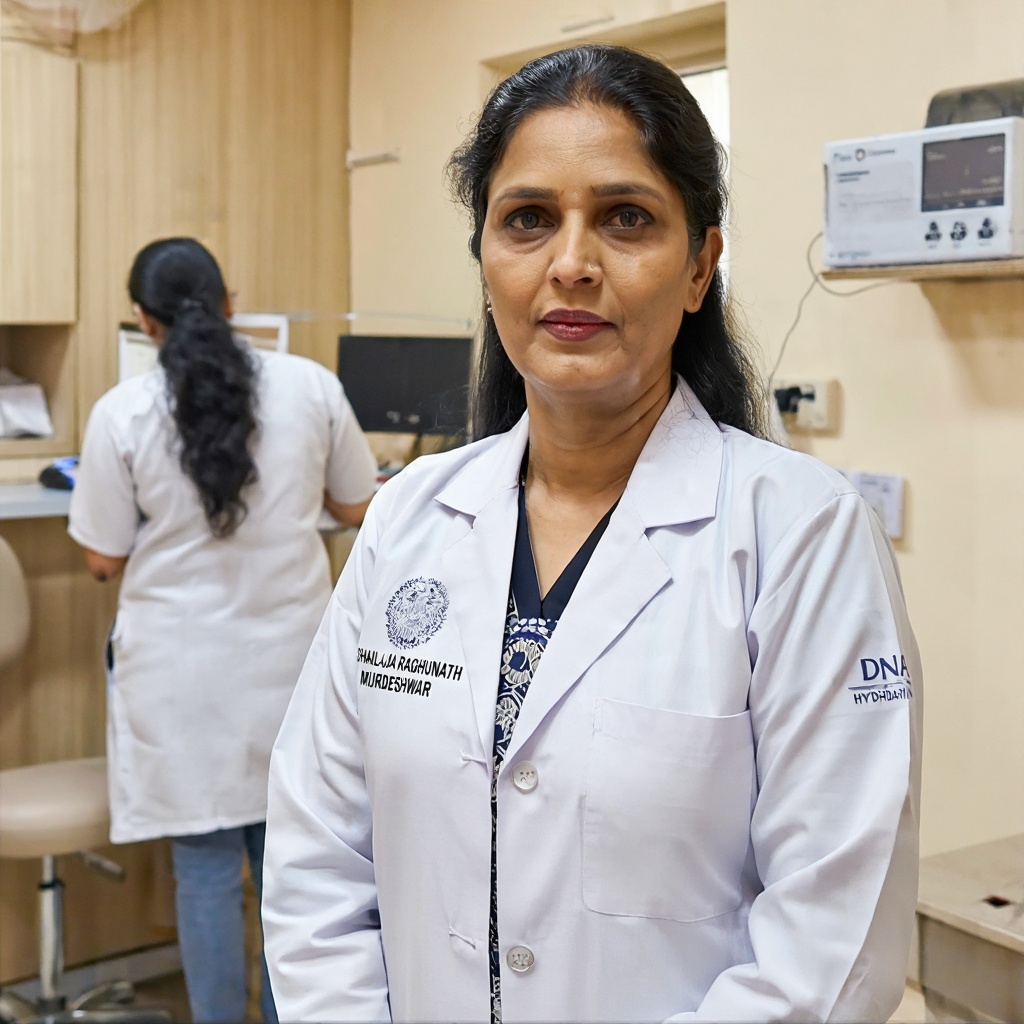
Dr SHAILAJA RAGHUNATH MURDESHWAR
Consultant Physician · Reg: 8052
Last reviewed: September 7, 2026
Overview
The primary purpose of this FISH test is to detect aneuploidy (abnormal number of chromosomes) for chromosomes 13 and 21. It is commonly used as a rapid prenatal screen in conjunction with traditional chromosome analysis to provide quick results for high-risk pregnancies. It can also be used postnatally to confirm a suspected diagnosis of Trisomy 13 or Trisomy 21. Early detection is crucial for genetic counseling, management planning, and parental decision-making.
- Test Code
- 6282
- CPT Code
- 88271
- ICD Code
- Q91.7
- Price
- ₹7,000
- Sample Type
- Amniotic fluid, Chorionic villus sample (CVS), Peripheral blood, Cord blood
- Result Time
- Reports are typically available within 10-12 days after the sample is received at the laboratory.
- Fasting Required
- No
- Method
- Fluorescence In Situ Hybridization (FISH)
Sample Collection
No special preparation is required. For prenatal samples, the procedure (amniocentesis or CVS) will be performed by a specialist. Inform your doctor about any medications or supplements you are taking.
Method: Venipuncture or amniocentesis/CVS by specialist
Laboratory Analysis
For blood samples, a standard venipuncture will be performed. For prenatal samples, the procedure may cause mild discomfort; it is performed under ultrasound guidance.
Report Delivery
After blood collection, apply pressure to the puncture site. For prenatal procedures, rest for a short period and avoid strenuous activity for 24 hours. Contact your doctor if you experience fever, bleeding, or unusual pain.
Timeline: Reports are typically available within 10-12 days after the sample is received at the laboratory.
Patient Instructions
About This Test
Who Should Get This Test
The primary purpose of this FISH test is to detect aneuploidy (abnormal number of chromosomes) for chromosomes 13 and 21. It is commonly used as a rapid prenatal screen in conjunction with traditional chromosome analysis to provide quick results for high-risk pregnancies. It can also be used postnatally to confirm a suspected diagnosis of Trisomy 13 or Trisomy 21. Early detection is crucial for genetic counseling, management planning, and parental decision-making.
How to Prepare
- For blood: Use EDTA vacutainer, mix gently, and transport at room temperature within 48 hours.
- For amniotic fluid: Collect in sterile tubes, do not freeze, transport at room temperature.
- For CVS: Collect in sterile container with transport medium, keep at room temperature.
- Label the sample with patient name, date, and type of sample.
Doctor's Notes
Reviewed by Dr SHAILAJA RAGHUNATH MURDESHWAR — MBBS, MD (General Medicine) · Reg. No. 8052
"FISH for chromosomes 13 and 21 is a rapid and reliable tool for detecting common aneuploidies, especially in high-risk pregnancies. Early diagnosis allows for informed decision-making and appropriate prenatal counseling."
Last medically reviewed: September 7, 2026
Test Parameters & Specifications
Sample Stability
- Hemolyzed or clotted blood samples
- Insufficient sample volume
- Samples received after 48 hours at room temperature
- Frozen or refrigerated samples
- Unlabeled or mislabeled samples
Understanding Your Results
Normal (2 signals for chr 13 and 2 for chr 21)
No evidence of Trisomy 13 or Trisomy 21. However, other chromosomal abnormalities cannot be ruled out.
3 signals for chromosome 13
Indicates Trisomy 13 (Patau syndrome). Confirm with karyotype.
3 signals for chromosome 21
Indicates Trisomy 21 (Down syndrome). Confirm with karyotype.
Mosaic pattern (mix of 2 and 3 signals)
Possible mosaicism; further testing recommended.
Consult your doctor if you have any concerns about your pregnancy or your child's development. If the FISH result is abnormal, genetic counseling is strongly recommended to discuss the implications and management options.
Limitations
- ⚠FISH only detects targeted chromosomal abnormalities (13 and 21), not other chromosomal aberrations
- ⚠Cannot detect structural rearrangements or small deletions/duplications
- ⚠Results should be confirmed by conventional karyotyping
- ⚠Mosaic cases may yield false-negative results if the abnormal cell line is not represented in the sample
- ⚠Not a substitute for full karyotype analysis
Risks & Considerations
- ●For blood draw: minor bruising or bleeding at puncture site
- ●For amniocentesis: small risk of miscarriage (0.1-0.3%)
- ●For CVS: small risk of miscarriage or limb defects (rare)
- ●Infection at the puncture site (rare)
Interfering Factors
- ●Maternal cell contamination in prenatal samples
- ●Insufficient sample volume
- ●Poor DNA quality due to improper storage or transport
- ●Recent blood transfusion (for postnatal blood samples)
- ●Mosaic aneuploidy may be missed if low-level mosaicism is present
Compare With Similar Tests
| Test | FISH for Pre or Postnatal Diagnosis Chromosome 13 21 | FISH | Karyotyping |
|---|---|---|---|
| Comparison | FISH for Pre or Postnatal Diagnosis Chromosome 13 21 |
Frequently Asked Questions
What is FISH for chromosome 13 and 21?
What is the cost of the FISH test for chromosome 13 and 21?
What is the turnaround time for this test?
What samples are used for this test?
Is fasting required before the test?
How accurate is FISH for detecting trisomy 13 and 21?
Can FISH detect all chromosomal abnormalities?
What does a normal FISH result mean?
What should I do if my FISH result is abnormal?
Is home sample collection available?
Are there any risks associated with prenatal sample collection?
Can this test be done for both prenatal and postnatal diagnosis?
Related Tests
Chromosome Analysis Cord Blood Test
₹4,000Chromosome Analysis Products of Conception Reflex Testing to FISH for Aneuploidy Detection Test
₹8,500Chromotouch Chromosome SNP Microarray Optima Products of Conception Test
₹18,500FISH - Amnio Three Probes: Trisomy 18 X & Y Test
₹10,500FISH - Amnio Two Probes: Trisomy 13 & 21 Test
₹7,500FISH - SRY Gene Test
₹7,371Reference Laboratory Services
We serve as a reference laboratory for hospitals and clinics across India. Send samples from your facility with same-day pickup, priority processing, and results delivered through our online portal. Competitive institutional pricing available.
Your Data Privacy
Your medical data is protected under Indian law.
✓ Stored in India: All patient records are stored on servers located in India. No data is transferred outside the country.
✓ DPDP Act Compliant: Under the Digital Personal Data Protection Act 2023, you can request deletion of your records at any time by contacting support.
Book Your Test
Enter your details and we'll connect you within 15 minutes.