
FISH - Monosomy 7 / del(7q31) for AML / MDS Test
Short Name: FISH Monosomy 7/del(7q31)
Also known as: FISH for Monosomy 7, FISH del(7q31) Test, Chromosome 7 FISH Analysis, Fluorescence In Situ Hybridization for 7q Deletion, FISH Panel for AML/MDS
FISH - Monosomy 7 / del(7q31) for AML / MDS Test test available at DNA Labs India for ₹6,000. Uses FISH (Fluorescence In Situ Hybridization) on Whole Blood or Bone Marrow Aspirate samples. Results in Reports are available within 4 working days from sample receipt at the laboratory. Samples must be submitted by 4:00 PM daily for same-day processing initiation.. Free home collection in 300+ cities across India.

🩺 Medically Reviewed By
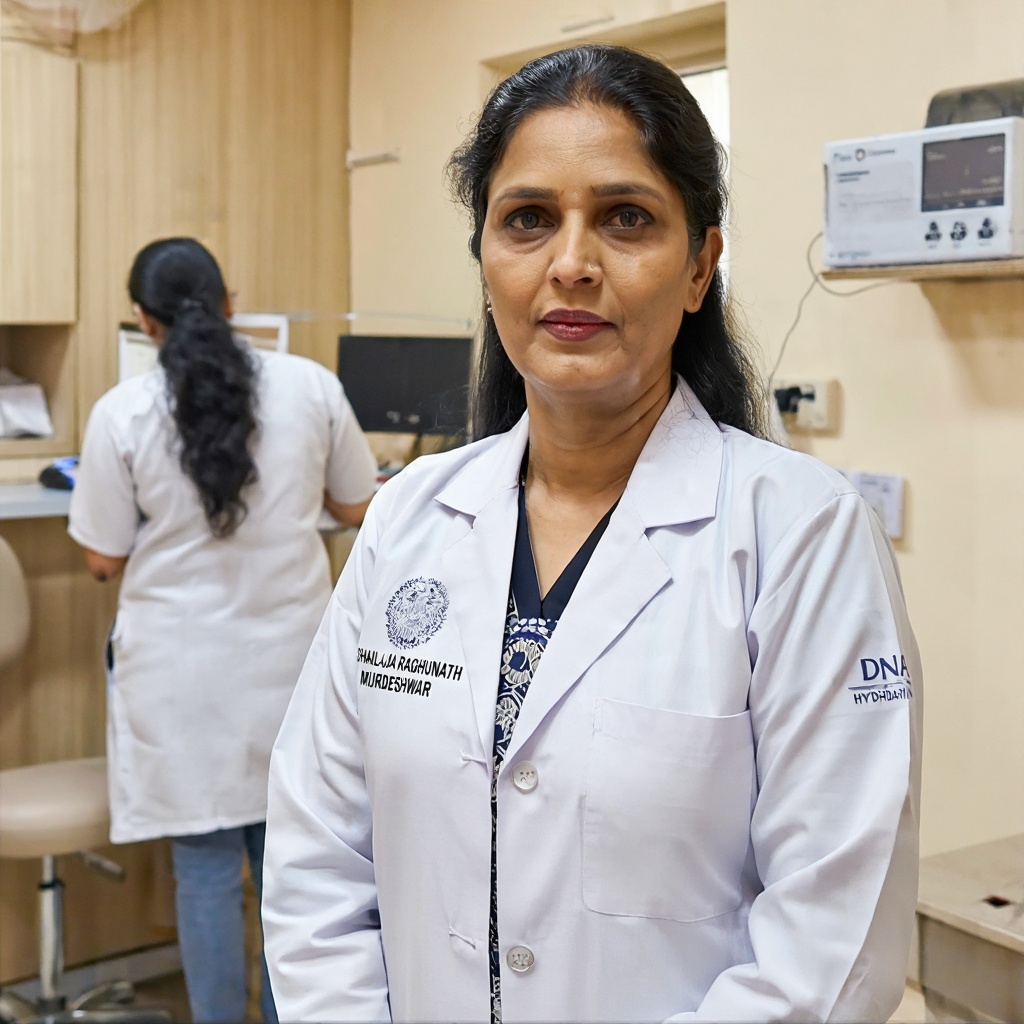
Dr SHAILAJA RAGHUNATH MURDESHWAR
Consultant Physician · Reg: 8052
Last reviewed: September 7, 2026
Overview
The primary purpose of the FISH - Monosomy 7 / del(7q31) test is to detect specific chromosomal abnormalities involving chromosome 7 in patients suspected of having or diagnosed with Acute Myeloid Leukemia (AML) or Myelodysplastic Syndromes (MDS). This test aids in diagnosis confirmation, prognostic risk stratification as per ELN and IPSS classification systems, treatment planning decisions including eligibility for allogeneic stem cell transplantation, monitoring of disease progression or relapse, and differentiation between de novo and therapy-related myeloid neoplasms.
- Test Code
- 618
- CPT Code
- 88271, 88275
- ICD Code
- C92.0, D46.9
- Price
- ₹6,000
- Sample Type
- Whole Blood or Bone Marrow Aspirate
- Result Time
- Reports are available within 4 working days from sample receipt at the laboratory. Samples must be submitted by 4:00 PM daily for same-day processing initiation.
- Fasting Required
- No
- Method
- FISH (Fluorescence In Situ Hybridization)
Sample Collection
Duly filled Chromosome & FISH Analysis Requisition Form (Form 17) is mandatory. Inform the physician about any recent blood transfusions or chemotherapy, as these may affect sample quality. No fasting is required for this test.
Method: Venipuncture (blood) / Bone marrow aspiration procedure
Laboratory Analysis
Whole blood sample (5 mL minimum 3 mL) is collected via venipuncture into 2 Green Top (Sodium Heparin) tubes. Alternatively, 4 mL (minimum 2 mL) of bone marrow aspirate is collected by the referring hematologist from 2 Green Top (Sodium Heparin) tubes.
Report Delivery
Samples must be shipped at 18–22°C (room temperature). DO NOT FREEZE. Samples should reach the laboratory within 48 hours of collection for optimal results. The patient may resume normal activities after sample collection.
Timeline: Reports are available within 4 working days from sample receipt at the laboratory. Samples must be submitted by 4:00 PM daily for same-day processing initiation.
Patient Instructions
About This Test
Who Should Get This Test
The primary purpose of the FISH - Monosomy 7 / del(7q31) test is to detect specific chromosomal abnormalities involving chromosome 7 in patients suspected of having or diagnosed with Acute Myeloid Leukemia (AML) or Myelodysplastic Syndromes (MDS). This test aids in diagnosis confirmation, prognostic risk stratification as per ELN and IPSS classification systems, treatment planning decisions including eligibility for allogeneic stem cell transplantation, monitoring of disease progression or relapse, and differentiation between de novo and therapy-related myeloid neoplasms.
How to Prepare
- Collect sample in 2 Green Top (Sodium Heparin) tubes only
- Whole blood: 5 mL total (minimum 3 mL)
- Bone marrow: 4 mL total (minimum 2 mL)
- Ship at 18–22°C room temperature; DO NOT FREEZE
- Complete and attach Chromosome & FISH Analysis Requisition Form (Form 17)
- Transport sample to laboratory within 48 hours of collection
- Label sample clearly with patient details and date/time of collection
Doctor's Notes
Reviewed by Dr SHAILAJA RAGHUNATH MURDESHWAR — MBBS, MD (General Medicine) · Reg. No. 8052
"Monosomy 7 and del(7q) are among the most frequently observed chromosomal aberrations in myeloid neoplasms. These abnormalities are associated with an unfavorable prognosis and poor response to conventional chemotherapy. Early detection through FISH testing allows clinicians to risk-stratify patients and consider targeted therapeutic approaches or allogeneic stem cell transplantation in eligible candidates. I recommend this test for all newly diagnosed AML and MDS patients as part of baseline cytogenetic workup."
Last medically reviewed: September 7, 2026
Test Parameters & Specifications
Sample Stability
- Clotted sample
- Sample collected in incorrect tube type (EDTA or non-heparin tubes)
- Sample received frozen or at temperatures outside 18–22°C range
- Sample received after 48 hours from time of collection
- Inadequate sample volume (below minimum requirement)
- Missing or incomplete Chromosome & FISH Analysis Requisition Form (Form 17)
- Heavily hemolyzed sample
Understanding Your Results
Negative for Monosomy 7 / del(7q31)
Two FISH signals for both CEP7 and 7q31 locus-specific probe observed in ≥97% of nuclei analyzed. This indicates a normal disomic pattern for chromosome 7 with no evidence of monosomy 7 or 7q31 deletion.
Positive for Monosomy 7
One FISH signal for CEP7 probe observed in a significant proportion of interphase nuclei (>3% threshold), consistent with loss of an entire copy of chromosome 7. This is classified as an adverse-risk cytogenetic abnormality in both AML (ELN classification) and MDS (IPSS/IPSS-R).
Positive for del(7q31)
Loss of one 7q31 locus-specific signal with retention of both CEP7 signals, indicating an interstitial deletion of the long arm of chromosome 7 at band q31. This may be an isolated finding or part of a complex karyotype. Classified as intermediate to adverse risk depending on the clinical context and co-existing abnormalities.
Positive for Monosomy 7 with concurrent del(7q31)
Detection of both monosomy 7 and deletion of 7q31 on the remaining chromosome 7 copy. This pattern indicates loss of one chromosome 7 and a deletion on the retained copy, suggesting biallelic loss of the 7q31 region. This is associated with a particularly poor prognosis.
Equivocal / Inconclusive
Results near the cutoff threshold or technical issues preventing definitive interpretation. Repeat testing on a fresh sample or correlation with conventional karyotyping and additional molecular studies may be recommended.
Consult your hematologist or oncologist if you experience persistent fatigue, unexplained bruising or bleeding, recurrent infections, shortness of breath, bone pain, or unintentional weight loss. If your FISH result is positive for Monosomy 7 or del(7q31), discuss treatment options and prognosis with your doctor. Genetic counseling may also be recommended.
Limitations
- ⚠FISH detects only targeted chromosomal abnormalities and does not replace a comprehensive karyotype analysis
- ⚠False negatives may occur if the deletion is below the resolution threshold of the probe used
- ⚠Low-level mosaicism (<5% abnormal cells) may not be reliably detected
- ⚠This test does not detect point mutations or small intragenic alterations
- ⚠Results should always be correlated with morphological, clinical, and other laboratory findings
- ⚠Cryptic or complex rearrangements involving chromosome 7 may require additional molecular testing
Risks & Considerations
- ●Minimal risk associated with blood draw: minor bruising, slight pain at puncture site, or rare infection
- ●Bone marrow aspiration carries additional risks including localized pain, bleeding at the aspiration site, and rarely, infection
- ●No known risks from the FISH procedure itself as it is performed on the collected sample in the laboratory
Interfering Factors
- ●Sample hemolysis or clotting may compromise interphase cell quality
- ●Excessive delay in sample transport beyond 48 hours may affect cell viability
- ●Fixation artifacts in bone marrow samples may produce ambiguous signals
- ●Overlapping nuclei can interfere with accurate signal enumeration
- ●Prior treatment with certain chemotherapeutic agents may affect probe hybridization efficiency
Compare With Similar Tests
| Test | FISH - Monosomy 7 / del(7q31) for AML / MDS Test | Conventional Karyotyping | Chromosomal Microarray (CMA) | NGS-based Molecular Profiling |
|---|---|---|---|---|
| Comparison | FISH - Monosomy 7 / del(7q31) for AML / MDS Test |
Frequently Asked Questions
What is the FISH - Monosomy 7 / del(7q31) test?
Why is this test recommended for AML and MDS patients?
What sample is required for this test?
Is fasting required before giving a sample for this test?
How long does it take to get the results of this test?
What does a positive result for Monosomy 7 or del(7q31) mean?
What is the difference between Monosomy 7 and del(7q31)?
Is this test covered by health insurance?
Can this test detect all types of AML and MDS?
Is home sample collection available for this test?
What is the cost of the FISH - Monosomy 7 / del(7q31) test at DNA Labs India?
How accurate is the FISH test for detecting Monosomy 7 and del(7q31)?
Related Tests
B-Cell Rearrangement Detection Test
₹22,000Acute Lymphoblastic Leukemia (ALL) Cytogenetics Panel Test
₹20,000Epstein-Barr Virus Early RNA (EBER-ISH) In-Situ-Hybridization Test
₹6,000OncoPro NCCN Lung Cancer Panel with PD-L1 Test
₹140,400Acute Myeloid Leukemia (AML) Cytogenetics Panel Test
₹23,000AML ETO t(8;21) Gene Rearrangement PCR Qualitative Test
₹6,000Reference Laboratory Services
We serve as a reference laboratory for hospitals and clinics across India. Send samples from your facility with same-day pickup, priority processing, and results delivered through our online portal. Competitive institutional pricing available.
Your Data Privacy
Your medical data is protected under Indian law.
✓ Stored in India: All patient records are stored on servers located in India. No data is transferred outside the country.
✓ DPDP Act Compliant: Under the Digital Personal Data Protection Act 2023, you can request deletion of your records at any time by contacting support.
Book Your Test
Enter your details and we'll connect you within 15 minutes.